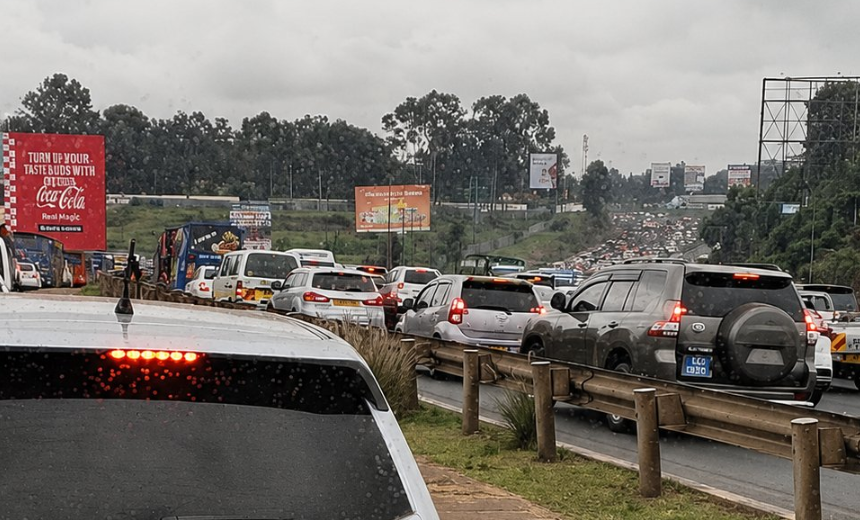
Nairobi woke up to confusion on Monday as rumours of planned protests rippled through social media, sparking fears of disrupted transport and leaving commuters uncertain about whether to head into work.
Across parts of the city and its outskirts, especially along the Thika Superhighway corridor, posts on X painted a picture of blocked roads, delayed journeys and rising fares. Some users claimed they were forced to walk long distances after finding no vehicles, while others spoke of alleged roadblocks in areas such as Witeithie and Ruiru.
One widely shared post alleged that sections of the highway had been sealed off in the early hours, forcing motorists into payments to pass. The claims, however, could not be independently verified.
“Only a few vehicles are on the road. You either pay or walk,” one user wrote, reflecting the tone of alarm that spread online.
Another post described motorists abandoning vehicles after encountering what were claimed to be barricades. “There’s chaos on Thika Road. People are turning back,” the user said.
Yet amid the noise, other commuters reported a very different reality.
In several areas along Thika Road, residents said buses and matatus were operating normally, with traffic officers present to manage flow. “Everything is moving as usual. There is no disruption here,” one commuter posted, pushing back against the alarm.
The mixed accounts left many residents unsure whom to believe. Some said they delayed leaving home altogether, asking online whether transport had been paralysed.
The uncertainty came just days after matatu operators resolved a standoff with the government following talks aimed at preventing a nationwide transport shutdown linked to rising fuel costs. The operators had earlier threatened industrial action but paused it to allow negotiations.
Following those discussions, government officials indicated that measures were being considered to ease pressure on fuel prices, including a possible reduction in diesel costs in the next pricing review cycle.
Despite the earlier tensions, transport services had been expected to stabilise. However, the latest wave of online claims briefly revived fears of disruption.
By mid-morning, reports from multiple parts of Nairobi suggested that most commuter routes were functioning, with only isolated congestion and no confirmed large-scale blockade.
For many residents, the episode underscored how quickly unverified information can shape perceptions of order in the city’s transport system and how, in moments of uncertainty, the line between rumour and reality can blur on the digital highway.
About the Author