Life, seasoned with perspective.
A reflection on participation, civic responsibility and the growing awareness of individual influence in shaping society. It highlights how small actions, when taken collectively, can signal meaningful change.
2,612,725.
That is the number.
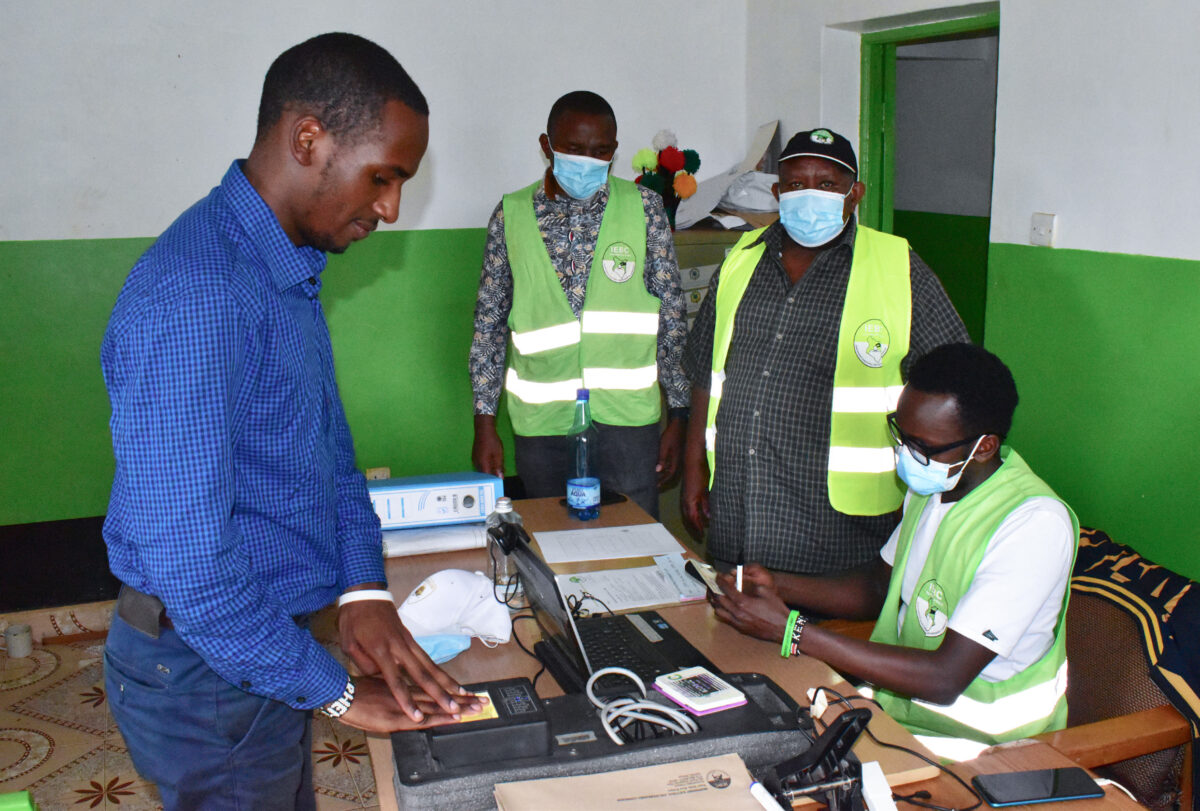
On 30 March, the Independent Electoral and Boundaries Commission launched a one-month voter registration exercise with a target of 2.5 million new voters. By 28 April, 2,345,476 had been registered. That is about 90 per cent of the target and already a strong showing. When you add the 267,249 voters who had registered since September last year during the continuous registration phase, you arrive at the current total.
That is how we get the number.
Let that sink in for a moment.
Kenya is a deeply political country. There is even a running joke that the moment we swear in a President, we immediately begin preparing for the next election five years later.
But this moment feels different.

Here is why.
The success of this registration drive was not about institutions alone. It was about people. Individuals, groups and especially young people who took it upon themselves to mobilise others to register and participate.
For years, Kenya has struggled with two major challenges: voter apathy and disengagement. Many citizens have questioned whether their vote truly counts. That doubt has, over time, discouraged participation.
So when a number like 2,612,725 emerges, it is not just a statistic. It is a signal.
To understand its significance, we need to go back a bit.
In June 2024, many Kenyans took to the streets in protest against a proposed Finance Bill. What began as a quiet expression of concern quickly grew into a nationwide movement. Social media played a central role in organising and amplifying voices. Young people were at the centre of it all.
On 25 June, the protests reached a peak. Emotions ran high. Tensions escalated. Lives were lost. It was a painful moment in our recent history, and its effects are still being processed through various institutions.
But beyond the pain, something shifted.
For a brief moment, long-standing divisions seemed to fade. Young people from different backgrounds stood side by side. Conversations moved beyond identity and focused on shared concerns.
That moment may not have solved everything, but it left an impression.
And perhaps it planted a seed.
Now, back to the number.
2,612,725.
This number did not come from nowhere. It reflects a growing awareness, particularly among young people, that participation matters. That showing up matters.
Whether through conversations, digital campaigns or simple peer influence, the message was clear: register, be counted, take part.
Of course, Kenya’s political landscape remains complex. There are still deep-rooted patterns that shape how people think and vote. That reality will not change overnight.
But something new is emerging alongside it.
A generation that is beginning to recognise its own influence.
Young people make up a significant portion of the population. Their choices, or lack of them, have real consequences. For a long time, many chose to stay away.
That seems to be changing.
Not in a dramatic or loud way, but steadily.
Quietly.
Intentionally.
It is important to be clear. Registering to vote does not mean agreeing on everything. It does not mean aligning with any one side. It simply means choosing to be part of the process.
And that, in itself, is powerful.
Progress does not always come from grand gestures. Sometimes it begins with simple actions: filling out a form, showing up, paying attention.
From where I sit, this moment is refreshing.
Not because it signals perfection, but because it signals movement.
A shift from watching to participating.
A shift from doubt to curiosity.
A shift from silence to engagement.
That is where the real opportunity lies.
The future of any country is shaped by those who choose to take part in it, not just in moments of crisis, but consistently and thoughtfully.
The number 2,612,725 is not the end of a story. It is the beginning of one.
What happens next will depend on what we do with it.
In the end, change is not driven by numbers alone.
It is driven by people.
People who decide that their voice matters.
People who choose to show up.
And perhaps that is the simplest, yet most powerful lesson of all.
Sometimes, all it takes to shape the future is the decision to be present.
About the author:
Kibisu Mulanda is a media executive and strategic communicator with over 20 years of experience in television, NGO storytelling and youth-focused content. He is the Acting Head of Switch Media Ltd and teaches media at the Kenya Institute of Mass Communication (KIMC). A certified SIYB trainer, he blends storytelling with strategy to drive social impact.
About the Author