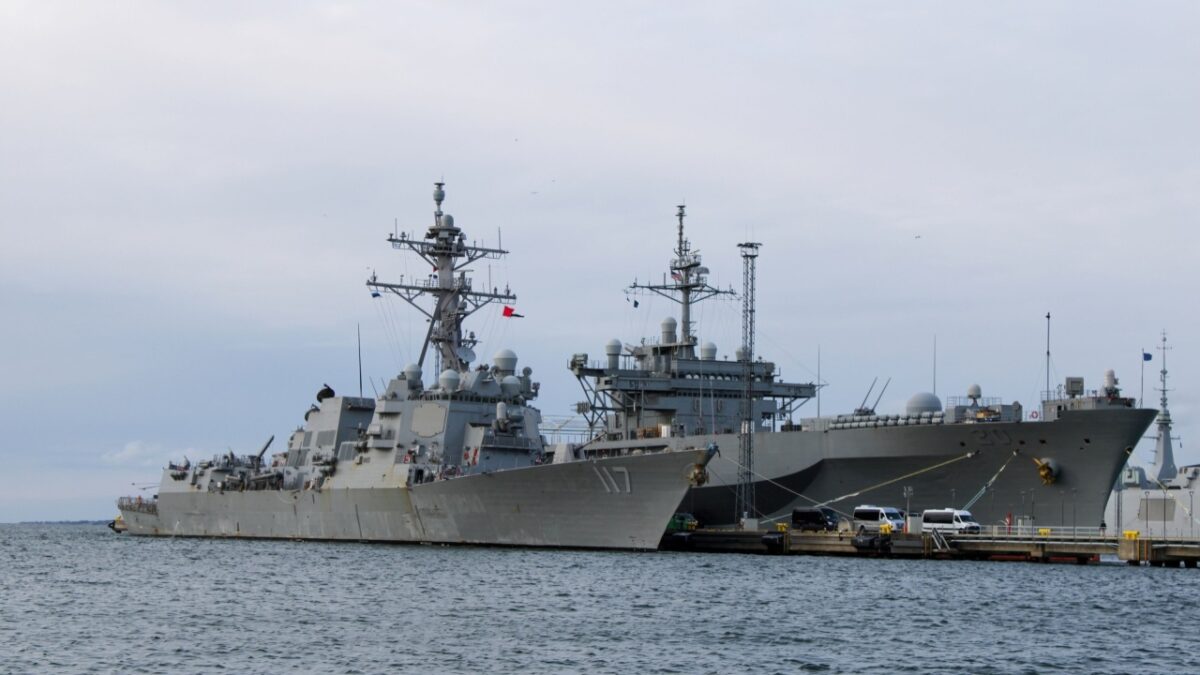
The United States says it will begin enforcing a naval blockade of Iranian ports within hours, a move that risks tipping a fragile ceasefire back into open conflict in the Gulf.
In a statement late Sunday, US Central Command said the blockade would apply to “all vessels of all nations” entering or leaving Iranian ports. The operation is due to begin at 1400 GMT on Monday.
The announcement comes days after a temporary truce was agreed to pause six weeks of fighting until April 22. That ceasefire now appears increasingly uncertain.
At the heart of the dispute is control of the Strait of Hormuz, a narrow shipping lane through which a significant share of the world’s oil and gas passes. Washington wants the route fully reopened. Tehran insists it retains authority over traffic.
American officials said the blockade would not interfere with ships travelling to non-Iranian ports through the strait. More detailed guidance, they added, would follow.
Still, the tone from Washington has been uncompromising. In a post on social media, Donald Trump said the US Navy would begin blocking vessels linked to Iran, adding that any attack on American forces or civilian shipping would be met with force.
Iranian leaders responded swiftly. Parliament speaker Mohammad Bagher Ghalibaf said the country would “not bow to any threats”, while navy chief Shahram Irani dismissed the blockade as “ridiculous”.
Earlier, Iran’s Revolutionary Guards warned they had full control over the strait and could trap any challenger.
The escalation follows the breakdown of high-level talks in Islamabad, the most direct negotiations between the two sides in decades. The American delegation, led by Vice President JD Vance, left frustrated after Iran refused to abandon what it calls its right to a civilian nuclear program.
“We made our final and best offer,” Mr Vance said after the meeting. “We’ll see if the Iranians accept it.”
Iranian officials painted a different picture. Foreign Minister Abbas Araghchi said the sides had been “inches away” from an agreement before talks broke down over what he described as shifting demands from Washington.
A lawmaker who attended the negotiations said the United States had pushed for control over parts of the strait’s economic benefits and demanded the removal of highly enriched uranium — conditions Tehran rejected.
Analysts warn the blockade could mark a return to active hostilities. Nicole Grajewski, a researcher at Sciences Po, said such a move would go far beyond symbolic pressure.
“This is not a minor signal,” she said. “It would effectively mean the war is back on.”
There are already signs of disruption. Iranian media reported that some tankers have turned away from the strait. Tehran has also been accused of limiting access to ships from certain countries, while allowing others, including China, to pass.
Markets reacted quickly. Oil prices surged in early trading, with both US and global benchmarks rising sharply on fears that supply could be squeezed if the waterway becomes unsafe.
Elsewhere in the region, the wider conflict continues to cast a long shadow. Pakistan, which hosted the talks, urged both sides to stick to the ceasefire. But there are concerns it may not hold, particularly with ongoing strikes linked to tensions involving Israel and Iran’s allies.
On the streets of Beirut, where recent violence has taken a heavy toll, there is little confidence that diplomacy alone can end the crisis.
“We can’t say the war has stopped because there are talks,” said Tamara, an 18-year-old cashier. “We mustn’t forget what has happened.”
For now, the focus shifts back to the waters of the Gulf, and whether the next move will bring calm, or another escalation.
About the Author