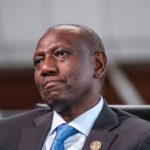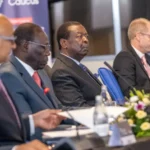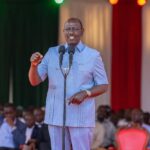
Fresh revelations by former lawyer Paul Mwangi have shed new light on the internal wrangles within the Orange Democratic Movement (ODM), suggesting that the party’s current divisions may have been part of a calculated long-term political strategy by Raila Odinga.
According to Mwangi, the ongoing split between factions aligned to Oburu Odinga and those led by Nairobi Senator Edwin Sifuna, Siaya Governor James Orengo, and Embakasi East Member of Parliament Babu Owino reflects deeper ideological and strategic differences within the party.
Diplomatic vs Militant Raila Factions
Mwangi argues that what is unfolding is essentially a clash between two distinct factions that both trace their roots to Raila’s political style.
He describes one group as a “political diplomatic faction”, aligned with cooperation and engagement, particularly in the context of the broad-based government arrangement with President William Ruto.
The other, he says, represents a “militant faction”, leaders who opposed the cooperation deal and maintained a more confrontational political stance.
“What you are seeing today is a fight between two Raila factions, a political diplomatic faction and a militant faction,” Mwangi explained, adding that both sides legitimately reflect different aspects of Raila’s political legacy.
Sifuna-Led Camp as a “Weaponised Exit Strategy”
In his most striking claim, Mwangi suggested that the faction opposed to the broad-based coalition, largely associated with Sifuna, Orengo and Babu, was deliberately preserved as a fallback plan.
According to him, Raila Odinga has historically avoided entering political arrangements without a contingency plan.
“Raila will not go into anything without an exit strategy,” Mwangi said.
He claimed that even as Raila engaged in cooperation with President Ruto, he maintained a parallel political force that could be activated if the alliance collapsed.
“That militant side worked as an exit strategy. If things did not work out with the cooperation side, he was ready to turn to his militant side,” he added.
Legitimacy Questions Rock ODM
Mwangi further noted that the current crisis has triggered questions about legitimacy within ODM, particularly regarding who truly represents Raila’s political direction.
However, he dismissed the notion that one faction is more authentic than the other, emphasizing that Raila’s political career has always embodied multiple strategies and ideologies.
“All factions are legitimate because Raila is a complex political character, and each group represents something he has stood for,” Mwangi argued.
The revelations come at a time when ODM is facing a major rift within its ranks especially with the latest party’s Special Delegates Convention that ratified Oburu as party leader, opposed by Sifuna and Co.
As the situation evolves, the balance between diplomacy and confrontation within ODM could shape not only the party’s future but also the broader trajectory of Kenyan politics.
About the Author