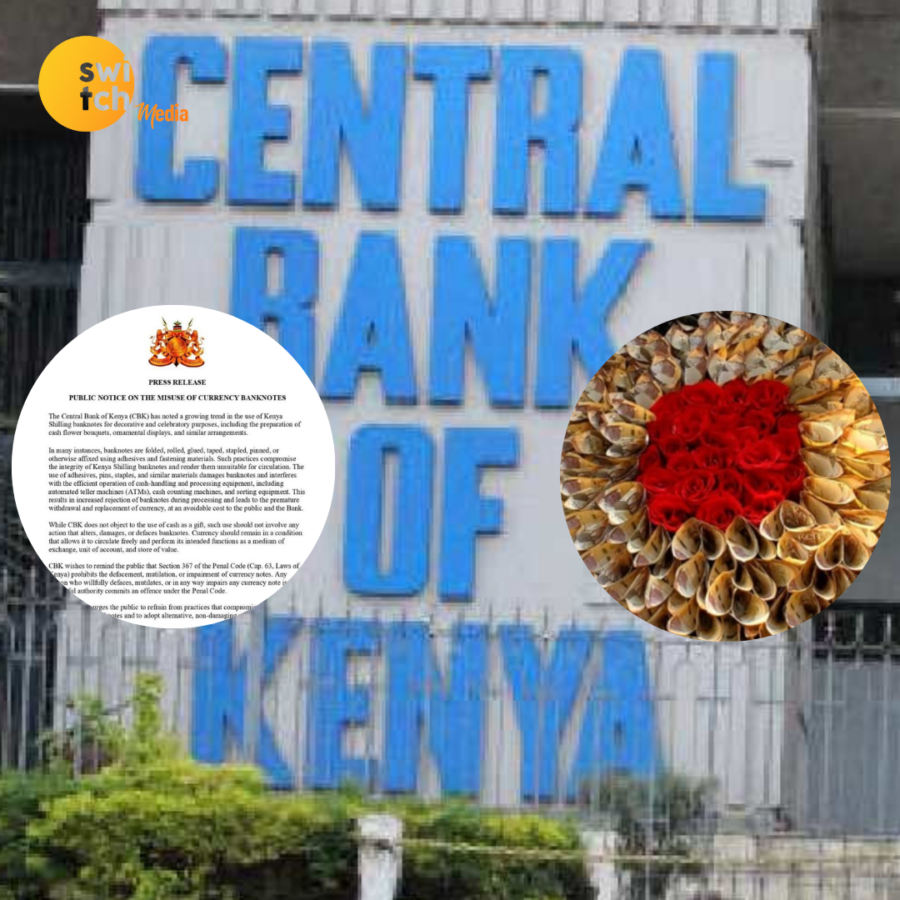
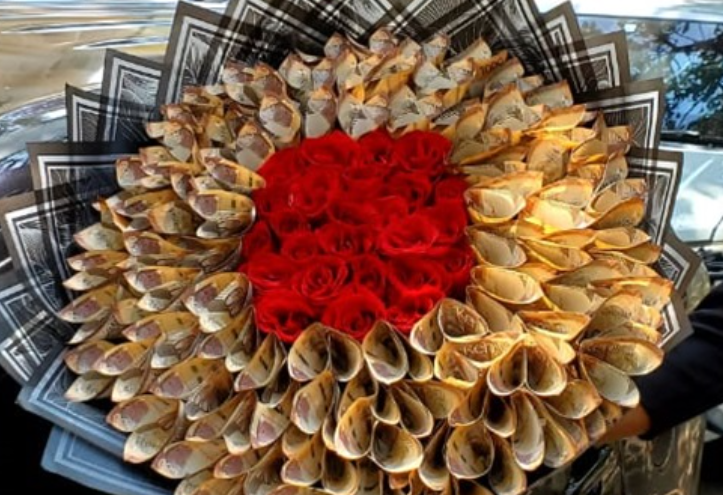
In a public notice issued on Monday, the Central Bank of Kenya warned Kenyans against using currency for decorative and celebratory displays, including the increasingly popular cash-filled flower bouquets. What may look festive, the regulator said, comes at a real cost to the country’s money supply.
The advisory follows a rise in cases where notes are folded, rolled, glued, taped, stapled or pinned into elaborate arrangements. According to the Bank, such handling damages the currency and shortens its life.
“The use of adhesives, pins, staples, and similar materials damages banknotes and interferes with the efficient operation of cash-handling and processing equipment,” the CBK said, citing disruptions to ATMs, counting machines and sorting systems.
At the heart of the warning is a simple concern: money must move. Once damaged, notes are often rejected by machines, forcing banks to pull them out of circulation earlier than planned. Replacing them, the CBK noted, creates avoidable costs for both the public and the Bank.
The regulator was careful to draw a line between gifting cash and defacing it. Giving money as a present, it said, remains perfectly acceptable. Altering or damaging it does not.
Banknotes, the notice stressed, must stay in a condition that allows them to serve their basic roles, as a medium of exchange, a unit of account and a store of value. When they cannot, trust in everyday transactions begins to fray.

There is also a legal edge to the warning. The CBK pointed to Section 367 of Kenya’s Penal Code, which makes it an offence to mutilate, deface or impair any currency note issued by lawful authority.
“Any person who willfully defaces, mutilates, or in any way impairs any currency note issued by lawful authority commits an offence under the Penal Code,” the Bank stated.
Rather than stifle celebration, the CBK urged creativity that does not involve damaging money. Alternative ways of presenting cash gifts, it said, can preserve both the sentiment and the shilling itself.
The notice, dated February 2, 2026, forms part of broader efforts by the Bank to protect the quality of notes in circulation. Public education and engagement with stakeholders will continue, it added, to maintain confidence in the national currency.
About the Author