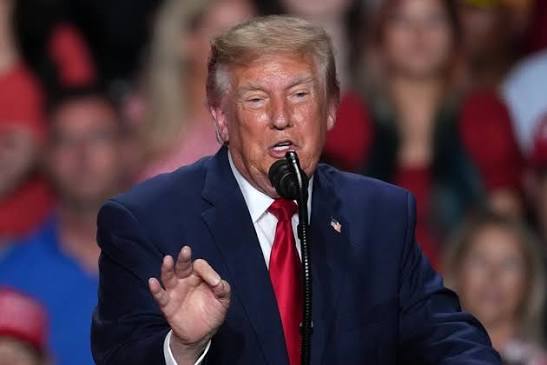
US President Donald Trump has called for Ukraine to elect a new leader, escalating his dispute with President Volodymyr Zelensky over a deal allowing Russian diesel exports to reach American markets.
Trump accused Zelensky of making the conflict more difficult to resolve by continuing Ukrainian attacks on Russian oil refineries. He also suggested that Kyiv needed a leader willing to negotiate an agreement with Moscow.
The remarks followed Zelensky’s criticism of Washington’s decision to ease sanctions on Russian diesel exports. The Ukrainian president argued that the move would give Moscow additional revenue to finance its war against Ukraine.
Speaking to reporters outside the White House on Saturday, Trump said Ukraine should stop attacking Russian refineries.
“He’d better damn well stop,” Trump said, before arguing that Ukraine needed a different leader who could reach a deal.
The exchange highlighted growing disagreements between Washington and Kyiv over how to end the war, which began with Russia’s full-scale invasion of Ukraine in February 2022.
Zelensky warns deal could fund Russia’s war
Zelensky has argued that allowing Russian diesel exports to resume would undermine efforts to restrict Moscow’s ability to sustain its military campaign.
He said the additional revenue could help Russia purchase military equipment and continue its attacks on Ukrainian cities.
His criticism came after fresh Russian strikes on Zaporizhzhia, which he cited as evidence that Moscow remained committed to its military offensive.
Zelensky held discussions with several international partners on Saturday, calling for concrete measures to protect Ukrainian civilians and European security.
The Ukrainian government has also maintained that Russia’s energy infrastructure can contribute to financing the invasion, making restrictions on its oil and fuel revenues an important part of the international response.
Moscow, meanwhile, has faced repeated Ukrainian drone attacks on its oil refineries, contributing to pressure on Russia’s domestic fuel production.
Trump defends move to ease sanctions
Trump confirmed on Friday that an agreement had been reached with Russia to suspend sanctions on its diesel exports until 7 April.
Under the arrangement he described, Russia would initially release 300,000 tonnes of diesel to American and international markets. A further 500,000 tonnes would follow in November, with additional deliveries planned afterwards.
Trump presented the agreement as part of his efforts to increase fuel supplies and bring down prices in the United States.
The move comes as global energy markets face disruption linked to the war involving Iran and the United States and Israel. The effective closure of the Strait of Hormuz has restricted a major route for global oil shipments, intensifying concerns about supply and prices.
Higher fuel costs have placed pressure on American households and businesses, adding to the political challenges facing Trump ahead of the US midterm elections.
However, critics argue that easing restrictions on Russian energy exports risks providing financial relief to Moscow at a time when Ukraine continues to face Russian attacks.
The competing priorities have exposed a difficult balance for Washington: addressing domestic fuel costs while maintaining pressure on Russia over its invasion of Ukraine.
European leaders push back
The proposed arrangement has also drawn criticism from European officials.
Kaja Kallas, the European Union’s foreign affairs chief, said easing sanctions would give Russia additional resources to continue the war.
She indicated that European foreign ministers intended to approve a new package of sanctions against Moscow, which she described as the largest since Russia launched its full-scale invasion.
The response underlined differences between the American approach to energy supplies and the European position that economic pressure remains necessary to constrain Russia’s military campaign.
The United Kingdom also expressed support for Ukraine. A Downing Street spokesperson said Prime Minister Andy Burnham had spoken with Zelensky and offered his solidarity.
According to the spokesperson, the two leaders supported an immediate ceasefire targeting attacks on energy infrastructure, alongside an end to Russian attacks on shipping in the Black Sea. Such measures, they argued, could help restore the flow of energy and food supplies to international markets.
Ukraine’s election question remains unresolved
Trump has previously called for new elections in Ukraine, including in December, arguing that voters should have an opportunity to choose whether Zelensky remains in office.
But Ukraine has been under martial law since Russia’s full-scale invasion in 2022. Elections have been suspended under the wartime arrangements, creating a significant legal and security obstacle to holding a national vote.
Any election would also have to contend with the practical challenges of a country at war, including displaced citizens, occupied territory and continuing military operations.
Trump’s latest comments therefore add another layer of tension to an already strained relationship between Washington and Kyiv.
For Zelensky, the immediate concern is that concessions on Russian energy exports could weaken efforts to limit Moscow’s capacity to wage war. For Trump, the agreement reflects an attempt to ease pressure on fuel supplies while pursuing a negotiated outcome to the conflict.
Whether the diesel arrangement will materially lower prices or change the course of the war remains uncertain. What is clear is that disagreements over sanctions, energy security and the terms of peace continue to complicate relations between the United States and Ukraine.
About the Author