China has given Kenya a KSh259 million grant to help ease the effects of drought and strengthen preparations for possible Ebola outbreaks, as the country steps up efforts to protect public health.
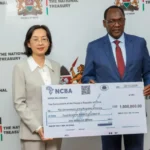
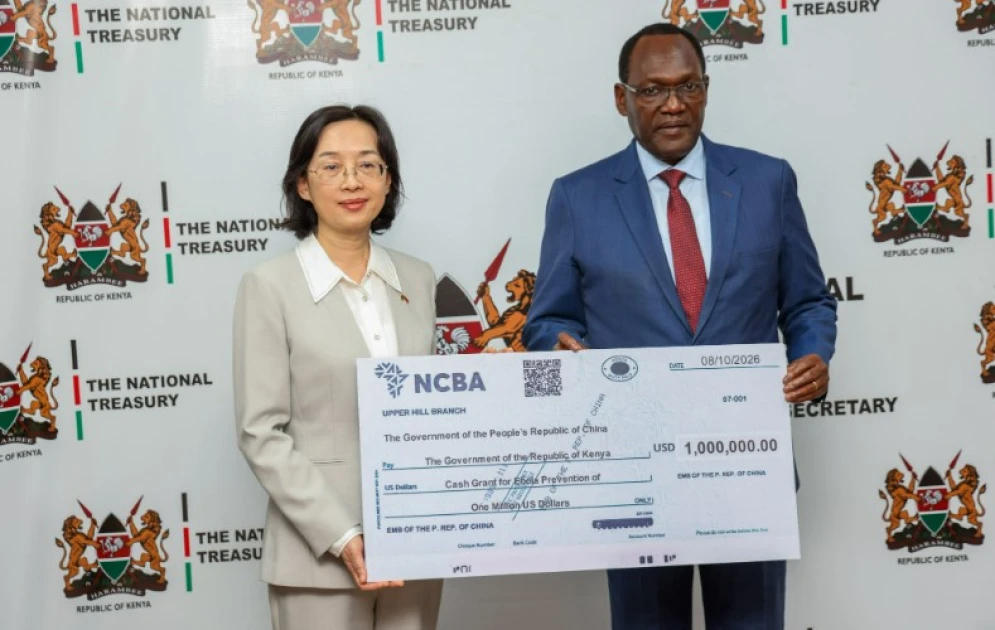
The funding, equivalent to US$2 million, was formally handed over at the National Treasury on Thursday, 8 October. Treasury Principal Secretary Chris Kiptoo received the grant from Chinese Ambassador to Kenya Guo Haiyan.
The assistance comes as Kenya faces two pressing challenges: the need to address drought-related hardship and growing concerns over its ability to detect and contain imported cases of Ebola.
Grant split between drought relief and Ebola response
According to the National Treasury, the grant has been divided equally between the two priorities.
Kenya will receive US$1 million, approximately KSh129.5 million, for drought mitigation. The remaining US$1 million will support preparedness and response measures for potential Ebola outbreaks.
The drought allocation is intended to support efforts to address the effects of dry conditions, while the health funding will contribute to the country’s capacity to respond to the threat of infectious disease.
The Treasury did not provide further details on the specific projects or timelines for spending the funds in its announcement.
Kenya steps up Ebola preparedness after reported case
The grant comes as Kenya intensifies its response to Ebola following the reported death of a patient who had travelled from the Democratic Republic of Congo and later died at Nairobi Hospital.
The case has heightened attention on disease surveillance, early detection and the country’s readiness to contain possible further infections.
The government has outlined plans to mobilise more than KSh70 billion for Ebola preparedness and response. The National Treasury has also set aside an initial KSh2.6 billion for emergency interventions.
Additional support is expected from international partners. The government anticipates KSh21 billion in assistance from the United States and KSh51.8 billion in emergency financing from the World Bank through its Rapid Response Option.
The proposed spending is expected to support disease surveillance, early detection, training for community health workers and the procurement of essential medical supplies.
Bio-isolation facility faces legal hurdles
Kenya’s wider Ebola response has also encountered legal challenges over a proposed US-funded bio-isolation facility at Laikipia Air Base.
The courts have suspended plans to establish the facility following public concerns about potential risks. The dispute adds another challenge as authorities seek to strengthen the country’s capacity to manage infectious disease threats.
China’s latest grant provides additional financial support for both public health preparedness and drought mitigation. However, the broader response will depend on how quickly the funds are deployed and whether the planned interventions reach the communities and health facilities that need them.
The assistance also underscores the role of international partners as Kenya works to address immediate emergencies while strengthening its preparedness for future public health threats.
About the Author