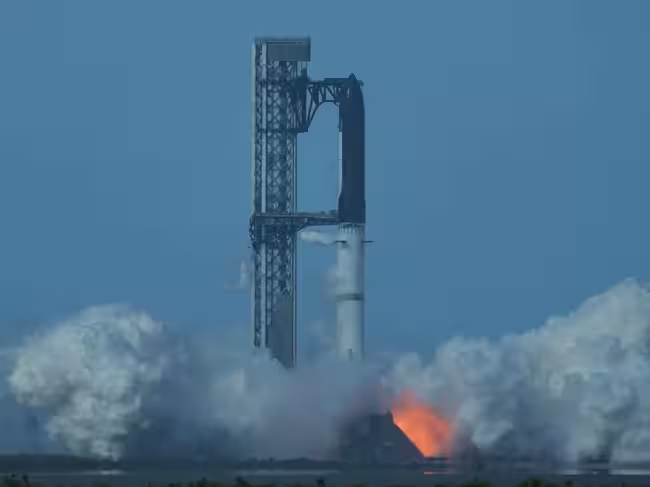
SpaceX is preparing for a major test. Starship is set to attempt orbit. It will be the first such attempt.
The launch is planned for Monday. It will lift off from Starbase, Texas. The flight is the 14th test. Earlier flights used suborbital paths.
A Bigger Test
This mission is more ambitious. Starship will first climb on a suborbital path. An engine burn will then be used to enter orbit.
The target orbit is about 275 kilometres up. A speed near 28,000 km/h will be needed. The flight could last nearly 10 hours. Six orbits of Earth are planned.
The spacecraft will also carry satellites. Twenty-six Starlink V3 satellites are due to be deployed. They are part of SpaceX’s next-generation network.
The company successfully tested Starlink V3 deployment during Flight 13. That mission, however, remained on a suborbital path.
Booster Will Splash Down
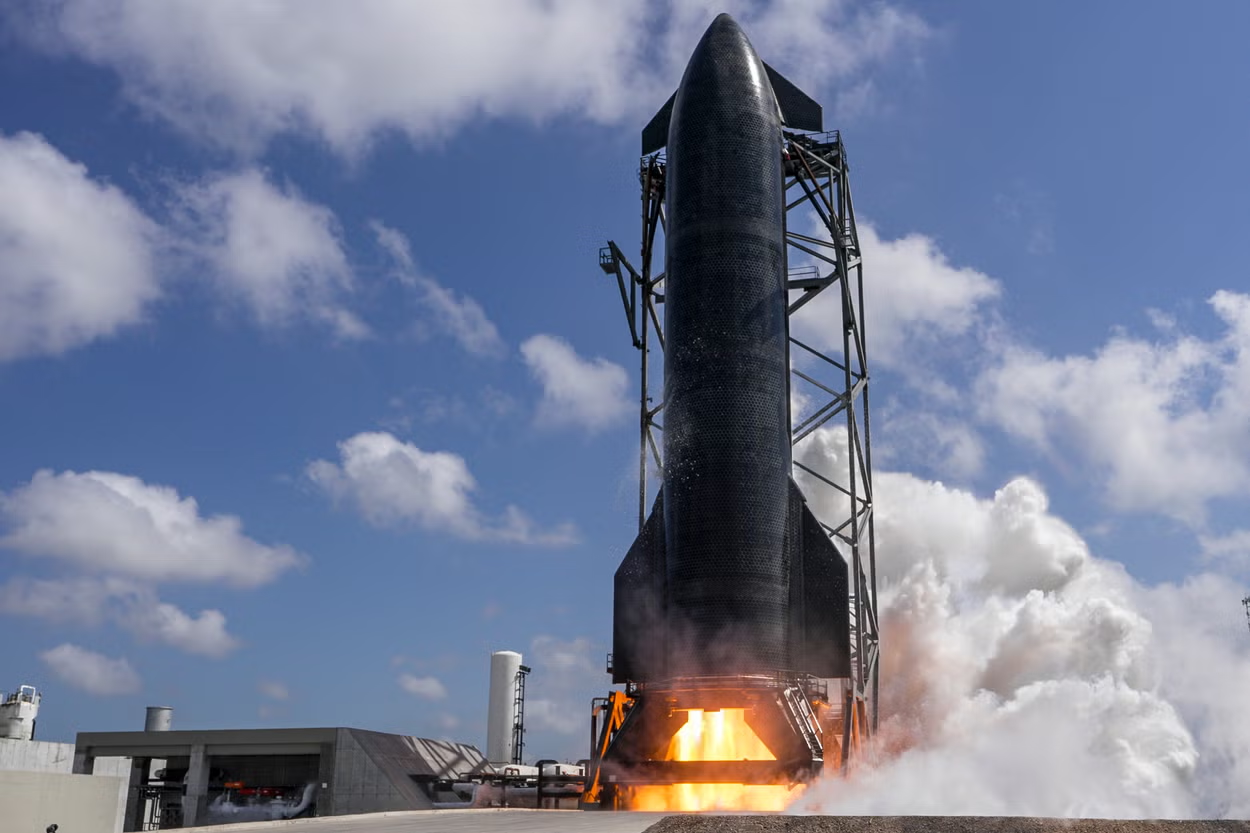
The Super Heavy booster will separate soon after launch. It is not planned to be caught this time. Instead, it is expected to splash down in the Gulf of Mexico.
The Starship spacecraft will continue its flight. A controlled return to Earth is planned later. The spacecraft is expected to splash down in the Pacific Ocean.
A Crucial Milestone
Reaching orbit is not the only goal. Several systems will be tested. The heat shield will face another major test.
An in-space engine relight is also planned. Such tests are important for future missions. Starship is being developed for more than satellite launches. It is also intended for future Moon and Mars missions.
NASA has selected Starship for planned lunar missions. More testing will be needed before those missions can proceed.
Risks Remain
The test will carry major risks. Starship has been developed through repeated flight tests. Earlier missions have produced both progress and failures.
SpaceX has continued to modify the vehicle. Flight 13 showed progress with the V3 vehicles and Starlink deployment.
But the first orbital attempt adds new demands. The spacecraft must reach orbit and then survive its return.
For SpaceX, the mission will provide data even if every goal is not achieved.
The company has described Starship as a fully reusable system. The latest test is another step towards proving that design in flight.
About the Author