
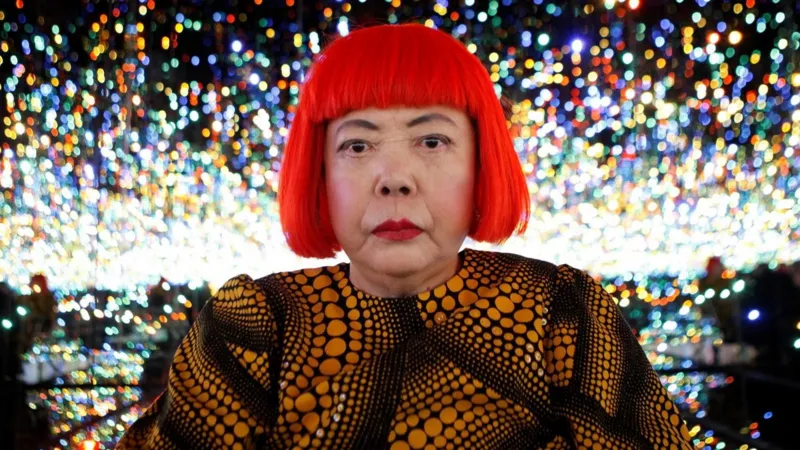
Yayoi Kusama, the Japanese artist whose endless fields of polka dots, mirrored rooms and brightly coloured pumpkins made her one of the most recognisable figures in contemporary art, has died at 97.
Kusama died at a hospital in Tokyo on Aug. 14, according to a statement from her company issued on Thursday. No cause of death was given.
Her death closes the extraordinary career of an artist who spent decades moving between obscurity and fame. She continued to paint until her final days, according to her studio.
“Throughout an extraordinary lifetime devoted entirely to artistic creation,” her company said, Kusama built an international career spanning visual art, performance, fiction and poetry.
From Hallucinations to Art
Born in Matsumoto, Japan, in 1929, Kusama began making art as a child. She described experiencing vivid hallucinations involving lights, flowers and patterns. Those visions later became central to her work.
In one account of her childhood, she recalled seeing a floral pattern spread across a room and eventually cover her own body.
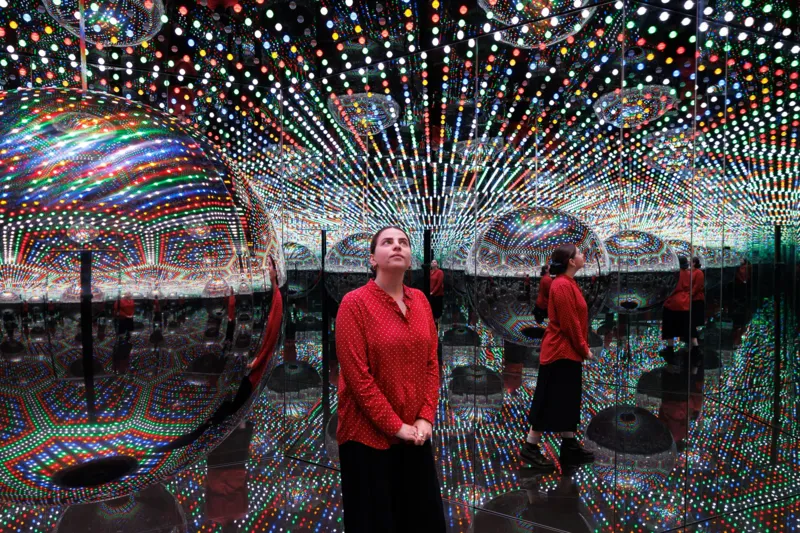
Her fascination with repetition became a defining feature of her art. Dots multiplied across canvases, sculptures and rooms. Mirrors created spaces that appeared to stretch without end.
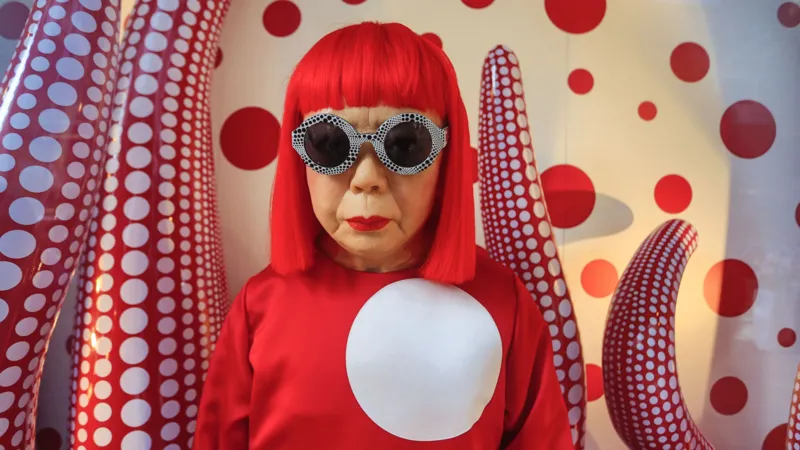
Her famous Infinity Mirror Rooms eventually became among the most popular contemporary art installations in the world.
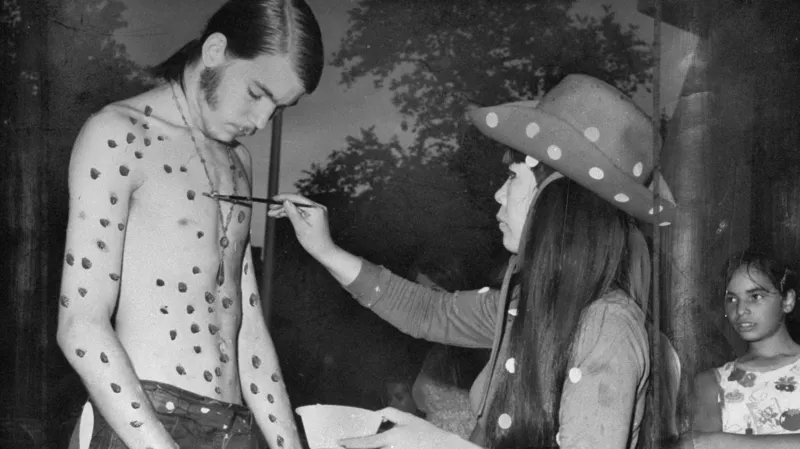
Kusama moved to New York in 1957, where she entered the experimental art scene of the 1960s. She produced paintings, soft sculptures and performances, including provocative works involving nudity and anti-war messages.
Her work was not always welcomed.
The New York art world was dominated largely by men, and Kusama later expressed frustration that ideas resembling hers were embraced by male artists who received greater recognition. She eventually returned to Japan in 1973.
A Return to Japan
Kusama voluntarily entered a psychiatric hospital in Tokyo in the late 1970s. She continued to work from a nearby studio and remained deeply committed to painting.
Rather than ending her career, the arrangement gave her a stable environment in which to continue creating.
“I still see hallucinations even now,” Kusama said in 2017. “Dots come flying everywhere.”
Over time, the artist who had once struggled for recognition became a global cultural figure.
Her work was exhibited at major museums and galleries around the world. Her distinctive visual language also moved beyond the art world, appearing in fashion and commercial collaborations, including projects with Louis Vuitton.
The Late-Life Rise to Global Fame
Kusama’s greatest recognition came relatively late in her life.
Her mirrored installations became particularly popular with younger audiences, helped by social media and the appetite for immersive experiences. Visitors photographed themselves surrounded by lights, reflections and seemingly infinite spaces.
Her pumpkins also became an enduring symbol of her work.
Kusama once explained her affection for them simply: “Pumpkins speak to me.”
The market followed the public’s enthusiasm. One of her paintings sold for about $10.5 million at auction in 2022, placing her among the most commercially successful female artists.
Japan, too, eventually embraced an artist whose work had once seemed too unconventional.
In 1993, Kusama represented Japan at the Venice Biennale. In 2016, she received the country’s Order of Culture, one of Japan’s highest honours for cultural achievement.
Her influence stretched across painting, sculpture, installation, performance and literature. Yet the themes remained remarkably consistent: repetition, infinity, identity, love and the boundaries between the individual and the world around them.
Kusama’s studio said she continued painting until the end of her life.
“She never put down her paintbrush,” the statement said, adding that her work would continue to offer “hope and strength” to people around the world.
For an artist who spent much of her early career fighting to be seen, Kusama leaves behind something difficult to overlook: an artistic language that turned private visions into a global spectacle.
About the Author