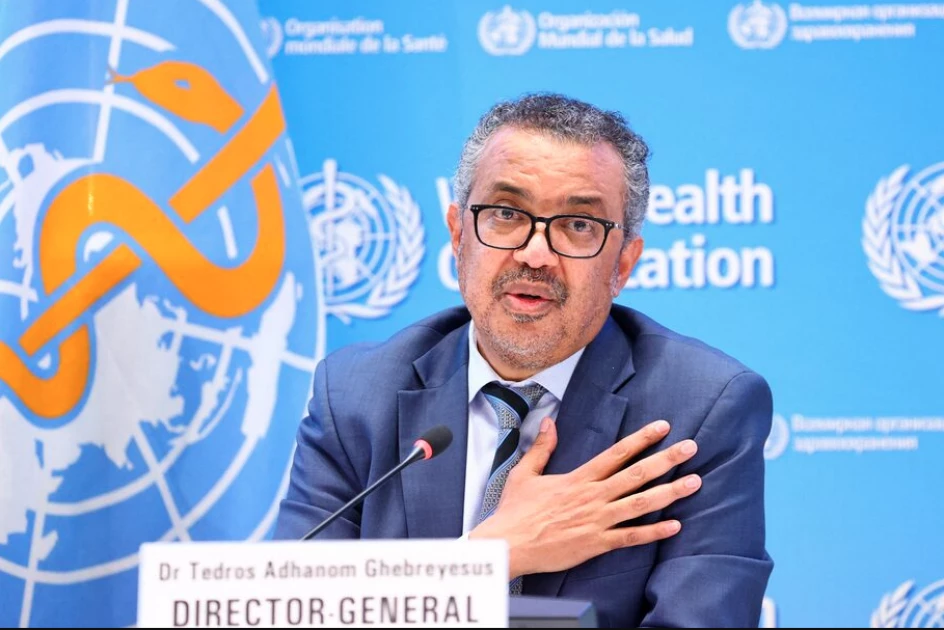
The head of the World Health Organization has travelled to the Democratic Republic of Congo for high-level talks as the country grapples with one of its most serious Ebola outbreaks in recent years.
Tedros Adhanom Ghebreyesus, the WHO Director-General, arrived in Kinshasa this week and is expected to meet President Félix Tshisekedi as health officials work to contain a fast-growing epidemic that has stretched the country’s response capacity.
The visit comes as concern grows over the speed of the outbreak. Since the Democratic Republic of Congo declared the epidemic on May 15, infections have continued to rise, particularly in the country’s conflict-affected east.
According to the WHO, the outbreak has so far resulted in 3,874 confirmed cases and 1,751 deaths. Nearly 90 per cent of infections have been recorded in Ituri province, where Tedros also visited in late May to assess the situation on the ground.
Health officials say the current outbreak is being driven by the Bundibugyo strain of the Ebola virus, a variant for which there is currently no approved vaccine or treatment. That has made efforts to slow transmission especially difficult in remote areas where healthcare services are already limited.
“The outbreak is unfortunately still expanding beyond the capacity of the response,” WHO spokesperson Tarik Jasarevic told reporters in Geneva.
“We need more support in terms of finances, but also other resources to scale up all areas of response: treatment capacity, field investigation teams, safe burial teams and community workers,” he said.
The latest epidemic is unfolding across five eastern provinces where years of insecurity have weakened public services and made access to healthcare difficult. Aid organisations have repeatedly warned that conflict, population movement and limited medical infrastructure are complicating efforts to trace contacts and contain the disease.
The current crisis is smaller than the country’s deadliest Ebola outbreak between 2018 and 2020, when nearly 2,300 people died from about 3,500 confirmed infections. However, public health experts say the rapid pace of the latest outbreak has heightened concern and increased pressure for an expanded international response.
There are, however, signs of progress in the search for medical tools against the Bundibugyo strain.
Canada has authorised clinical trials of a vaccine developed by US pharmaceutical company Moderna. The vaccine, known as rVSV Bundibugyo and described by the WHO as one of the most promising candidates, is also being developed with Singapore-based Hilleman Laboratories.
Separately, researchers at the University of Oxford recently administered the first dose of another experimental vaccine built on the same technology used in the AstraZeneca Covid-19 vaccine.
Scientists are also studying several potential treatments, including the antiviral medicines remdesivir and obeldesivir, alongside the monoclonal antibody therapy MBP134.
Ebola spreads through direct contact with the bodily fluids of an infected person and can cause severe haemorrhagic fever. Over the past five decades, the virus has claimed more than 15,000 lives across Africa.
With infections continuing to climb, health officials say stronger international backing will be essential if the Democratic Republic of Congo is to bring the outbreak under control before it spreads further.
About the Author