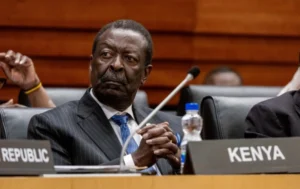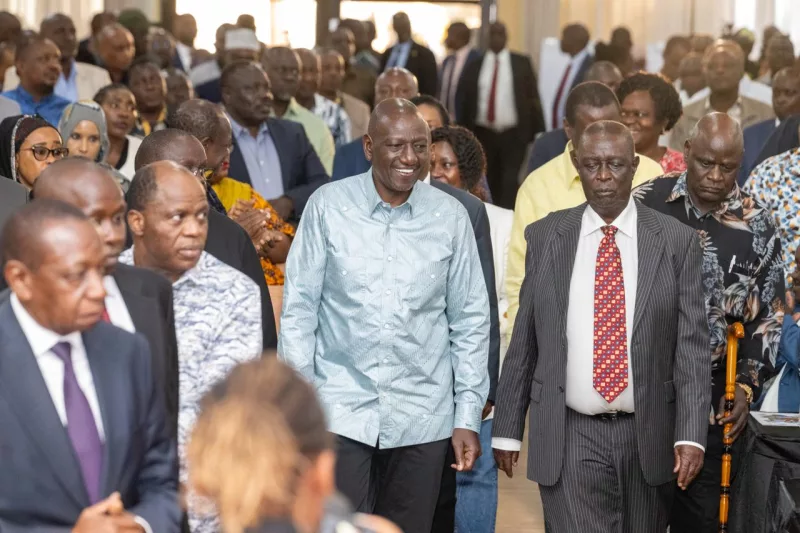
Kenya’s political leadership has gathered in Naivasha for a retreat that comes at a significant moment for the country: the final stretch of Vision 2030 and the search for what should come after it.
The Joint Broad-Based Alliance Parliamentary Group and Governors Retreat is bringing together political leaders to take stock of the government’s record, discuss ways of speeding up development and consider a longer-term national direction.
The meeting comes less than two weeks after President William Ruto called for a national conversation on a new development plan to succeed Vision 2030.
The timing gives the Naivasha gathering significance beyond the usual political retreat. It places questions about Kenya’s next economic and social chapter alongside the more immediate business of government.
President Ruto has argued that Kenya needs a development charter that can survive changes in political leadership and electoral cycles.
“This conversation belongs to each one of us, and to all of us,” he said in a national address on July 30, calling for a people-driven process to shape the country’s future.
The President has said nationwide consultations on the proposed new vision are due to begin on August 12, with political leaders, professionals, young people, businesses, civil society, faith groups and other sections of society expected to participate.
The Naivasha discussions therefore arrive just days before that wider public process begins.
A familiar blueprint nears its deadline
Vision 2030 has been Kenya’s central long-term development blueprint since it was launched in 2008 under President Mwai Kibaki.
Its ambition was straightforward: make Kenya a newly industrialising, middle-income country with a higher quality of life by 2030.
The plan was built around economic, social and political pillars, with infrastructure, technology, human resources, security and public-sector reforms supporting them.
Nearly two decades later, the country is preparing for the end of that planning period.
The government says Vision 2030 has delivered important gains while acknowledging that some of its original ambitions have not been fully realised.
In his July address, Mr Ruto pointed specifically to the goal of attaining upper-middle-income status by 2030, saying it remained unfinished.
He presented that gap not as a reason to abandon long-term planning but as a reason to examine what worked, what did not and what Kenya should do differently in the decades ahead.
That debate is likely to shape the new national vision now being discussed.
A policy document presented to the President in July proposed a long-term path towards a modern, industrialized and high-income economy. Kisumu Governor Anyang’ Nyong’o has been involved in the preparation of the proposed blueprint.
But the bigger question is whether a new plan can overcome a problem that has confronted previous national strategies: the distance between ambitious targets and what citizens experience in their daily lives.
Development claims meet the test of delivery
For the leaders meeting in Naivasha, the immediate challenge is not simply to produce another set of targets.
It is to show how existing government programmes can translate into jobs, better services, stronger businesses and improved living standards.
President has repeatedly defended the broad-based arrangement between his United Democratic Alliance and the Orange Democratic Movement as a vehicle for delivering development.
Government officials have pointed to investments in roads, electricity, markets, education, healthcare and railway infrastructure as evidence of progress.
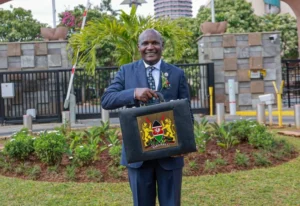
The administration has also argued that economic conditions have improved, citing lower inflation, a more stable currency and falling borrowing costs. In his national address, Ruto said foreign exchange reserves had risen above $15 billion and that Kenya attracted $3.2 billion in foreign direct investment in 2025.
Those claims, however, form only part of the national conversation.
For many Kenyans, the success of any development strategy will ultimately be measured less by government statistics than by the cost of living, access to employment, the quality of public services and whether economic growth creates opportunities outside the country’s major urban centres.
The political environment also adds another layer to the discussions.
Kenya is less than a year away from the 2027 General Election. The broad-based government has brought together politicians who previously stood on opposite sides of the political divide, but the arrangement remains politically contested.
That means the Naivasha retreat sits at the intersection of two conversations: how to govern Kenya over the long term and how the country’s political alliances will evolve before the next election.
The bigger question: What kind of Kenya comes next?
The retreat’s emphasis on exchanging ideas and accelerating development reflects a broader question now confronting Kenya’s leadership.
What should the country look like after 2030?
The answer will have to go beyond roads and buildings. It will also involve jobs, education, healthcare, housing, food security, technology, manufacturing and the ability of young people to build sustainable livelihoods.
The government has said the new national vision should be broader than any single administration and should be anchored in the Constitution.
President Ruto has argued that the State should measure its success by whether it expands opportunity and improves the lives of citizens.
That ambition will now face a more difficult test: public participation.
The proposed consultations are intended to give Kenyans a direct role in deciding the country’s long-term priorities. That process could determine whether the next blueprint is seen as a government programme or as a genuinely national project.
The history of Vision 2030 offers a useful lesson.
The original blueprint itself was developed through consultations involving experts and citizens from across Kenya before its launch in 2008.
Nearly 20 years later, the country is being asked to have that conversation again.
For the leaders in Naivasha, the task is to turn broad political agreement into practical choices.
For the public, the question is simpler.
After Vision 2030, what will actually change and how soon will ordinary Kenyans feel it?
The answer may be shaped in Naivasha, but it will ultimately have to be tested far beyond the conference rooms.
About the Author