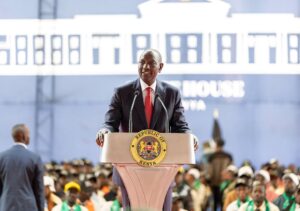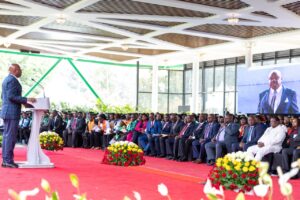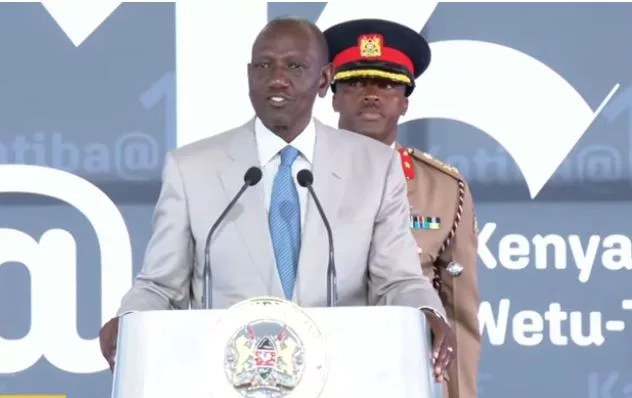
President William Ruto used Kenya’s Katiba Day celebrations on Thursday to challenge leaders and public institutions to show that the Constitution is being felt in the daily lives of citizens, rather than simply being celebrated each year.
Speaking at the Kenyatta International Convention Centre in Nairobi, President Ruto said the annual commemoration should be a time for the country to take stock of how far it has come since the 2010 Constitution was promulgated.
“Katiba Day must be more than an anniversary; it must be a day of national accounting,” he said.
His remarks placed the focus on implementation as Kenya marked 16 years of the Constitution. The occasion is intended not only to commemorate the document’s adoption but also to reflect on the rights, freedoms and system of government it established.
President Ruto questioned whether the country had fully honoured those commitments and whether institutions were being held to account for how they exercise public power.
He said the Constitution has a dual purpose: it creates offices and gives institutions authority, while also placing limits on that authority.
“The Constitution serves two equally important principles: it establishes offices and restrains power,” he said.
For President, the measure of constitutional progress should be visible in ordinary life. He pointed to access to healthcare, clean water, education and decent housing as some of the clearest indicators of whether the promises made in the Constitution are reaching citizens.
“The true test of constitutional implementation is not how often we quote the Constitution, but how closely the daily experiences of Kenyans reflect its promise,” he said.
He also cautioned against treating the gradual fulfilment of constitutional rights as a reason for putting those commitments off indefinitely.
“Progressive realisation of constitutional rights cannot mean indefinite postponement,” President Ruto said.
The President’s message comes as Kenya continues to debate the pace of constitutional implementation, the performance of public institutions and the delivery of basic services.
Katiba Day therefore offers a moment for both government and citizens to look beyond ceremonies and assess what has changed since 2010 and what remains unfinished.
For many Kenyans, the Constitution’s success will ultimately be judged less by speeches and anniversaries than by whether its promises are reflected in their everyday lives.
About the Author