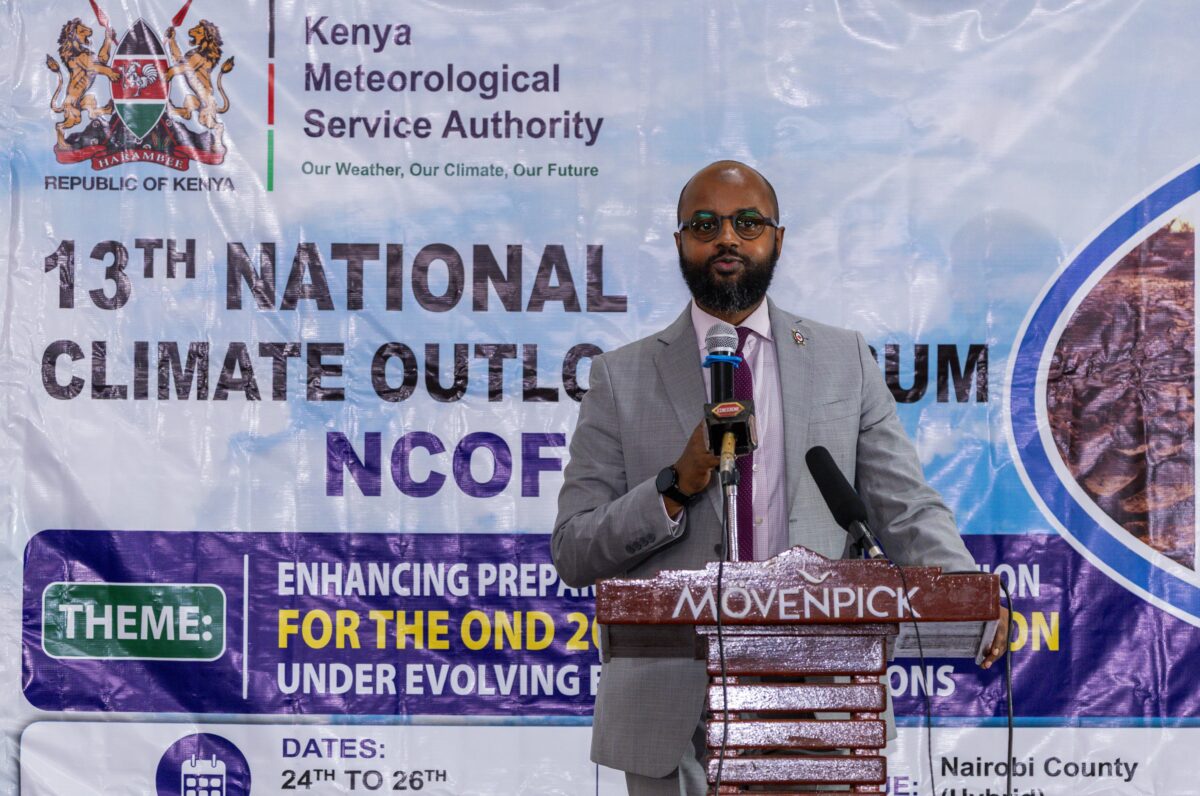
NAIROBI — Kenya’s climate warning system will mean little if forecasts remain on paper, Kenya Red Cross Society Secretary General Dr Ahmed Idris said on Monday, as authorities prepared for potentially heavy October-to-December rains.
Dr. Idris urged climate experts and policymakers to turn seasonal forecasts into clear decisions that households, businesses and public institutions can act on.
His call came as the 13th National Climate Outlook Forum opened in Nairobi, with authorities preparing for a rainy season that could affect up to 1.5 million people and displace about 500,000 under a worst-case scenario.
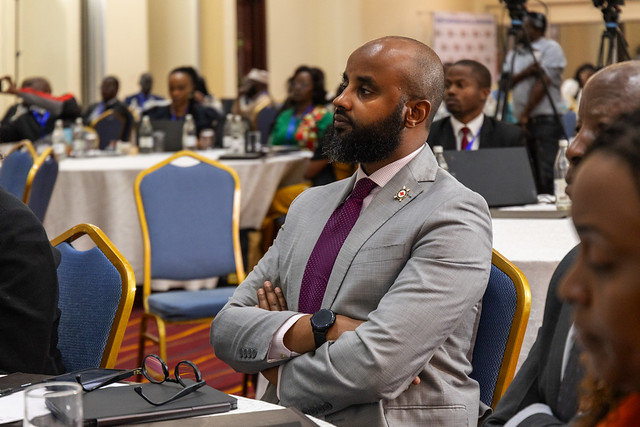
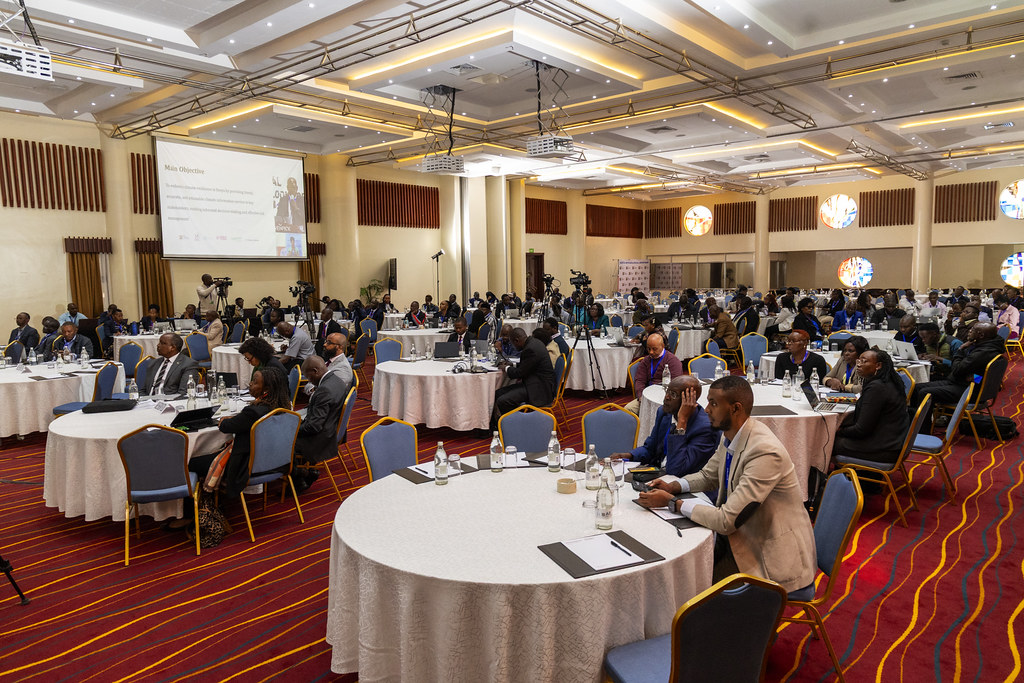
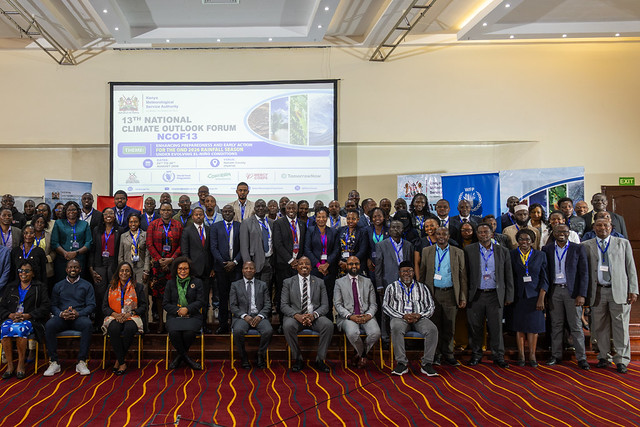
The three-day forum brought together government agencies, meteorologists, humanitarian organizations, development partners, the private sector and civil society to prepare for the October-November-December, or OND, rains.
“We will be advising people on what to do with their lives. We will be advising the country on how the economy ought to be organized the next couple of months,” Dr. Idris said.
From forecast to action
Dr. Idris said the forum should not end with the release of a weather forecast. Instead, he said, the information should be interpreted according to the risks facing particular communities and sectors.
That means a forecast for heavy rainfall should lead to different decisions in agriculture, transport, health, education and disaster management.
The approach is consistent with the wider purpose of Kenya’s National Climate Outlook Forum, which brings producers and users of climate information together to develop sector-specific advisories and action plans.
Dr. Idris said the timing of the coming rainy season makes early action particularly important.
Schools are expected to reopen. National examinations will take place. Millions of people will be travelling. Political activity will also increase as Kenya moves towards the 2027 General Election.
Those overlapping pressures could make disruptions caused by floods or landslides more difficult to manage.
Authorities prepare for worst case
The National Disaster Operations Centre has already begun planning for the possibility of severe weather.
NDOC Director Col. (Rtd) David Samoei said authorities were preparing for flooding, landslides, drowning incidents, damaged bridges, dam failures and disruption to transport, water, electricity and communication networks.
“We are planning on the worst case,” Samoei said.
Areas being closely monitored include Mandera, Wajir, Garissa, Tana River, parts of the Coast, Elgeyo-Marakwet, Baringo, Murang’a, Kiambu, Kisumu and Busia.
Murang’a, Elgeyo-Marakwet and Kiambu are considered particularly vulnerable to landslides, while several other areas face significant flood risks.
The government is also working with county authorities and the Kenya Defence Forces to prepare rescue operations in places that could become inaccessible by road.
Officials are considering the pre-positioning of food and other essential supplies and identifying evacuation centres before the rains begin.
Samoei also urged residents, particularly in towns and cities, to keep drainage channels and waterways free of waste to reduce the risk of flooding.
El Niño adds to concern
The preparations follow regional climate outlooks pointing to wetter-than-normal conditions during the OND season.
The IGAD Climate Prediction and Applications Centre said last week that El Niño had developed and was expected to strengthen during the remainder of 2026. It identified eastern Kenya among the areas where the likelihood of wetter-than-normal conditions was particularly high.
Kenya’s meteorological authorities have cautioned, however, that El Niño alone does not determine rainfall patterns.
Kenya Meteorological Service Acting Director Edward Muriuki said other climate factors were also being monitored before the country’s detailed seasonal forecast is issued.
“It is one thing to communicate this information, but it should be understandable,” Muriuki said.
That distinction matters. A seasonal forecast can indicate the broad direction of weather conditions, but the effects can vary significantly from one county to another.
The cost of waiting
Margaret Oduk, head of the UNEP Liaison Office to the African Union Commission and the UN Economic Commission for Africa and representative to Ethiopia, called for a similar shift towards early action.
She said governments and communities should prepare for hazards before they become disasters.
The message is increasingly familiar across climate and humanitarian planning: warnings only save lives when people have the information, resources and time to act.
For Dr. Idris, moving beyond the language of probability and putting the forecast into the hands of people who must make decisions.
The final national OND forecast is expected to provide more detailed information on rainfall patterns and their likely effects. Sector-specific advisories are also expected to guide planning in areas including agriculture, food security, livestock, water, health, transport, infrastructure and disaster management.
For a country already familiar with the cost of floods and landslides, the test will not simply be whether Kenya gets the forecast right. It will be whether the warning reaches communities early enough and whether they can act on it.
About the Author