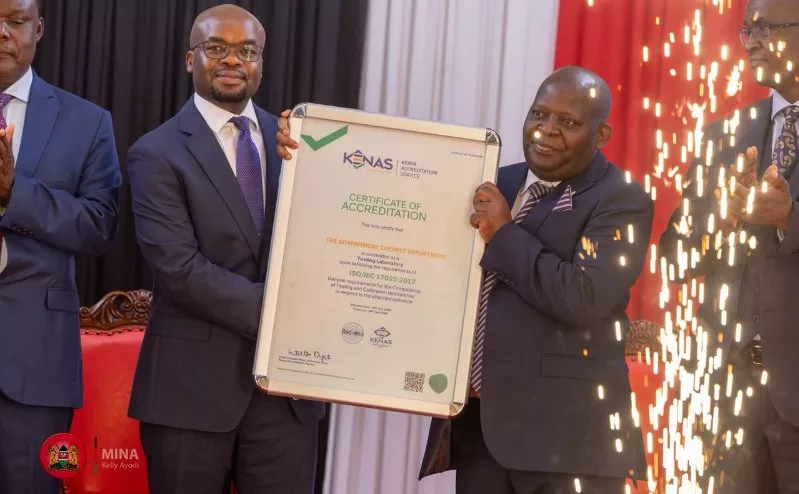
Kenya’s Government Chemist Department has secured international laboratory accreditation after nearly three years of assessment, a move officials say should strengthen confidence in scientific evidence used in courts and investigations.
The department formally received its ISO/IEC 17025 Testing Laboratory Accreditation Certificate from the Kenya Accreditation Service (KENAS). It attained the accreditation in June 2026.
The standard sets requirements for laboratory competence and quality. KENAS has previously said accreditation under ISO/IEC 17025 helps ensure forensic results are accurate, credible and capable of standing up to scrutiny in court.
At a ceremony marking the presentation of the certificate, Raymond Omollo, the Principal Secretary for Internal Security and National Administration, said the accreditation would give greater weight to the work of Government Chemist experts.
Forensic analysts can be called to court to explain how their findings were reached. They can also face questions over whether their laboratory meets recognised standards.
“The official presentation of the ISO/IEC 17025 Testing Laboratory Accreditation Certificate by KENAS affirms that scientific work undertaken by one of Kenya’s most important national laboratories has been independently assessed,” Raymond Omollo said.
Evidence under scrutiny
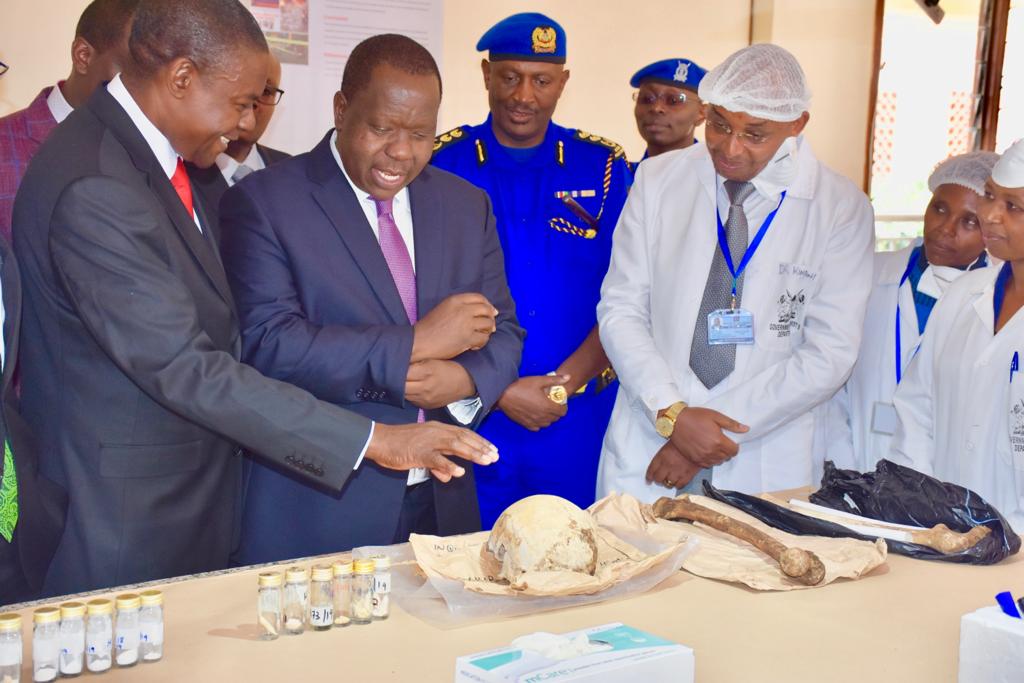
The Government Chemist plays a role well beyond criminal investigations.
Its work covers forensic science and analytical laboratory services. Its findings can be relevant to criminal cases, public health, environmental protection, consumer safety and regulatory enforcement.
For investigators and prosecutors, laboratory evidence can help establish what happened in a case. But its value depends on whether the testing and results can withstand scrutiny.
Raymond Omollo said forensic examinations can influence whether an investigation progresses and whether evidence can ultimately be relied upon in court.
“Forensic examinations can determine whether an investigation moves forward, whether evidence can be relied upon and, ultimately, whether justice can be done,” he said.
The department also handles laboratory work with implications for public health, including suspected poisoning and the testing of food, medicines, agricultural products and industrial chemicals.
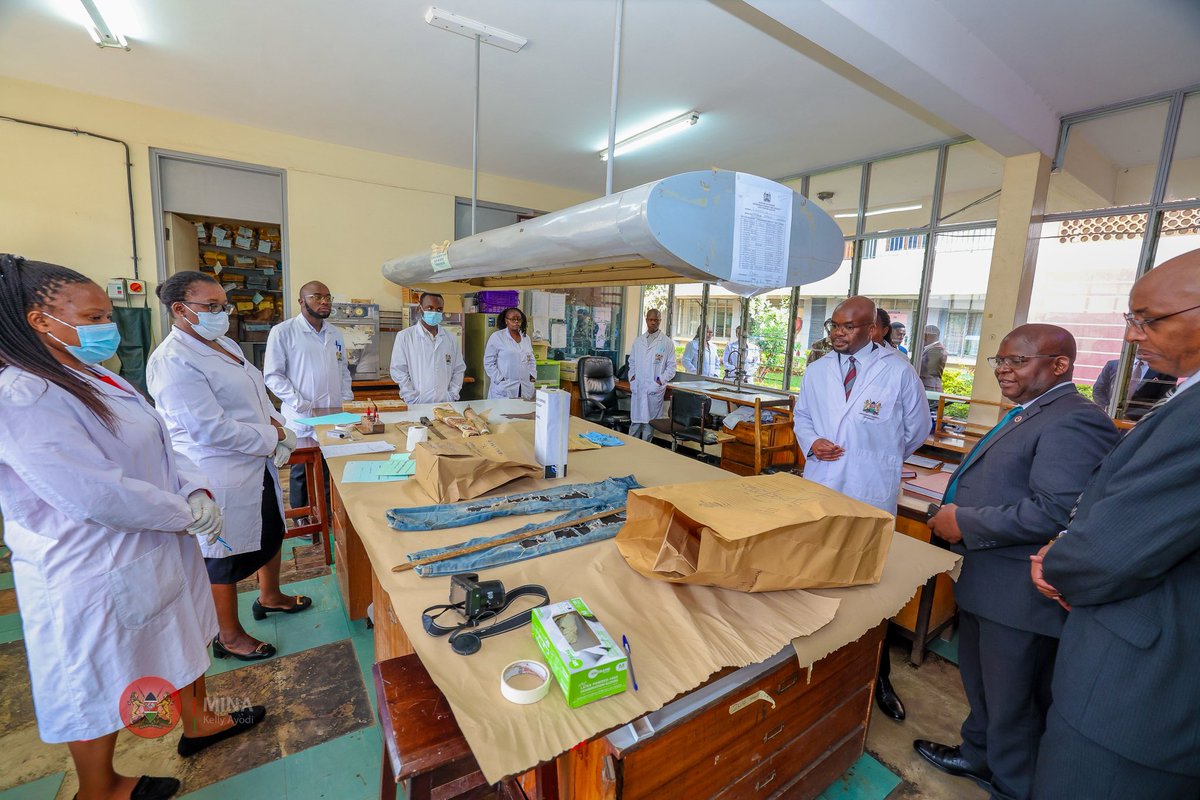
Accreditation is not a permanent guarantee
The new status does not mean the department can now relax its standards.
The accreditation is valid for four years, but the laboratory must continue meeting the required conditions. Failure to do so could result in the accreditation being withdrawn.
Raymond Omollo urged government agencies to make greater use of the Government Chemist rather than building separate facilities that duplicate its capabilities.
He said closer cooperation could allow institutions to share expertise, technology, data and infrastructure while reducing unnecessary public expenditure.
He also called for the department to take on a wider role in scientific research.
“This accreditation is not an end in itself,” Omollo said. “The real test begins with what we have done today the presentation of the certificate.”
He said the Government Chemist should evolve from a laboratory that receives samples and issues reports into a national center of scientific expertise.

Juma Mukhwana, the Principal Secretary for the State Department for Industry, said the accreditation demonstrated that the department had the systems, equipment and qualified staff needed to produce reliable results.
“Today is more than a ceremony. It is a statement about trust, justice, science and the protection of the Kenyan public,” Dr Mukhwana said.
The accreditation comes as Kenya continues to place greater emphasis on forensic laboratory services. The government published a draft National Forensic Science Bill in 2026, proposing reforms to forensic laboratory services and forensic science practice.
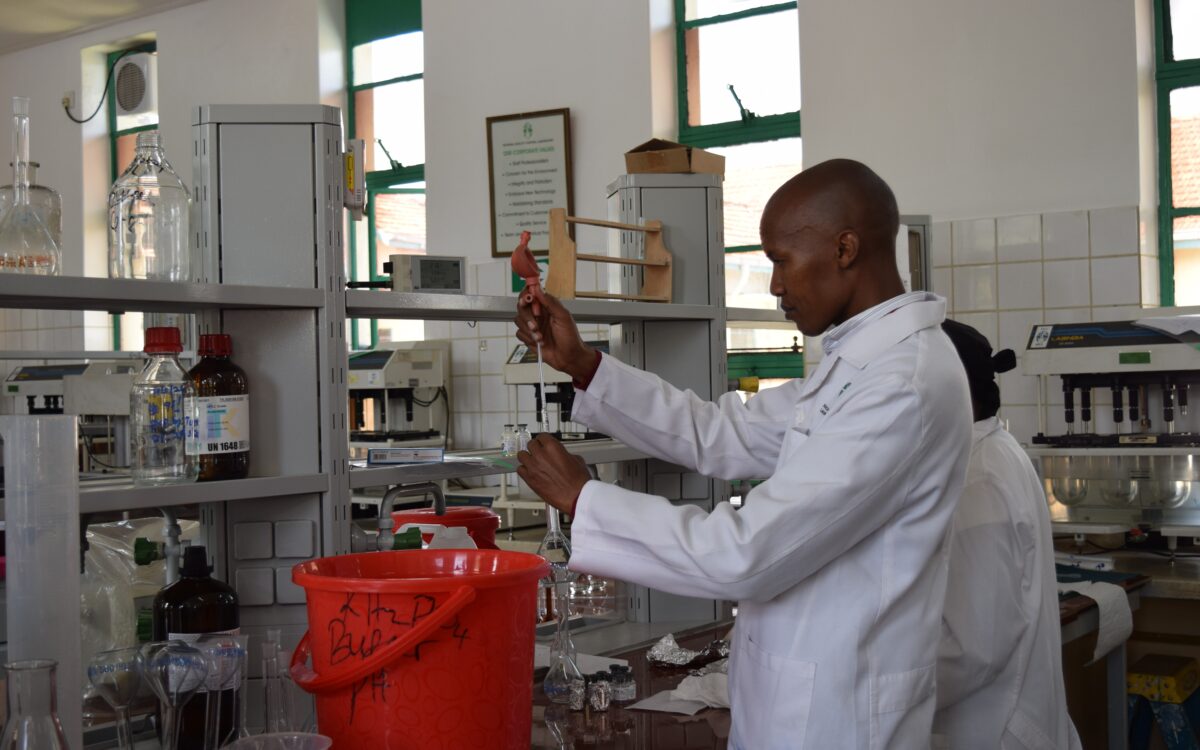
Officials say the latest accreditation should improve confidence in scientific evidence. But its longer-term value will depend on whether the department can maintain the standards, invest in its personnel and turn the accreditation into better services for investigators, courts and the public.
About the Author