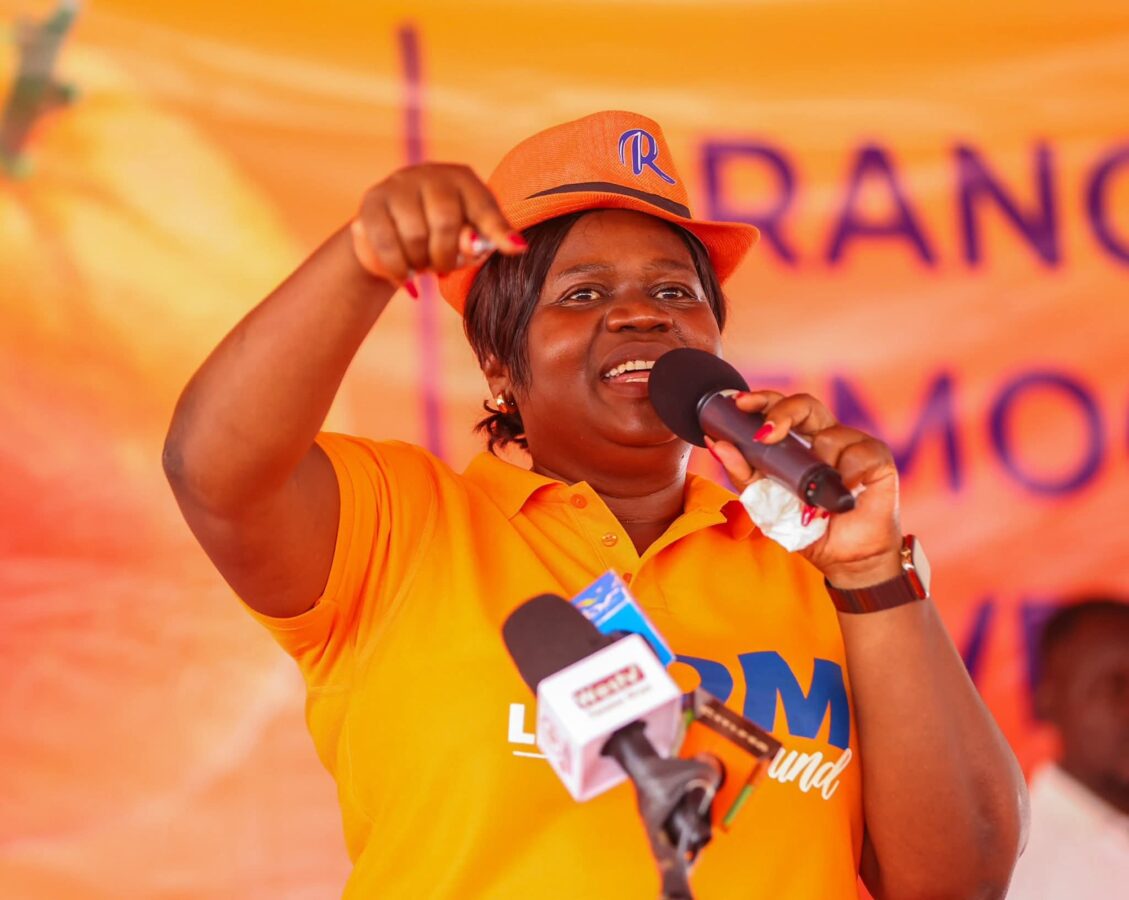
ODM National Chairperson Gladys Wanga has declared that a formal coalition between the Orange Democratic Movement (ODM) and President William Ruto’s United Democratic Alliance (UDA) would be a formidable political force in the 2027 General Election.
Addressing party members during an ODM meeting in Kajiado County, Wanga said combining the support bases of the two parties would produce what she described as an overwhelming electoral advantage.
“If you count all our votes and you put together with UDA, we will have some 17 million votes,” Wanga told supporters. “And we will win the next elections and we will be with the Maasai community with us.”
Her remarks offer one of the clearest signals yet that senior ODM leaders are firmly behind efforts to formalise the parties’ working relationship ahead of the next election.
Wanga also urged ODM members to remain united as discussions continue, reaffirming the party leadership’s support for President William Ruto’s bid for a second term.
“We are saying two terms for our president. We say ODM should remain steadfast,” she said.
The comments come as ODM and UDA intensify negotiations aimed at converting their broad-based government arrangement into a formal pre-election coalition. Both parties have already launched consultations through their leadership structures, with teams tasked with preparing a joint manifesto and outlining how the proposed alliance would operate.
The talks represent a significant political shift for ODM, which spent years as Kenya’s largest opposition party before gradually moving closer to the Kenya Kwanza administration following the formation of the broad-based government.
Supporters of the proposed coalition argue that it could provide political stability while creating a platform to pursue shared development priorities. Among those backing the negotiations are Siaya Senator Oburu Oginga, Wanga and National Assembly Minority Leader Junet Mohamed.
If finalised, the alliance would reshape Kenya’s political landscape by bringing together parties that have traditionally drawn support from different regions and voting blocs.
Wanga’s projection of 17 million votes also comes as the Independent Electoral and Boundaries Commission (IEBC) continues an ambitious voter registration drive ahead of the 2027 polls. The commission hopes to register at least 6.5 million new voters, increasing the national register from about 22.1 million to nearly 28.5 million voters before the election.
The IEBC has identified young people as the largest pool of unregistered voters and is also encouraging eligible Kenyans living abroad and those serving prison sentences to register. IEBC Chairperson Erastus Ethekon has repeatedly called on political leaders across the country to support the exercise by encouraging eligible citizens to obtain voter cards.
While coalition negotiations continue, the proposed alliance is already shaping political debate, with supporters presenting it as a path to stability and critics expected to scrutinise what it could mean for Kenya’s opposition politics as the 2027 election draws closer.
About the Author