The Video Assistant Referee (VAR) has once again found itself at the centre of football’s biggest talking point after two contentious decisions in the World Cup knockout stage left fans, pundits and former officials questioning whether the technology is delivering the fairness it promised.
Introduced to reduce clear refereeing mistakes, VAR has become a permanent fixture in the modern game. Yet in this tournament, two high-profile incidents involving Portugal, Croatia, Senegal and Norway have fuelled fresh criticism over how the system is being interpreted rather than the technology itself.
The first flashpoint came in Portugal’s dramatic 2-1 victory over Croatia.
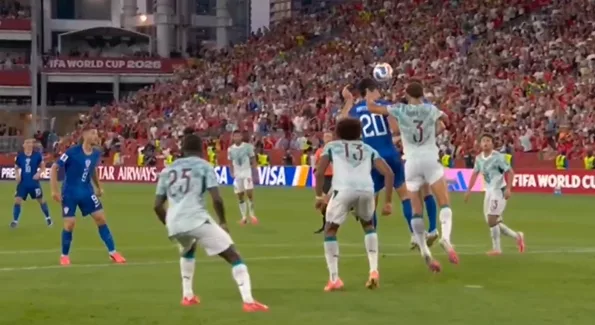
Croatia believed they had forced extra time when Joško Gvardiol bundled home a stoppage-time equaliser following a frantic scramble inside the penalty area. But after a review, referee Espen Eskås ruled the goal out for offside, prompting immediate disbelief from Croatian players and supporters.
Former FIFA referee and FOX Sports rules analyst Mark Clattenburg explained that the decision depended on whether a Croatian player had made contact with Ivan Perišić’s cross before the ball reached the eventual assister.
“If he touches the ball, it becomes offside. If he doesn’t, the receiving player remains onside,” Clattenburg said during the broadcast.
Match officials concluded that the cross had indeed brushed a Croatian teammate before continuing, placing the next attacker in an offside position despite the ball later deflecting off a Portuguese defender.
The ruling sparked a flood of reactions online.
“I’ve never seen this kind of robbery. How is that Croatia goal offside?” one supporter wrote on social media.
Another, identifying as a Portugal fan, posted: “I’m a hardened supporter of Portugal and idolise CR7, but it seems like Croatia were robbed here.”
Others questioned whether the Portuguese touch should have started a new phase of play, while some defended the officials, arguing the decision reflected the current interpretation of the Laws of the Game.
A second controversial moment unfolded during Norway’s last-16 meeting with Senegal.
With extra time nearing its end, VAR advised the referee to review a challenge involving Senegal midfielder Lamine Camara and Belgium captain Youri Tielemans. After watching the replay, the referee awarded Norway a penalty, ruling that Camara had fouled Tielemans inside the box.
Tielemans converted from the spot to seal a dramatic 3-2 win, completing Norway’s comeback after Senegal had led 2-0 until the closing stages of normal time.
The decision quickly divided opinion.
Some argued Camara’s challenge arrived late after Tielemans had nudged the ball away. Others believed the Belgian midfielder had initiated the contact and was no longer in meaningful control of the ball when the tackle came.
The incidents have revived a familiar debate around VAR. While the technology was introduced to help officials correct clear and obvious errors involving goals, penalties, direct red cards and mistaken identity, critics argue that controversial interpretations continue to overshadow major matches.
Supporters of VAR maintain that difficult decisions would still exist without video review and that the system ultimately helps referees reach more accurate outcomes. Its critics, however, believe football has merely exchanged one form of controversy for another, with lengthy reviews and fine margins increasingly shaping the biggest moments on the game’s grandest stage.
As the World Cup enters its decisive rounds, scrutiny of VAR is unlikely to fade. Every review, every replay and every marginal call will continue to test not only the technology, but also confidence in those responsible for applying it.
About the Author