
Life. Seasoned with perspective.
A reflection on success, integrity, and the values that shape our perception of wealth. It reminds us that honest hard work deserves respect and that true prosperity is measured by both character and purpose.
There is nothing wrong with becoming wealthy. The problem is not wealth itself, but how it is acquired and how it is used.
In Kenya, wealth often comes with suspicion. The moment someone becomes successful; many people immediately assume they must have done something dishonest. We rarely stop to ask whether years of sacrifice, discipline, and hard work could have produced the very success we are looking at.

Yet the Bible says something quite different. In Deuteronomy 8:18 we are reminded, “Remember the Lord your God, for it is He who gives you the ability to produce wealth.” Wealth, in itself, is not evil. It is what we do with it, and how we acquire it, that truly matters.
Let me take you back to my childhood because I believe many of our perceptions about money are shaped much earlier than we realize.
I grew up in a modest home. By village standards, however, we were fairly comfortable. Both my parents were teachers and we also farmed. We never lacked food, and we had the privilege of attending good schools. Even as children, we knew we were fortunate because of how our friends looked at our family.
Then life happened.
Circumstances changed and, like many families, we went through a difficult season. We were not poor, but life became considerably harder than what we had been used to. Things that once came naturally suddenly required careful planning and sacrifice. We had to adjust.
Looking back now, I realize that seasons of financial struggle quietly change the way you see the world.
You begin asking difficult questions.
Why are others succeeding while I seem to be standing still?
Why does life appear easier for them?
Sometimes, without even realizing it, you begin to resent people whose only mistake is succeeding where you have not.
But financial struggles can shape a person in two very different ways.
They can ignite a determination to work harder, dream bigger, and create a better future.
Or they can breed bitterness toward anyone who appears to have escaped the struggle.
I know many people of my generation can relate to another childhood memory.
If your home happened to be near a busy road, you probably remember sitting by the roadside “claiming” every beautiful car that passed.
“Hiyo ni yangu!”
“That one is mine!”

Sometimes those imaginary claims became serious arguments, with two children insisting that the same car belonged to each of them, forgetting that neither of them actually owned it.
Perhaps those innocent moments were our earliest dreams of a better life.
As we grow older, however, something changes.
Instead of being inspired by successful people, we sometimes become suspicious of them.
Part of that suspicion is understandable.
Over the years, we have seen public figures whose wealth appears overnight without convincing explanation. That has made many Kenyans skeptical whenever they see someone prosper.
Unfortunately, that skepticism often extends to everyone who succeeds, including people who have spent decades building businesses, creating jobs, and working honestly.
I have come to learn that success deserves respect when it has been earned with integrity.
I recently saw elderly women seated on dusty ground listening to a young politician, young enough to be their grandson. After speaking for a long while, he handed each of them one hundred shillings.
The image stayed with me.
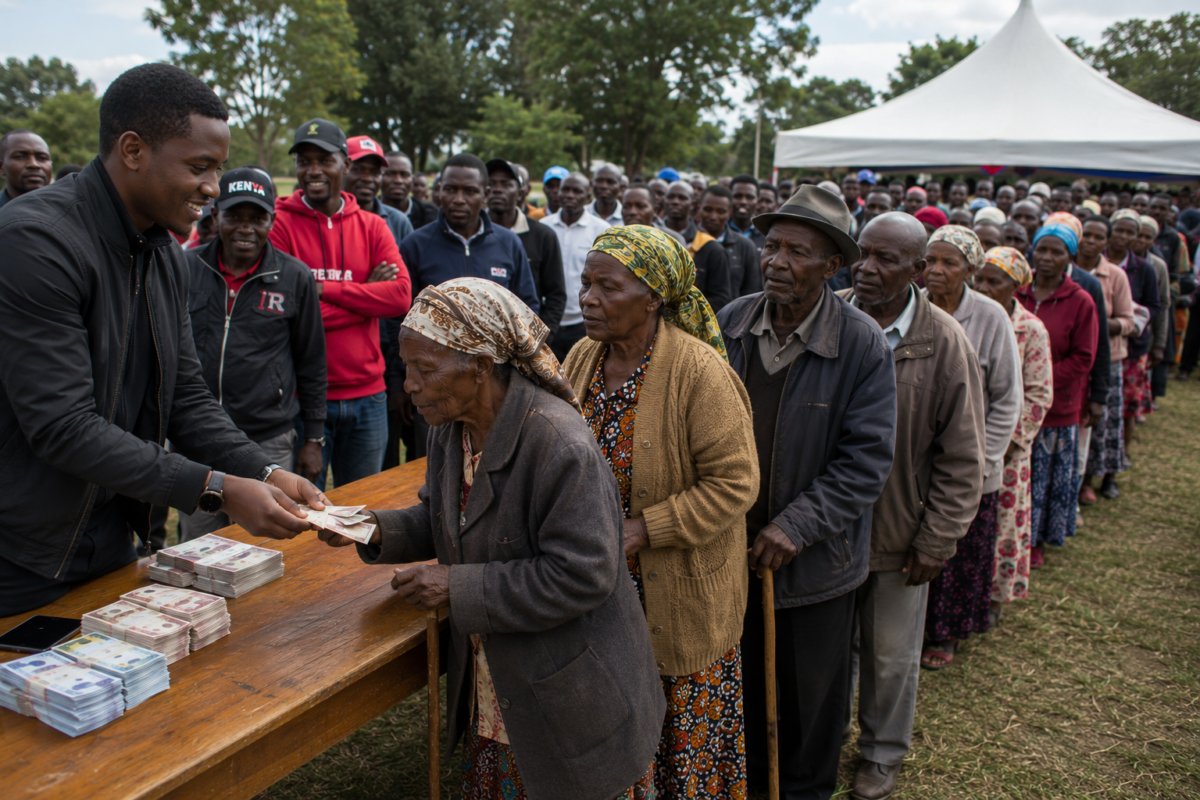
During another election campaign, a politician threw loaves of bread into a crowd. What may have been intended as generosity quickly became something else as people scrambled to catch the bread.
That is the difference between giving and preserving dignity.
Kindness should never make another human being feel smaller.
On the other hand, I was pleasantly surprised to learn that one of Kenya’s wealthiest businessmen and philanthropists, Dr Manu Chandaria, reportedly prefers using a modest Toyota Fielder for his daily commute. A man of immense means choosing simplicity reminded me that wealth does not always need an audience.
Perhaps that is the balance we should all strive for.

Work hard.
Build honestly.
Prosper without apology.
Remain humble.
Because there is nothing romantic about struggling financially. Most people wake up every day hoping to build a better life for themselves and for those they love. There is nothing wrong with wanting a better home, quality education for your children, financial security, or simply the peace that comes from knowing tomorrow is taken care of.
We should never apologize for dreaming bigger.
At the same time, let us respect those who have walked the difficult road before us and honestly built their success. Not every wealthy person is dishonest, just as not every person with little is automatically virtuous.
Character is not measured by the size of a bank account.
It is measured by the integrity behind it.
As the young people like to say, let us chase the bag.
Just make sure that when success finally comes, you can proudly explain how you earned it.
Because wealth is never the problem.
Integrity is what gives wealth its true value.
About the author:
Kibisu Mulanda is a media executive and strategic communicator with over 20 years of experience in television, NGO storytelling, and youth-focused content. He is the Acting Head of Switch Media Ltd and teaches media at the Kenya Institute of Mass Communication (KIMC). A Certified SIYB Trainer, he blends storytelling with strategy to drive social impact.
About the Author