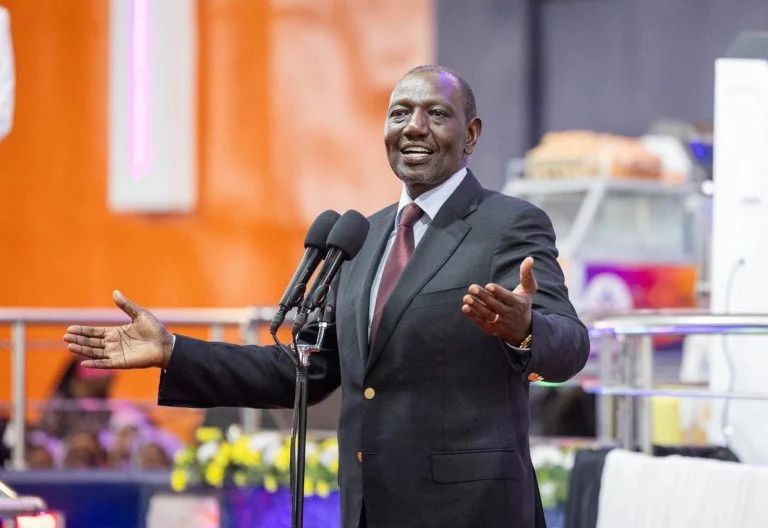
President William Ruto has emerged as the leading choice for president in a new opinion poll, underlining his early advantage as political activity ahead of the 2027 General Election gathers pace.
According to the latest survey released by research firm Infotrak on Monday, 32 per cent of respondents said they would vote for Ruto if a presidential election were held today. The findings place the Head of State ahead of other potential contenders, offering a snapshot of the country’s shifting political mood.
The poll comes as Kenya’s political landscape continues to evolve, with parties stepping up grassroots mobilisation and opposition figures intensifying campaigns in preparation for the next election.
Infotrak said the survey measured current voter preferences and should be viewed as a reflection of public opinion at the time the research was conducted rather than a prediction of the eventual election outcome.
While Ruto remains in front, the poll also signals that a significant share of voters either favour other candidates or have yet to make up their minds, leaving considerable room for political realignment before Kenyans head to the ballot.
The findings are likely to energise the President’s allies, who have maintained that his administration continues to enjoy broad public support despite economic pressures and growing political competition.
At the same time, opposition leaders have consistently argued that opinion polls represent only one measure of public sentiment and that voter attitudes can change significantly as campaigns progress.
Political analysts have long noted that presidential preference surveys often capture the prevailing national mood but are not always reliable predictors of election results, particularly when conducted years before voting day.
With more than a year before the official campaign period begins, Kenya’s political landscape remains fluid. Alliances are expected to shift, new candidates may emerge, and key national issues—including the economy, cost of living, governance and employment—are likely to shape voter decisions in the months ahead.
About the Author