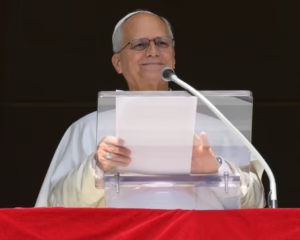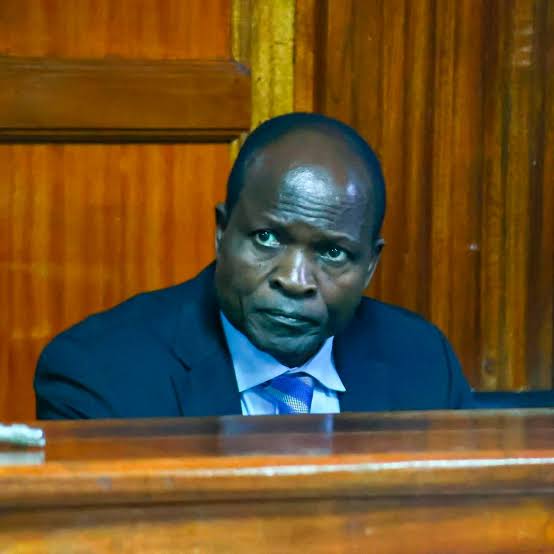
Former Migori Governor Okoth Obado once stood among Kenya’s most formidable county politicians. For years, he built an image of strength, resilience and grassroots appeal that allowed him to dominate the politics of South Nyanza.
On Thursday, that legacy suffered its most dramatic collapse.
A three-judge chapter in his political career ended inside a Nairobi courtroom after the High Court found Obado guilty of the 2018 murder of university student Sharon Otieno. The conviction closes one of Kenya’s longest-running and most closely watched criminal trials, bringing to an end a political journey that had once seemed unstoppable.
A politician who defied political expectations
Obado’s rise was anything but ordinary.
Long before he became governor, he earned his reputation through the trade union movement, particularly among sugarcane farmers and workers in Migori County. Those early years helped him cultivate deep political networks that later translated into overwhelming electoral support.
His followers remained fiercely loyal throughout much of his political career, often defending him publicly whenever his leadership came under criticism.
Despite his commanding influence, those who met him often encountered a different personality.
Away from political rallies, Obado spoke softly. He was measured in his words, courteous in conversation and rarely raised his voice. Yet allies and rivals alike acknowledged that beneath the calm exterior was a determined political strategist who seldom retreated once he had made up his mind.
His quiet style frequently led opponents to underestimate him.
The case that changed everything

Everything changed on September 4, 2018.
The body of Sharon Otieno, then a university student, was discovered in Kodera Forest in Homa Bay County. She had been abducted days earlier alongside journalist Barrack Oduor, who survived after escaping the attackers.
Investigators soon focused on Obado after evidence emerged about his relationship with Sharon, who was reportedly carrying his child at the time of her death.
The investigation quickly became one of Kenya’s most high-profile murder inquiries, attracting intense public scrutiny and widespread media attention.
A lengthy trial reaches its conclusion
Nearly eight years after Sharon’s killing, the High Court ruled that prosecutors had proved their case beyond reasonable doubt.
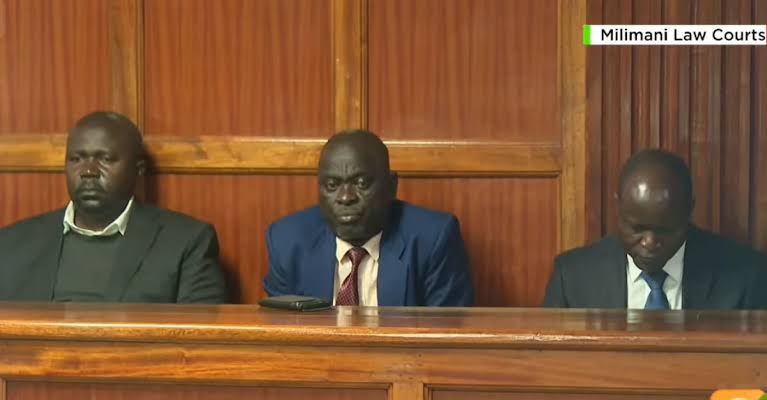
Justice Cecilia Githua found Obado guilty alongside his former personal assistant Michael Oyamo and former county clerk Caspal Obiero.
In delivering the judgment, Justice Githua said the prosecution had established motive, planning and execution through the evidence presented during the lengthy trial.
Following the conviction, the court cancelled the accused persons’ bond terms and ordered that they remain in custody pending sentencing.
From governor to convicted prisoner
For years, Obado had appeared politically untouchable.
He successfully navigated the often turbulent politics of Migori County and secured two terms as governor despite persistent political rivalries.
The Sharon Otieno case, however, reshaped both his public image and political future.
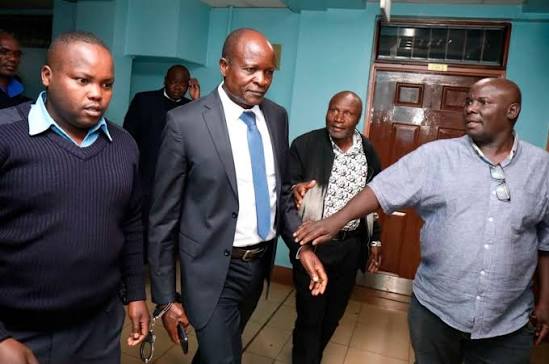
As he walked from the courtroom under police escort following Thursday’s verdict, the contrast was stark.
The man who once commanded packed campaign rallies and controlled one of western Kenya’s most influential political networks now faces sentencing after being convicted of murder.
A case that resonated across Kenya
The Sharon Otieno murder became more than a criminal investigation.
It sparked national conversations about violence against women, abuse of power and accountability for public officials. Women’s rights organisations repeatedly called for justice, arguing that the case symbolised broader concerns about gender-based violence and impunity.
For Sharon’s family, the verdict marked the end of a painful legal battle that stretched for nearly eight years.
For Kenya, it stands as one of the country’s most significant convictions involving a senior political figure.
Whether remembered for his political achievements or the crime that ended his career, Okoth Obado’s story has become one of the most dramatic rises and falls in Kenya’s recent political history.
About the Author