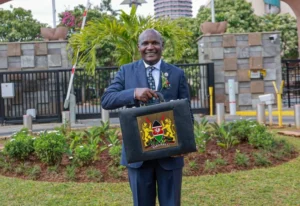

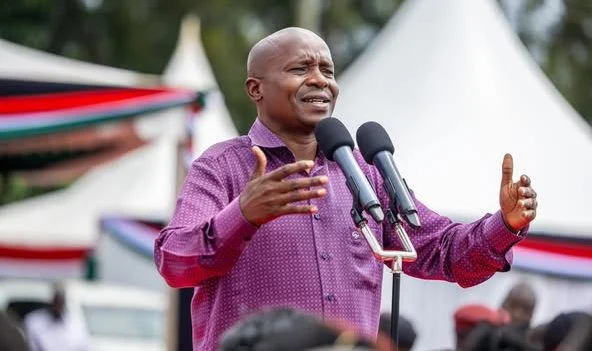
Deputy President Kithure Kindiki has dismissed growing political efforts to rally the Mt Kenya region against the Kenya Kwanza administration, insisting that unity and development—not political rhetoric—will determine the outcome of the 2027 General Election.
Speaking on Sunday during the 36th anniversary thanksgiving service of the Anglican Church of Kenya (ACK) Diocese of Embu at Kigari Teachers Training College, Kindiki urged leaders to avoid using places of worship for political confrontation. He said the government had resolved to keep politics out of the church and instead work alongside religious institutions in serving the public.
“As leaders under the leadership of President William Ruto, we have agreed that we will not use the altar to do foolish things, deliver confusing messages, destroy communities or divide people,” Kindiki told the congregation.
The Deputy President said churches remained important partners in national development and governance, adding that the government welcomed criticism aimed at improving public service.
“Whatever you want us to improve or correct in leadership, we will do so. We will listen because we are human beings, and government is a human institution that can always be improved through your guidance and input,” he said.
Push for Mt Kenya Unity
Kindiki’s remarks come at a time of heightened political activity in the Mt Kenya region, where opposition leaders have stepped up campaigns seeking to consolidate support ahead of the 2027 elections.
Without naming specific individuals, he accused some politicians of trying to sow division within the region and urged residents to reject such efforts.
“There are people speaking as though the world is coming to an end. There is no problem. We are here, and we are not going anywhere,” he said.
Describing himself as a unifying figure for the region, Kindiki said he would resist attempts to pit communities against one another.
“I come from this region, and I do not want our communities to be divided. We are one people. Those who think they will bring confusion to Mt Kenya by making people speak in different voices and dividing them should relax.”
Development Will Decide 2027, Says Kindiki
The Deputy President argued that the government’s record in office would ultimately matter more to voters than political campaigns or public criticism.
He said President William Ruto, elected leaders and county governments would be judged by what they had delivered rather than by political slogans.
“What will save the President, the Deputy President, governors, Members of Parliament and all leaders is the work they have done for the people, not the noise being made,” he said.
Kindiki also expressed confidence that the Kenya Kwanza administration would remain politically competitive in the next election, pointing to previous victories achieved under difficult political circumstances.
“If we won when President Uhuru Kenyatta was in The Hague with President William Ruto, then next year is a small matter. Pray only for good health and God’s favour,” he said.
Church’s Role in Nation Building
The Deputy President praised the Anglican Church for its longstanding contribution to education, healthcare, water projects and youth empowerment, saying the government’s development agenda aligned closely with the church’s mission of improving people’s lives.
He argued that spiritual guidance should go hand in hand with efforts to expand economic opportunities.
“It is not enough to prepare someone for salvation; it is equally important to ensure they have a good education, access to livelihoods and empowerment so that they can serve God with dignity as they await heaven,” he said.
Closing his address, Kindiki appealed for national cohesion, urging Kenyans to look beyond regional and political differences.
“We are one community and one country, and we have no other home to go to. Kenya is our homeland, and we must protect it, love it and live together in peace.”
Political contestation in the Mt Kenya region is expected to intensify as both the government and opposition position themselves ahead of the 2027 General Election, with leaders increasingly seeking to consolidate support in one of the country’s most influential voting blocs.
About the Author