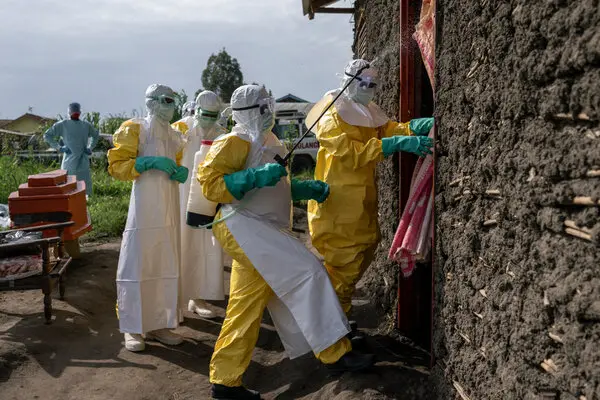
An Ebola response has been put at risk.
Health workers battling the deadly outbreak in the Democratic Republic of the Congo have threatened to strike over unpaid salaries, raising fresh concerns about efforts to contain the virus.
The warning has come as the World Health Organization (WHO) said the outbreak may be two to four times larger than official figures suggest.
Protest Held at Treatment Centre
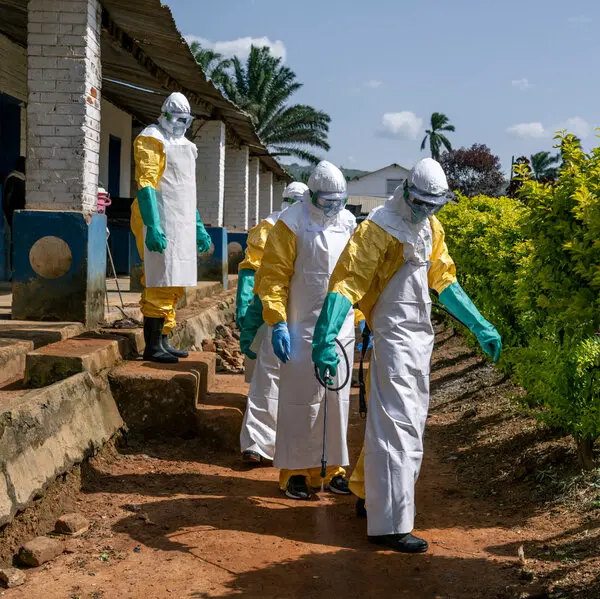
A protest was staged on Monday at the Ebola treatment centre in Rwampara, one of the areas hardest hit by the outbreak in Ituri Province.
Tyres were burned.
Access to the facility was briefly blocked.
Doctors and other frontline workers said they had not received their salaries since the outbreak was declared on May 15.
“We’ve been treating Ebola patients without pay since May 15. We continue to do so because that is our oath, but we are working in very difficult conditions,” Dr Pascal Bahoya told AFP.
Health workers warned that a 48-hour ultimatum had been issued.
If salaries and promised allowances are not paid, a full strike could be launched.
Government Acknowledges Delays
The payment delays have been acknowledged by Health Minister Samuel Roger Kamba.
During a visit to Ituri last week, he said the problem was linked to administrative processes and assured health workers that the matter would be resolved.
No timeline for the payments was announced.
Outbreak Continues to Grow
According to official figures released on Tuesday, more than 700 people have died and nearly 2,000 confirmed infections have been recorded since the outbreak began.
However, the WHO believes many infections have not yet been detected.
Speaking in Geneva, WHO emergencies director Chikwe Ihekweazu said modelling by the agency suggested the real number of cases could be two to four times higher than those officially confirmed.
That assessment reflects the challenges of detecting infections in remote and conflict-affected communities.
Health Workers Under Pressure
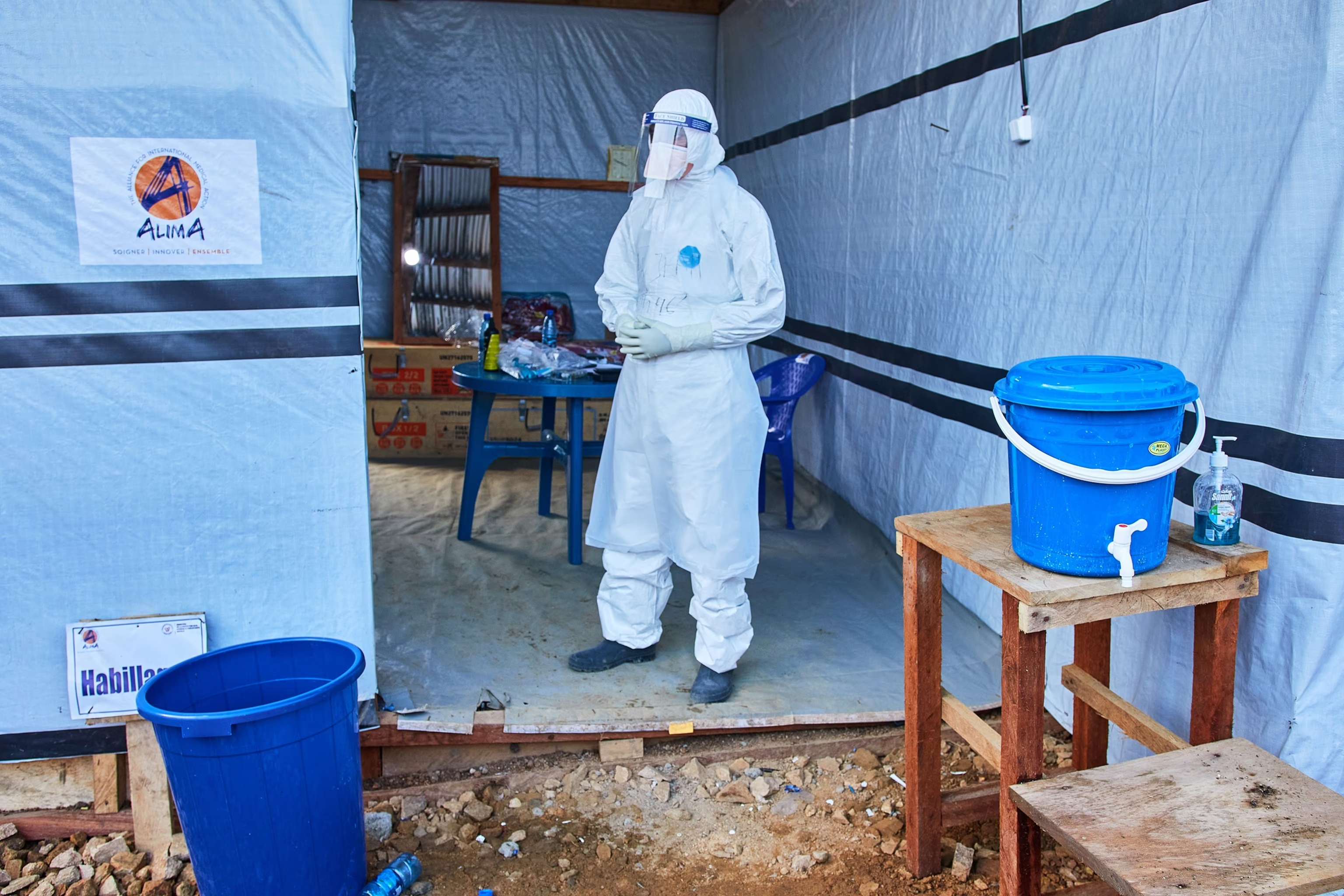
Frontline medical teams have continued to work despite increasing pressure.
The Democratic Republic of the Congo’s National Institute of Public Health says 112 healthcare workers have been infected during the outbreak.
At least 35 have died.
The losses have added to the strain on a health system already facing limited resources.
Conflict Slows Response
The outbreak has spread beyond Ituri into North Kivu, South Kivu, Tshopo and Haut-Uele provinces. Years of armed conflict have displaced thousands of people across eastern DR Congo.
Many families are living in overcrowded camps where access to clean water and sanitation remains limited, making disease control more difficult.
Neighbouring Uganda has also reported Ebola cases linked to the outbreak.
No Approved Vaccine Available
The current outbreak has been caused by the Bundibugyo strain of the Ebola virus. Unlike the more common Zaire strain, there is currently no approved vaccine or specific treatment for this variant.
Clinical trials of two experimental treatments are underway as health officials work to improve survival rates.
International Support Expanded
The international response has continued to grow. According to international health agencies, about $1.5 billion has been mobilised to support the Ebola response in DR Congo.
The funding is being directed towards treatment, surveillance, laboratory testing and support for frontline health workers as efforts continue to contain one of the country’s most serious public health emergencies.
About the Author