
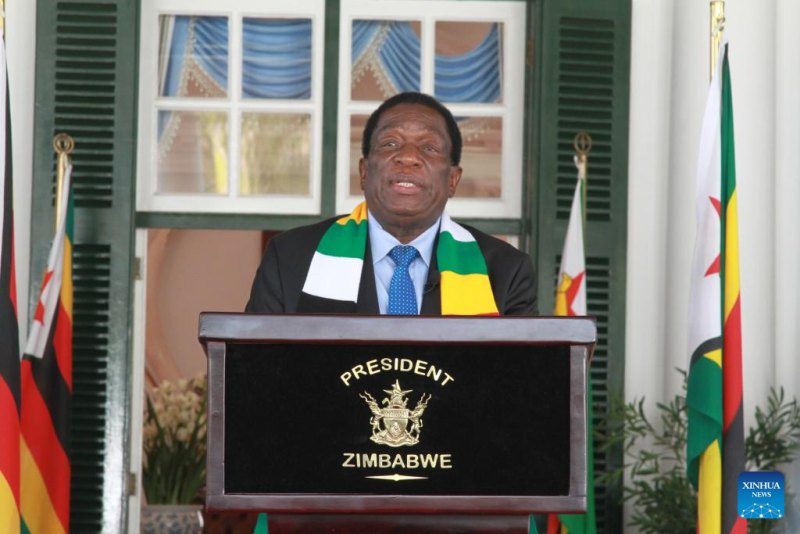
Zimbabwe’s lower house of Parliament has approved a constitutional amendment that would extend presidential terms and fundamentally reshape how future leaders are chosen, a move that has sparked fierce debate over the country’s democratic future.
The bill, passed on Thursday with the support of 216 lawmakers, comfortably cleared the two-thirds majority required to amend the constitution. Only 42 legislators voted against it.
If the proposal becomes law, presidential and parliamentary terms would increase from five to seven years. It would also eliminate direct presidential elections, handing Parliament the responsibility of choosing future heads of state.
The changes could allow President Emmerson Mnangagwa, 83, to remain in office until 2030, two years beyond the end of his current and constitutionally final term.
Announcing the outcome of the vote, Speaker of Parliament Jacob Mudenda said the legislation had secured enough support to proceed to the Senate, where it is widely expected to pass before being sent to the president for assent.
The vote marks the latest step in a campaign by the ruling ZANU-PF party to revise the constitution. The party, which has governed Zimbabwe since independence in 1980, received Cabinet backing for the proposed changes earlier this year.
Mnangagwa came to power in 2017 after the military intervened to remove long-serving leader Robert Mugabe. He later secured victories in presidential elections held in 2018 and 2023, although both contests were disputed by opposition parties and some election observers.
Among the most significant provisions in the bill are the extension of presidential and parliamentary terms to seven years, the postponement of elections due in 2028 until 2030, and the transfer of presidential selection from voters to Parliament.
Supporters of the amendment argue that the changes would provide political continuity and stability at a time when Zimbabwe faces economic and governance challenges.
Critics, however, see the proposal as a direct challenge to democratic principles.
Opposition politicians, constitutional lawyers and civil society organisations have argued that changes of such magnitude should be decided by voters through a national referendum rather than by Parliament alone.
Their concerns draw partly from Zimbabwe’s 2013 Constitution, which introduced a two-term limit for presidents and set out safeguards against extending presidential tenure without public approval.
The debate intensified this week after Zimbabwe’s Constitutional Court dismissed a legal challenge that sought to halt the bill before lawmakers voted on it.
For many Zimbabweans, the legislation represents a critical test of the country’s democratic trajectory. Mnangagwa was once welcomed by supporters as a leader who would open a new chapter after Mugabe’s long rule. Yet his administration has faced persistent economic difficulties, criticism over governance and questions about the credibility of recent elections.
As the bill moves to the Senate, attention is now turning to whether the proposed constitutional changes will become law, and what they could mean for Zimbabwe’s political landscape in the years ahead.
About the Author