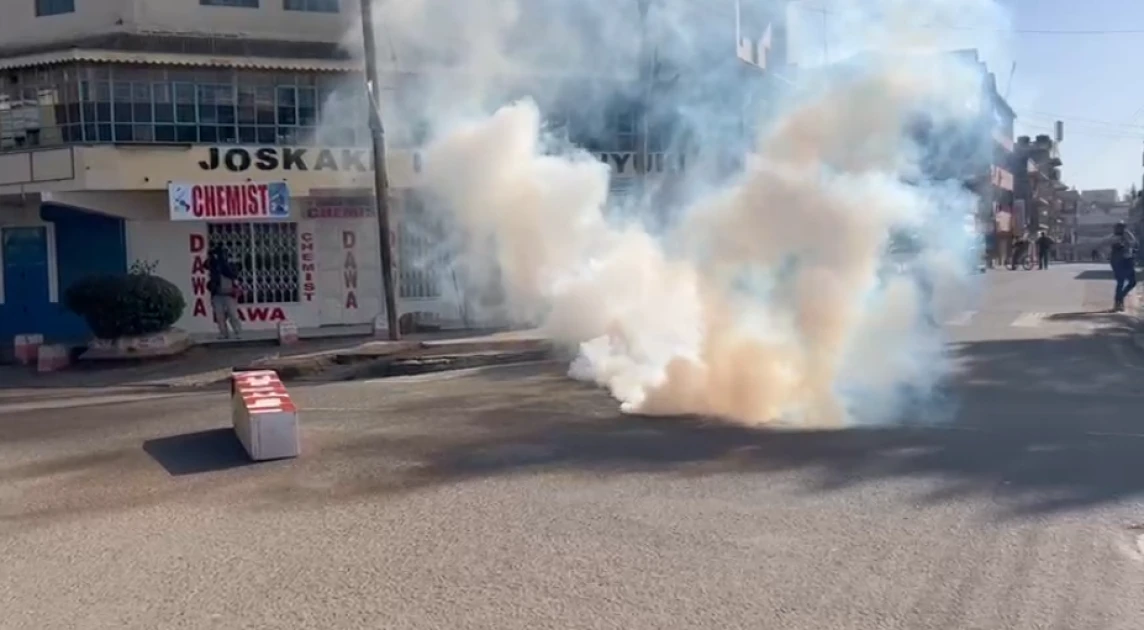
Police arrested several people on Tuesday in Nanyuki as fresh protests erupted over a controversial Ebola quarantine facility being built at Laikipia Air Base in Nanyuki, deepening a debate that has divided residents, politicians and the national government.
The facility, which is being funded by the United States, is intended to quarantine American citizens arriving from the Democratic Republic of Congo (DRC), where health authorities continue to battle an Ebola outbreak.
For many residents, however, the project has become a symbol of fears that Kenya is being exposed to a disease it has never recorded within its borders.
Dozens of demonstrators gathered near the military base on Tuesday. Some wore protective suits and carried a mock coffin bearing the word “Ebola”. The protest remained relatively small, but tensions rose as police moved in.
“We don’t have that disease in this country,” one of the demonstrators. “They are bringing a virus into our country.”
The facility, which is nearing completion, is expected to contain 50 isolation beds and will be run by American personnel. It has faced opposition since plans for its construction became public, with local leaders in Laikipia among the most vocal critics.
The project has also encountered legal hurdles. Kenya’s High Court issued a temporary order halting construction while legal challenges are considered.
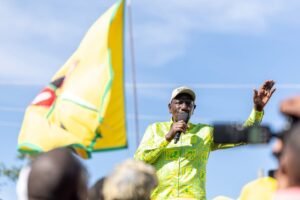
Yet President William Ruto’s administration has defended the initiative, arguing that Kenya’s long-standing partnership with the United States makes cooperation necessary.
“The American people and government have been partners with us on matters of health for close to 25 to 30 years,” president Ruto said last week.
He added that rejecting a facility financed by Washington would be difficult to justify, describing such a move as lacking compassion towards an ally.
Government officials have also sought to reassure the public about the centre’s purpose. Kenya’s Health Ministry has repeatedly stated that the facility is intended to strengthen the country’s preparedness against Ebola and would be available to Kenyans if needed.
The United States has committed $13.5 million towards Kenya’s Ebola preparedness efforts, according to government officials.
The latest demonstrations follow earlier protests on June 1. Human rights organisations reported that two people died during the unrest, although the circumstances surrounding those deaths remain unclear and have not been independently verified.
Public concerns have been heightened by broader questions about health cooperation between Nairobi and Washington. Last year, the two countries entered a health agreement that attracted scrutiny from critics who argued it granted the United States extensive access to health-related data in exchange for financial support.
Health experts, however, have stressed that Ebola preparedness measures are increasingly important across East Africa because of the ongoing outbreak in neighbouring DRC.
The World Health Organization has declared the outbreak an international public health emergency. According to the agency, hundreds of infections and dozens of deaths have been recorded in Congo. While fears of regional spread persist, Uganda remains the only neighbouring country to have confirmed cases, most involving people who crossed the border from the DRC.
For now, the debate in Nanyuki reflects a broader tension between public health planning and public trust. As construction crews await the outcome of legal challenges, residents remain deeply divided over whether the facility represents preparedness or an unnecessary risk.
About the Author