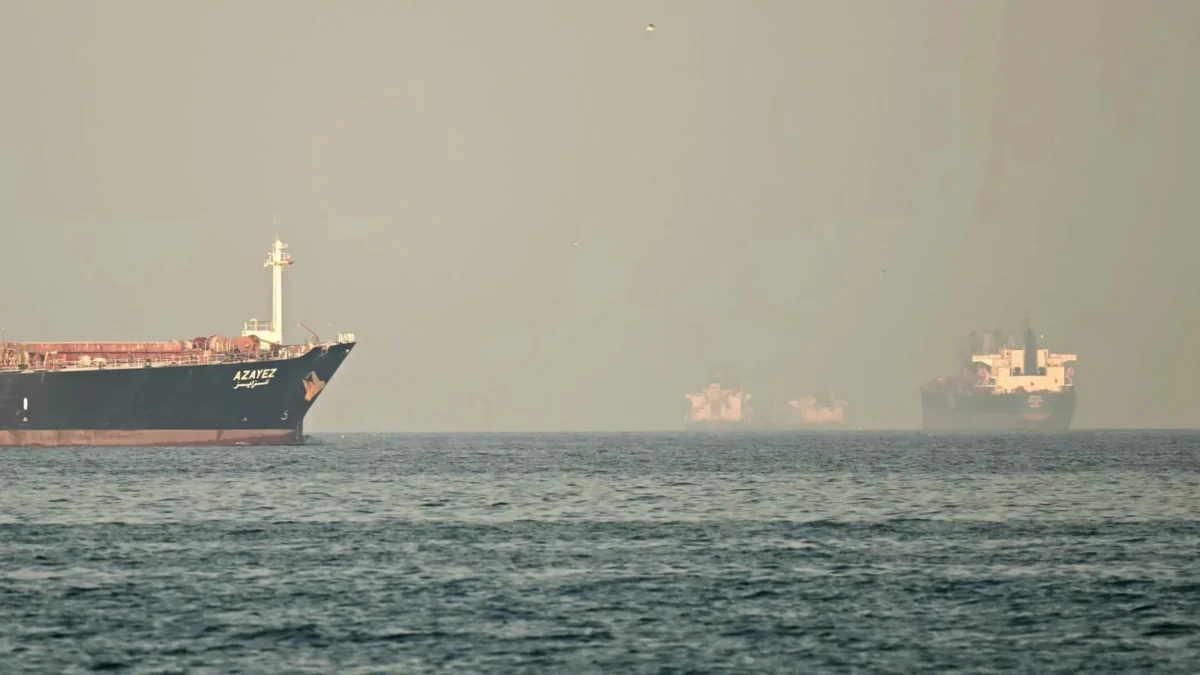
At least three commercial vessels have been attacked near the Strait of Hormuz, as escalating hostilities between Iran, the United States and Israel threaten to disrupt one of the world’s most critical energy corridors.
The UK Maritime Trade Operations Centre (UKMTO) reported that two ships were struck by unidentified projectiles, resulting in fires on board. A third vessel experienced an explosion “in very close proximity” caused by what was described as an unknown projectile. The crews were reported safe. A fourth security incident in the area involved the evacuation of a ship’s crew, though the cause has not been confirmed.
The incidents occurred amid a sharp deterioration in regional security following US–Israeli strikes that killed Iran’s Supreme Leader, Ayatollah Ali Khamenei, and prompted Iranian retaliation across several Middle Eastern states. Strikes have since been reported in the United Arab Emirates, Qatar, Bahrain and Kuwait.
Iran’s Islamic Revolutionary Guards Corps (IRGC) claimed that three UK- and US-linked tankers had been hit by missiles and were ablaze. Neither London nor Washington has confirmed the claim.
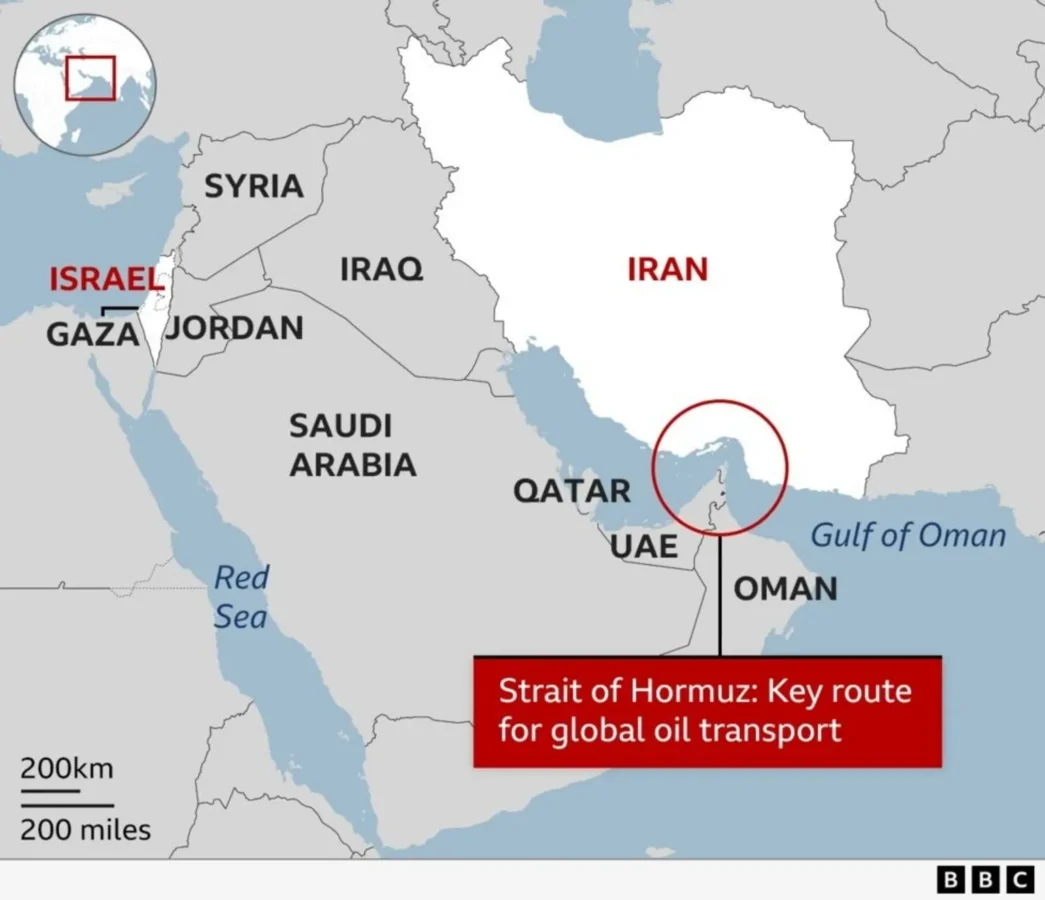
The UKMTO said multiple security incidents had been recorded across the Arabian Gulf and the Gulf of Oman, advising vessels to exercise caution. Iran has also warned international shipping against transiting the strait.
Shipping activity has slowed dramatically. According to maritime tracking data from Kpler, at least 150 tankers have anchored in Gulf waters outside the strait, with only a limited number of Iranian and Chinese vessels passing through. Homayoun Falakshahi, an analyst at Kpler, said many shipowners were holding back due to elevated risk and sharply rising insurance premiums. “Because of Iran’s threats, the strait is effectively closed,” he said, adding that prolonged disruption could send oil prices “much, much higher.”
The Strait of Hormuz carries roughly 20% of global oil and gas supplies. Any sustained interruption would have immediate consequences for global energy markets.
Private maritime security firm Vanguard Tech said it had received reports consistent with the UKMTO’s account, involving vessels flagged to Gibraltar, Palau, the Marshall Islands and Liberia.
Separately, Danish shipping giant Maersk announced it would suspend sailings through the Bab el-Mandeb Strait and the Suez Canal, instead diverting ships around the Cape of Good Hope, reflecting broader concerns over the safety of Red Sea and Gulf routes.
Energy markets have already reacted. Although formal Brent crude trading resumes at 23:00 GMT on Sunday, over-the-counter transactions suggest prices have risen by around 10%, to approximately $80 a barrel. Some analysts warn that, should the strait remain closed for an extended period, prices could exceed $100.
The Opec+ alliance, which includes Saudi Arabia and Russia, agreed on Sunday to increase output by 206,000 barrels per day in an attempt to mitigate price pressures. However, analysts question whether such an increment would offset the loss of flows through Hormuz if the disruption persists.
Edmund King, president of the AA, said the turmoil would likely translate into higher fuel costs globally. “The magnitude and duration of pump price increases depends on how long the conflict goes on,” he said.
The situation remains fluid, with commercial shipping, energy markets and regional security closely intertwined as the confrontation deepens.
About the Author