Nigeria Sends Military to Benin After Soldiers Try to Seize Power
Nigeria says it deployed fighter jets and ground troops to help Benin stop a coup attempt by a group of mutinous soldiers.
The move followed two emergency requests from Benin’s government, which asked for urgent air support and help protecting key institutions.
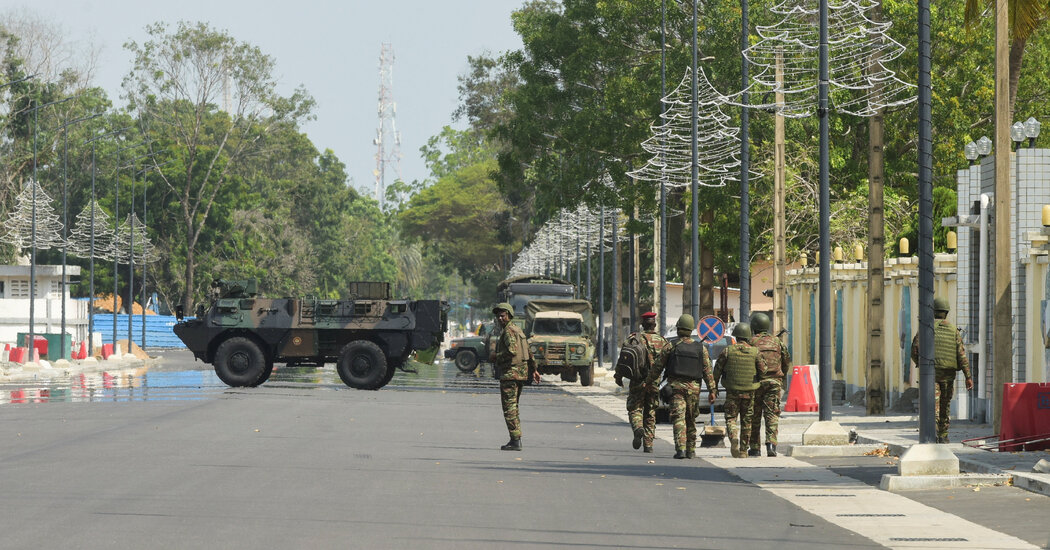
According to Nigeria’s presidency, fighter jets were the first to enter Benin’s airspace to push the soldiers out of the national broadcaster and a military camp they had occupied. Ground troops later crossed into Benin to assist security forces on the ground.
Benin’s President Patrice Talon later appeared on national television to announce that loyal forces had regained control and blocked the attempt to overthrow his government. He said security forces pushed back the mutineers and cleared the remaining resistance inside the capital.
The government said arrests had already begun, with several soldiers detained. One security source reported that most of those arrested were still serving in the military, along with one former soldier. It is unclear whether the alleged coup leader, Lieutenant Colonel Pascal Tigri, has been caught.
Residents in Cotonou reported hearing gunfire early in the day, but the city later returned to a calm state as security forces took control.
The coup attempt raised fresh fears about political stability in West Africa, a region that has seen several governments fall in recent years. Militaries have taken power in Niger, Burkina Faso, Mali, Guinea and, more recently, Guinea-Bissau. Benin had not experienced a successful coup since 1972, making Sunday’s events a major shock.
Regional leaders strongly condemned the attempted takeover. ECOWAS ordered the deployment of parts of its standby force, including troops from Nigeria, Sierra Leone, Ivory Coast and Ghana, to support Benin and help protect its institutions.
The political climate in Benin has been tense ahead of the April presidential election. President Talon is expected to step down after completing his term, but recent changes to the constitution — including a longer presidential term — have drawn criticism from the opposition. The opposition party’s preferred candidate was recently blocked from running, which has added to public concern over fair competition.
Security analysts say political uncertainty, tight election conditions and wider regional instability may have contributed to the attempted coup.
About the Author