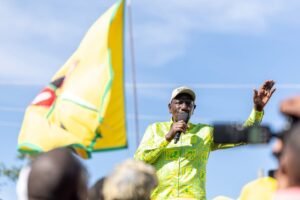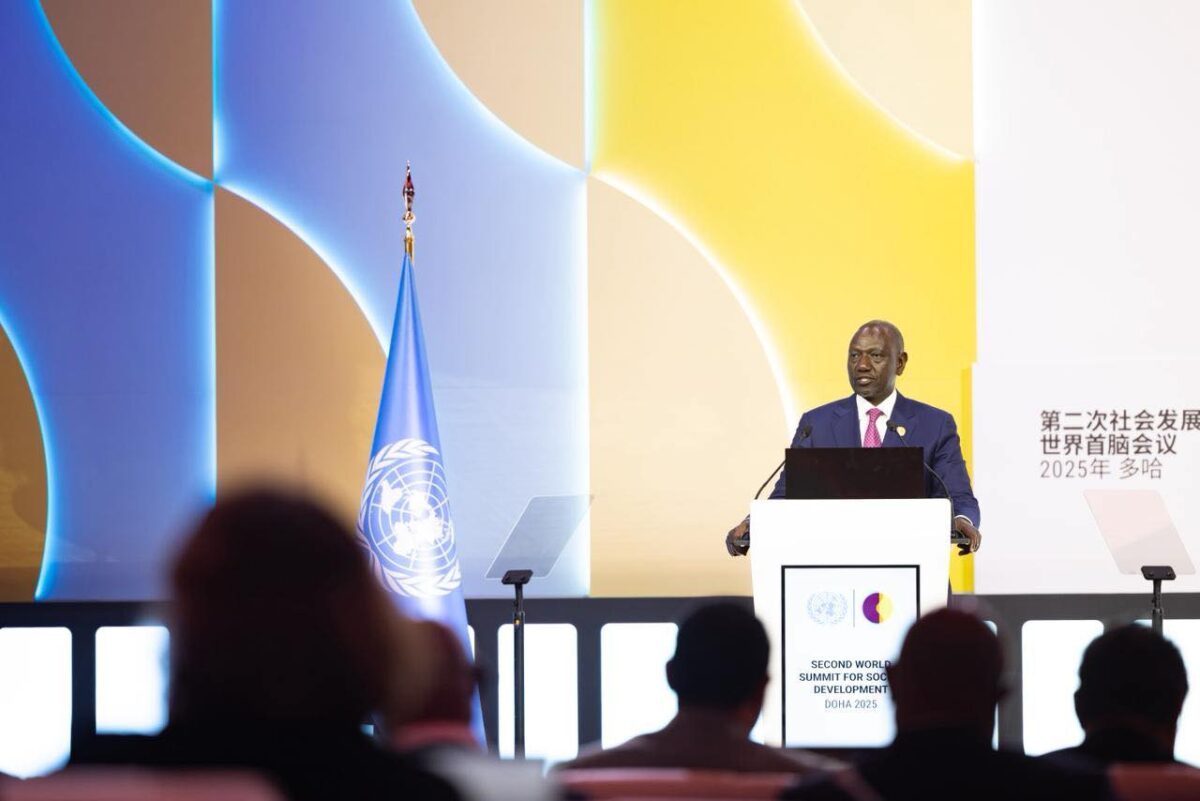
DOHA, Qatar — Kenya’s President William Ruto used a major global forum on social development to make a bold call: Reform the United Nations and give Africa a real voice at the top table.
Speaking at the Second World Summit for Social Development in Doha on Tuesday, President Ruto said that true social development cannot thrive without historical justice and equal representation. He reiterated Africa’s demand for two permanent and two non-permanent seats on the UN Security Council with full rights and privileges.
“It is time those who have been left behind are given a fair say in shaping the future,” he told world leaders gathered for the summit, which also marked 30 years since the first such meeting in Copenhagen.
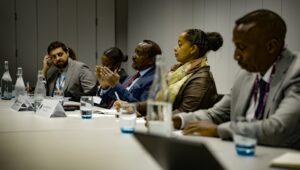
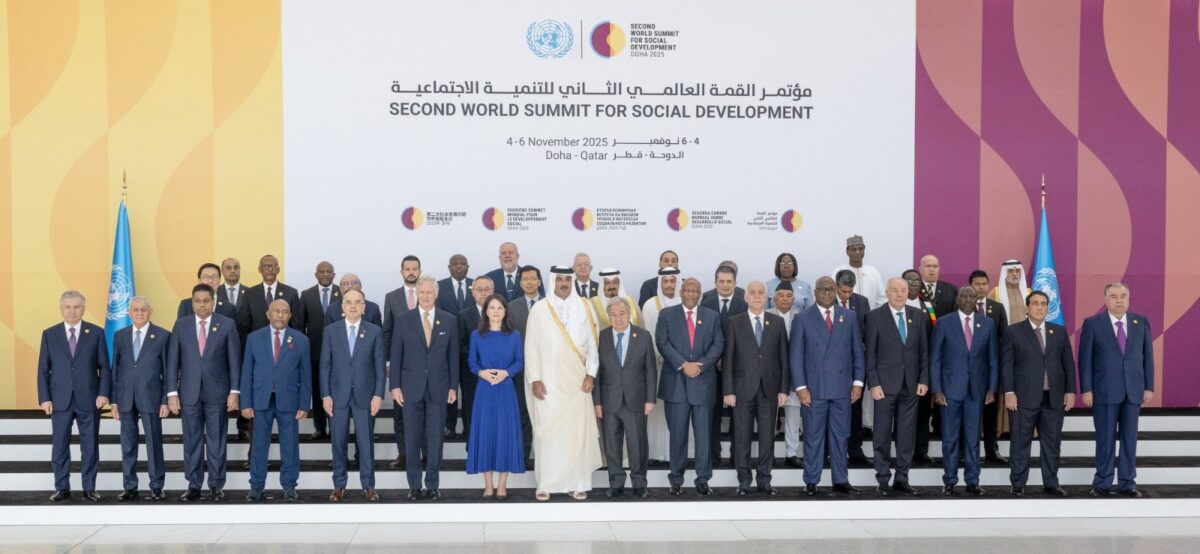
The summit attended by UN Secretary-General António Guterres and dozens of heads of state focused on tackling poverty, unemployment, and social exclusion. Mr. Ruto argued that these challenges have persisted for decades because of deep-rooted inequality in the international system.

“Across many parts of Africa and Western Asia, hunger is rising, growth is slowing, and vulnerability is deepening. Health and education systems are strained, while energy deficits hold back opportunity,” said Ruto.
A Call for Justice and Reform
The Kenyan leader tied Africa’s struggle for equality to a broader demand for justice. Noting that the African Union has declared 2025 the Year of Justice for Africans and People of African Descent through Reparations, he said the initiative seeks accountability for the crimes of slavery, colonisation, apartheid, and exploitation that caused lasting human and environmental harm.
He also pressed for an overhaul of the global financial system, saying developing nations continue to bear the brunt of unfair structures.
“We urge decisive action on debt distress,” Dr. Ruto said, calling for progress towards a UN convention on sovereign debt and an international framework for tax cooperation.
President Ruto argued that the existing order often traps poorer nations in cycles of dependence and underdevelopment.
“We must build a financial architecture that is fair, transparent, and responsive to the needs of all,” he said.
Showcasing Kenya’s Domestic Agenda
Mr. Ruto also took the opportunity to outline Kenya’s progress under his government’s Bottom-Up Economic Transformation Agenda, a policy framework he says targets inequality and job creation.
He highlighted education reforms, including the rollout of a competence-based curriculum and the hiring of 76,000 new teachers, a figure expected to rise to 100,000 by early 2026. The changes, he said, would bring Kenya closer to UNESCO’s recommended teacher-to-learner ratio of 1:25.
On economic empowerment, he pointed to the Hustler Fund, a financial inclusion initiative that has disbursed more than KSh 80 billion ($615 million) to over 26 million Kenyans. The upcoming NYOTA project, developed with international partners, will provide grants and training to one million young people over five years.
Social welfare and healthcare were also central to his message. The Inua Jamii safety-net programme now supports 1.7 million vulnerable families, while new housing projects have created more than 320,000 jobs. Dr. Ruto said Kenya’s health insurance coverage has tripled in two years, ensuring that “no one is denied healthcare because they cannot pay.”
A Warning Against Isolationism
In a sobering close, Dr. Ruto warned that the world is retreating into isolation at a time when cooperation should be a priority. He criticised the growing nationalism that has replaced collective action with self-interest.
“The consensus that once bound us together in Copenhagen is fraying.We must stand together with renewed resolve to dismantle the structures that perpetuate inequality,” said Ruto.
About the Author