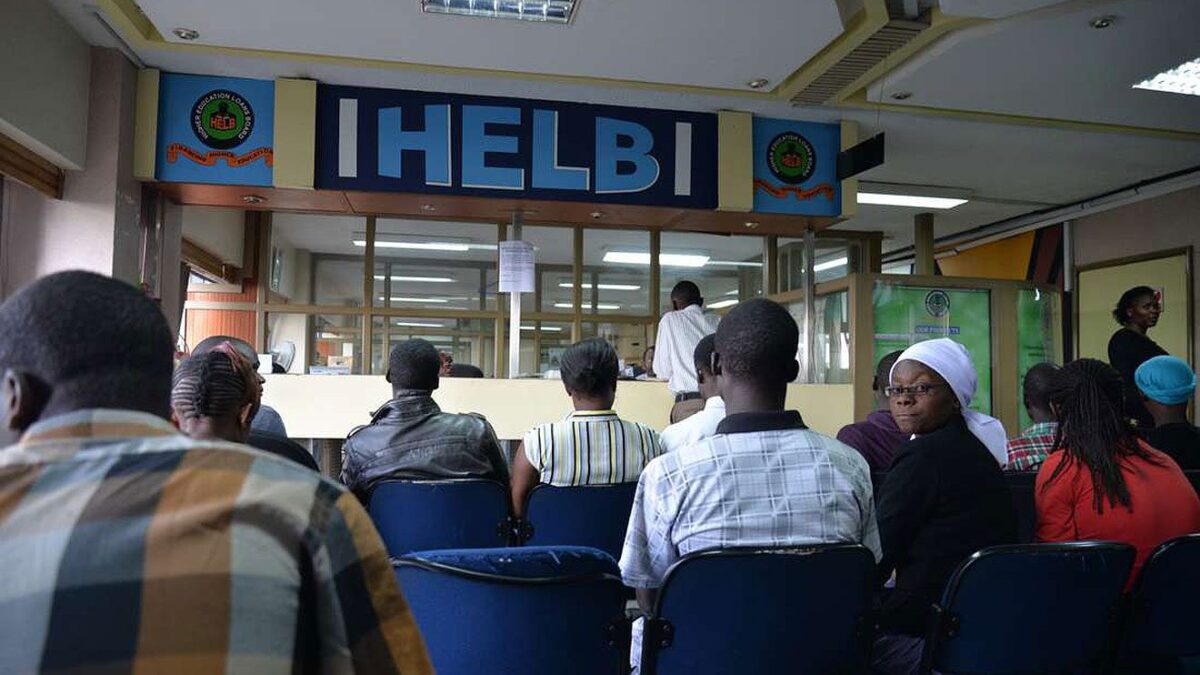
Over three million young Kenyans are jobless, forcing thousands of graduates to default on Higher Education Loans Board repayments, exposing a deeper mismatch between skills, education and opportunity.
Kenya is facing a growing youth unemployment crisis that is now linked with a record level of student loan defaults.
Official data from the Kenya National Bureau of Statistics estimates that more than three million Kenyans aged between 15 and 34 are unemployed or underemployed. The stagnant job market, which created only about 75,000 new formal jobs in 2024, has left many recent graduates unable to secure stable work, making it increasingly difficult for them to repay government-issued student loans.
According to the Higher Education Loans Board (HELB), over 380,000 graduates have defaulted on repayments, with outstanding loans now exceeding Sh42 billion. Many of the defaulters are professionals in law, medicine, accounting, and engineering, sectors that require higher education but currently face limited job absorption.
What’s Driving the Crisis?
Experts say the surge in defaults is a symptom of a much deeper economic imbalance: the mismatch between classroom learning and market-ready skills. While thousands of young Kenyans leave universities each year, few possess the practical or technical expertise that employers are demanding. This disconnect has fueled frustration, with social media discussions highlighting a lack of mentorship, innovation funding, and opportunities for entry-level experience.
The challenge is worsened by a sluggish economy that has forced companies to scale back hiring and automate certain functions. Analysts also note that Kenya’s reliance on the informal sector, which employs most young people but offers little job security, limits consistent income making loan repayment nearly impossible for many graduates.
What Is Being Done?
The government has rolled out several initiatives to tackle unemployment, including the Hustler Fund, affordable housing projects, and the Kenya Youth Employment and Opportunities Project (KYEOP), which has supported over 150,000 young people through skills training and small business grants. The World Bank has also backed new youth-focused programs like NYOTA, aimed at helping young entrepreneurs access credit and build sustainable enterprises.
Despite these interventions, the scale of the problem remains daunting. Economists warn that without long-term strategies to link education to evolving market demands, particularly in digital and green economies, Kenya’s growing youth population may continue to face exclusion from formal employment and economic participation.
Consequences for Kenyan Youth and Economy
As the number of unemployed graduates rises each year, the country risks a cycle of debt and dependency that could stall progress on poverty reduction and national productivity. Addressing the twin crises of joblessness and loan default will require not only policy innovation but also collaboration between universities, employers, and the government to ensure that education leads to real opportunity.
Kenya’s youth unemployment challenge and increasing HELB loan defaults are not separate issues, they are deeply interconnected. As thousands of graduates struggle to find meaningful employment, debt burdens rise and the risk of social and economic fallout grows. Tackling this crisis demands coordinated action across education, industry and finance. Credentials alone are no longer enough, unless paired with achievable employment pathways.
About the Author