Kenya’s media regulator is asking Parliament for Sh1.5 billion to fund an artificial intelligence system it says will revolutionise how broadcasters are monitored.
The Media Council of Kenya (MCK) told lawmakers that the tool could flag unethical or unlawful content the moment it airs—an especially pressing need, it argued, as the country’s media landscape grows more crowded.
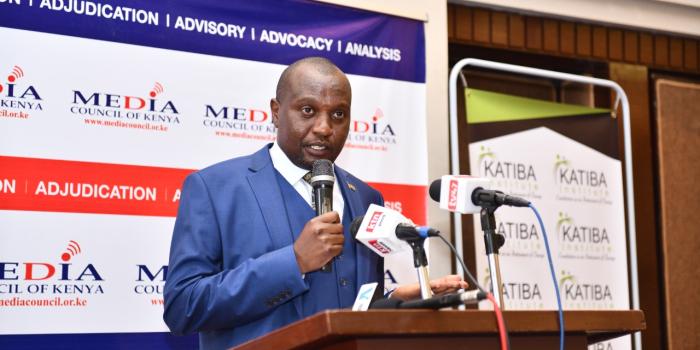
“There are about 250 television stations in Kenya, many broadcasting in vernacular languages,” said David Omwoyo, the council’s chief executive. “Relying on human analysts alone is no longer enough. We need a modern system that can deliver real-time oversight.”
Currently, MCK employs just 37 analysts to track output from hundreds of outlets nationwide. Omwoyo said the new system would be particularly useful in monitoring vernacular stations, which in the past have been accused of spreading inflammatory content.
The request comes amid rising concerns over press safety and freedom. Between January and September, the council recorded 84 violations against journalists. These included 56 assaults, most during political protests, along with 16 cases of intimidation, eight incidents of censorship, three arrests and one reported abduction.
Men accounted for the bulk of cases—65 out of 84—with police officers blamed for most of the attacks. Hired gangs, government officials, politicians and even a magistrate were also cited in the council’s report.
Parliament’s Committee on Communication, Information and Innovation, which heard the request on Tuesday, acknowledged the need for stronger oversight but stressed the balance between accountability and free expression.
“The narratives shaping our world today are increasingly driven by algorithms and platforms outside traditional newsrooms,” said committee chair John Kiarie. “Parliament must strike a balance between protecting Kenyans from misinformation and upholding a free, responsible press.”
Lawmakers also resolved to work with MCK and the Centre for Parliamentary Studies and Training to boost media literacy among MPs ahead of the next elections.
For now, the regulator’s pitch rests on whether Parliament believes artificial intelligence can help strengthen media accountability without weakening the country’s hard-won press freedoms.
About the Author