Across Kenya peaceful protests have repeatedly been met with force. Reports allege live ammunition, beatings, tear gas, unmarked officers and even hospital raids. At least hundreds are reportedly killed and injured in a wave of unrest.
In June, thousands of Kenyans led largely by young, tech‑savvy Gen Z poured onto the streets. Their target was remembering the lives lost last year during #RejectFinanceBill2024 protests, police brutality, inequality, political corruption and justice for those affected during 2024 protests. But, what began as a peaceful protest resulted to police using violence.
Protesters gathered on key dates to fight for justice and every time, the police responded with beatings, violence, tear gas, water cannon and live rounds which resulted in lose of lives of Kenyans and even children.
Key Cases of Police Brutality
Death of Albert Ojwang in Custody
Albert Omondi Ojwang, a 31‑year‑old blogger and teacher, died two days after his arrest in early June. Police said he hit his head inside a cell. But an autopsy revealed signs of assault. His death sparked national outrage.
Death of Bridget Wainaina in her home
Bridget Njoki Wainaina, a 12‑year‑old Class 7 pupil from Kiriguini village in Ndumberi, Kiambu County, was tragically killed by a stray police bullet while inside her home during the Saba Saba protests on July 7, 2025. Around 6:20–6:30 pm, Bridget was inside her compound watching TV. A stray round pierced the house and struck her in the head. She was rushed to St. Bridget’s Hospital where attempts to revive her failed.
Death of Boniface Kariuki in Nairobi CBD
On 17 June, a street vendor, Boniface Kariuki, was shot in the head by police using an anti‑riot shotgun. Two officers were charged and appeared in court.
Live Rounds at Saba Saba Protests
On 7 July, the anniversary of the 1990 Saba Saba pro‑democracy rally, protests flared. Authorities say 31 people were killed across 17 counties as police used tear‑gas, water cannon and live bullets . In Nairobi’s suburbs, officers shot directly into crowds, residents and streets.
Deaths Recorded in June 2024 Protests
David Chege, Erickson Kyalo, Eric Kayoni Shieni, Kelvin Odhiambo Maina, Ibrahim Kamau Wanjiru, Earnest Kanyi, Kenneth Njiru Mwangi, Wilson Sitati, Beasley Kogi (aka Beasley Kamau)
Additional Protesters Killed by Police During June Escalations
Rex Kanyike Masai, Abdi Kadir, Evans Kiratu, Benson Scotts Mbithi, Michael Kihuga, Austin Onyisa/Makhoka, Kelvin Kagoni, Brian, Lemaiyan Kasaine, Chris Gitonga, Matthew Njoroge, Kennedy Onyango
Cover‑ups of Deaths
At least two protesters 19‑year‑old Charles Owino and 21‑year‑old Shaquille Obienge were fatally shot. Their deaths were officially recorded as road accidents. Such cases highlight attempts to conceal deadly force.
Eyewitness Voices
“They fire live rounds everywhere… We are not animals, we are human beings like them.” a protestor in CBD told reporters.
“64 Kenyans were killed in cold blood. Not a single officer has been held to account.” Hussein Khaled, human rights activist.
Official Response
The Independent Policing Oversight Authority (IPOA) says it has opened hundreds of investigations but notes systemic delays and police interference.
Police leaders claim they acted to keep the peace, labeling many protests illegal.
Authorities push back
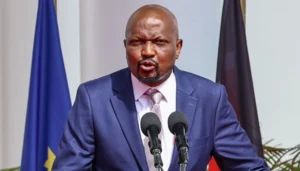
Murkomen was widely criticized for what appeared to be a call for excessive police force, including lethal action. His “shoot-to-kill” remarks sparked public outrage, particularly given the rising number of deaths and injuries during protests.
The lack of official accountability, paired with ongoing reports of police brutality, has fueled further distrust in the government’s handling of civil unrest.
International and Civil Society Reaction
The Kenya National Commission on Human Rights reported 31 deaths on Saba Saba day alone, including cases of live fire by police, with hundreds more injured and over 500 arrested.
Human rights organisations, including Amnesty International and the UN Human Rights Office, have condemned the live rounds, use of excessive force and abductions. The UN urged prompt investigations and protections for peaceful assembly and press freedoms.
As the UN calls for transparent, independent investigations, local bodies like the Law Society of Kenya are documenting testimony from protest survivors, families of the dead, and those still missing.
In court, calls are growing for reforms yet no senior officer has faced prosecution.
But many more incidents go unpunished. Human Rights Watch and IPOA report that between June and August 2024, more than 60 protesters were killed and 66 abducted by security forces. Still, no senior officers have been convicted.
What Lies Ahead?
Kenya’s youth especially Gen Z are calling for accountability and systemic change.
About the Author