

World Tourism Day is being marked on September 27, with tourism enthusiasts highlighting the importance of travel, conservation, cultural exchange and community livelihoods.
Observed annually since 1980, the day provides an opportunity to recognise the contribution of tourism to economies and communities around the world.
Tourism employs about one in every 10 people globally and provides livelihoods for hundreds of millions of people. In some countries, the sector contributes more than 20 per cent of gross domestic product.
Beyond its economic contribution, tourism connects people with cultural and natural heritage while supporting efforts linked to the United Nations Sustainable Development Goals.
The 2026 theme, “Digital Agenda and Artificial Intelligence to Redesign Tourism”, highlights the growing role of technology and artificial intelligence in transforming how travellers discover, choose and experience destinations.
The theme also focuses on how digital innovation can reshape the tourism industry and improve the way destinations engage with travellers.
For Amboko Diaries CEO, Anjela Amboko, World Tourism Day is an opportunity to reflect on the wider purpose of travel as the industry embraces digital innovation and artificial intelligence.
“Marking World Tourism Day is no longer about tallying arrival numbers or capturing perfect landscapes, it is a critical pause to ask who travel truly serves.”

She says the growing use of technology should not come at the expense of authentic human connections and local communities.
“As the industry rapidly shifts toward digital innovation and AI-driven exploration, our greatest challenge isn’t algorithm efficiency but preserving the authentic human connection at the heart of every journey,” says Anjela.
Amboko also says technology can help increase the visibility of lesser-known destinations and give local creators a greater platform.
“True progress in tourism happens when innovation amplifies community stories, honors environmental stewardship and ensures that the economic wealth of travel flows directly to the hands that shape our cultures,” she adds.
For journalist and travel enthusiast Jacklyne Malombe, Naivasha remains one of her favourite destinations in Kenya.

“From the calm waters of Lake Naivasha to the breathtaking landscapes of Hell’s Gate, every visit reminds me of Kenya’s incredible beauty and the importance of tourism. As we mark World Tourism Day 2026 today, I believe tourism is more than sightseeing; it is a story of conservation, cultural exchange, community livelihoods and national pride,” she said.
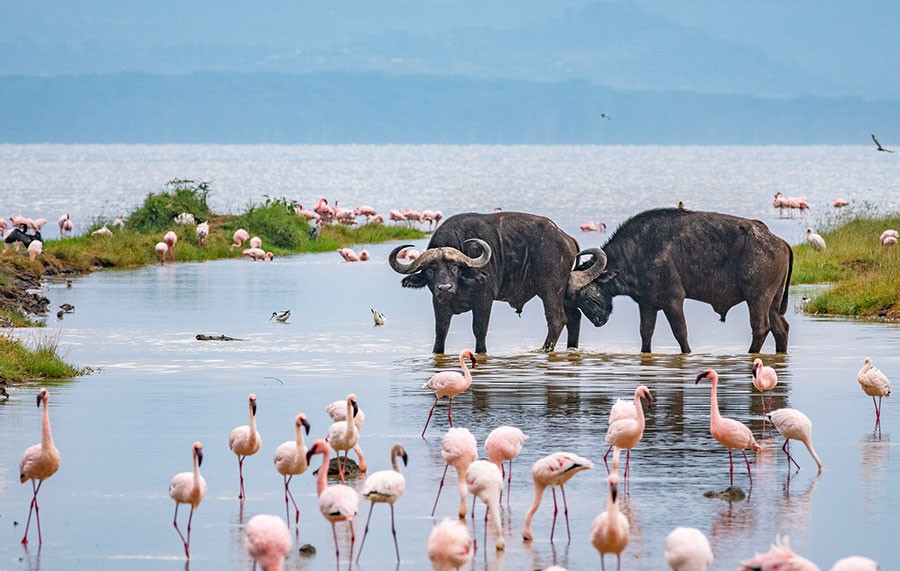
Malombe encouraged travellers to explore local destinations while supporting communities and promoting sustainable tourism.
“Let us explore our beautiful destinations, support local communities and embrace sustainable travel to preserve our natural heritage for generations to come,” emphasise Miss Malombe.
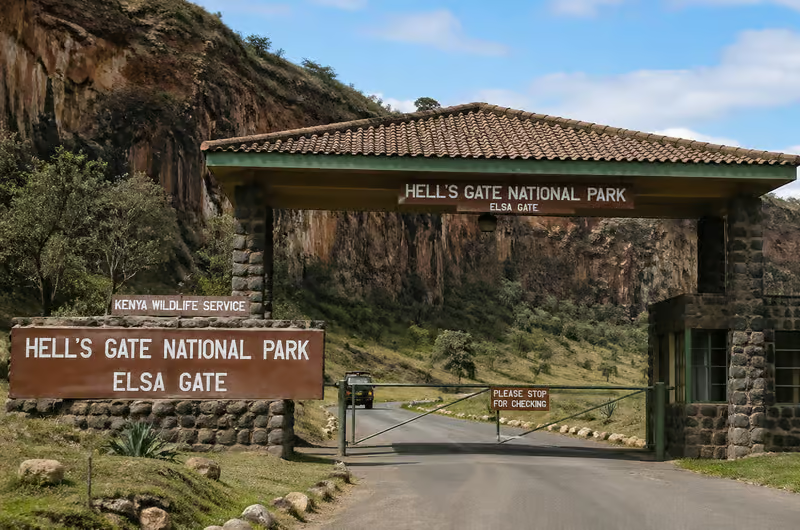
Conservation remains a key tourism concern
As Kenya celebrates World Tourism Day, conservation remains an important part of the country’s tourism story, with the Kenya Wildlife Service raising concerns over an increase in rhino territorial fights that could threaten the survival of calves.
KWS Director General Erustus Manga said interventions to protect rhinos had contributed to an increase in populations, particularly black rhinos. However, he said territorial fights had emerged as a new challenge that requires urgent attention.
“In 2023, we had over 280 rhino births in this country. In 2024, we recorded more than 260 rhino births,” Manga said.
Manga said he tasked his team to account for the more than 500 rhino calves recorded during the two years.
“Unfortunately, we could only account for 100.”
This means about 400 rhino calves could not be accounted for.
The KWS Director General said he had tasked his team with ensuring measures are put in place to improve the survival of rhino calves and see them reach maturity.
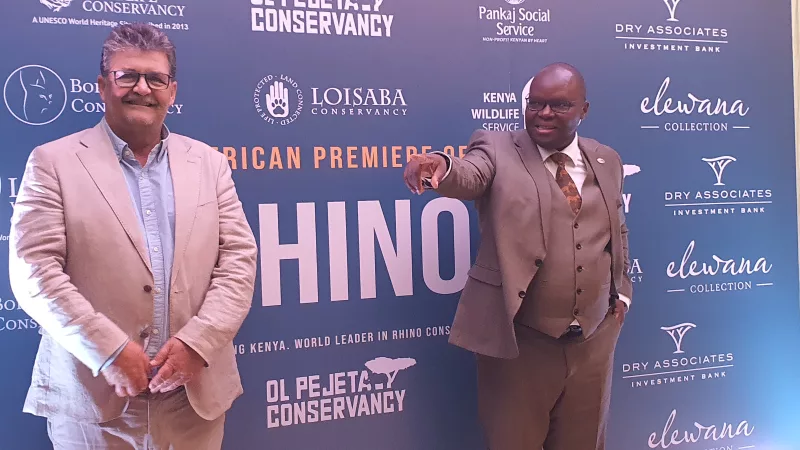
Manga was speaking in Nairobi during the African premiere of RHINO, a documentary narrated by actor Tom Hardy, which was screened on September 26 as part of World Rhino Day activities.
The premiere brought together rangers, KWS officials, conservancies and conservation partners around efforts to protect one of Africa’s most threatened species.
RHINO takes viewers to the frontline of efforts to protect rhinos from extinction, following rangers, veterinarians and communities involved in conservation.
The documentary also highlights the work and resilience of rangers, whose efforts often take place away from the public spotlight.
The premiere was organised by Loisaba Conservancy, with lead sponsorship from Elewana Collection, Borana Conservancy, Ol Pejeta Conservancy, Lewa Wildlife Conservancy, Trademark Hotel, Dry Associates, Tusk Trust and the Pankaj Foundation.
“As the crisis deepened, Kenya adopted intensive management: gathering scattered survivors into secure sanctuaries where they could be protected and breed. Ngulia Rhino Sanctuary was established in Tsavo West in 1986 and became a cornerstone of this effort.”
Manga said the establishment of KWS in 1989 provided stronger institutional foundations for the country’s rhino conservation efforts.
About the Author