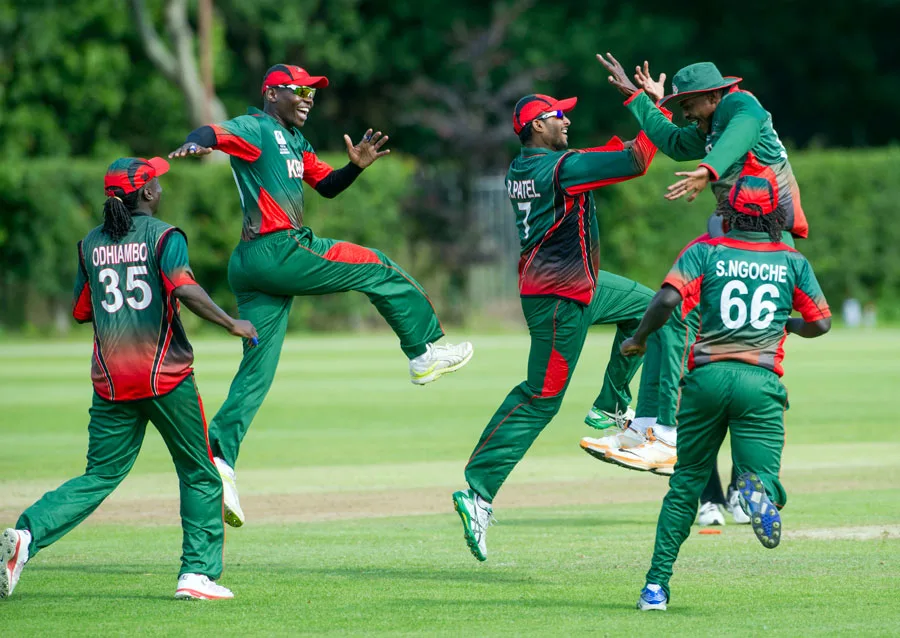
Kenya has defeated Uganda by 39 runs to win the 2026 Africa Continental Cup in Kigali, delivering an important continental title for a national cricket team trying to rebuild its international standing.
Kenya scored 170 for seven from its 20 overs after winning the toss and electing to bat at Gahanga International Cricket Stadium.
Uganda was then restricted as Kenya completed the victory in Saturday’s final.
The title is Kenya’s first in the competition.
Why the victory matters
Kenya once occupied a considerably more prominent position in world cricket.
Its defining achievement remains reaching the semifinal of the 2003 Cricket World Cup, when Kenya became the first non-Test nation to reach that stage of the tournament.
What followed was a prolonged decline characterised by governance disputes, financial difficulties and deteriorating international results.
The Kigali victory does not by itself return Kenya to cricket’s elite.
But it provides evidence of competitive progress in a region where Uganda has become an increasingly important rival.
Uganda qualified for the 2024 T20 World Cup, something Kenya failed to achieve.
Beating Uganda in a continental final therefore carries significance beyond the trophy.
Kenya recovered from a shaky start
Kenya did not cruise through the final.
The batting side initially struggled before recovering to post 170, leaving Uganda needing to score at more than eight runs per over.
Kenya’s bowlers then successfully defended the total.
The result caps a tournament in which Kenya demonstrated improvement in the shorter T20 format.
What happens next?
The larger objective is qualification for major International Cricket Council tournaments.
That requires consistent results rather than a single tournament victory.
Kenya will need to translate the momentum from Kigali into stronger performances in ICC qualification competitions while rebuilding domestic cricket structures capable of producing international players.
For a country that once stood on the brink of a World Cup final, the ambitions are inevitably larger than winning a second-tier continental competition.
But rebuilding sporting institutions rarely happens in one leap.
In Kigali, Kenya at least took another step.
About the Author