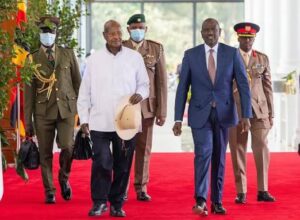
President William Ruto has arrived in New York with one of Kenya’s most ambitious investment pitches yet: a proposed $17 billion, roughly Sh2.2 trillion, refinery in Lamu.
The project forms part of Kenya’s investment agenda during the 81st United Nations General Assembly, where Ruto is expected to hold meetings with governments, investors and international institutions.
Kenya is also using the New York meetings to promote investment in artificial intelligence, infrastructure and energy while pushing its argument for changes to the international financial system.
But the size of the proposed refinery makes it the standout item.
At $17 billion, its stated value would be equivalent to more than Sh2 trillion, making it one of the largest individual infrastructure investments ever proposed in Kenya.
Why does Kenya want another refinery?
Kenya currently imports refined petroleum products such as petrol, diesel, kerosene and jet fuel.
The country’s old refinery in Mombasa stopped refining crude more than a decade ago and was subsequently converted into a petroleum-storage facility.
A functioning refinery could potentially allow crude to be processed locally instead of Kenya importing almost all its finished petroleum products.
That could create jobs and industrial activity, although whether refining locally ultimately produces cheaper fuel depends on construction costs, financing, refinery efficiency, crude supply, taxes and international petroleum prices.
The proposed Lamu location is also strategically significant.
Lamu is the anchor of the wider LAPSSET infrastructure corridor, which was conceived to include a port, roads, railways, pipelines and industrial development connecting Kenya with neighbouring countries.
Where would the crude come from?
This is one of the critical unanswered questions.
Kenya has commercially recoverable oil discoveries in the South Lokichar basin in Turkana, but efforts to move the project into full commercial production have faced repeated delays.
Ruto has recently spoken about developing a Turkana-to-Lamu pipeline.
A refinery at Lamu could theoretically become part of that wider petroleum system, but the economics would depend heavily on how much crude Kenya produces and whether the plant would also process imported oil.
Why $17 billion deserves scrutiny
Refineries are among the world’s most expensive industrial projects.
A headline investment figure does not mean the money has already been secured.
There is an important difference between a proposed project, an investor commitment, financing reaching financial close and actual construction.
That distinction will be important as Ruto conducts meetings in New York.
The key questions are therefore who will finance the refinery, who will own it, what capacity it will have, where its crude will come from, what guarantees investors may seek from Kenya and when construction could realistically begin.
Ruto’s New York trip also includes investment discussions organised around the Africa Finance Corporation and Global Africa Business Initiative.
The UN General Assembly’s formal General Debate begins on Tuesday, September 22.
For Kenya, the measure of the investment diplomacy will ultimately be what survives beyond announcements in New York and moves into financing and construction.
About the Author