Kenya’s Ministry of Energy and Petroleum has defended the Government-to-Government (G-to-G) fuel importation arrangement following remarks by Ugandan President Yoweri Museveni questioning the use of intermediaries in Uganda’s previous petroleum procurement system.
In a statement issued on Sunday, September 20, Energy and Petroleum Cabinet Secretary Opiyo Wandayi said the G-to-G arrangement was introduced in 2023 as an emergency response to a severe shortage of US dollars that was threatening Kenya’s supply of refined petroleum products and putting pressure on the wider economy.
The Ministry said that when President William Ruto’s administration took office in September 2022, oil marketing companies were required to pay for imported petroleum products in US dollars within five days of cargo receipt. The monthly petroleum import bill was approximately $500 million, accounting for about 35 per cent of the country’s total import bill at the time.
According to the Ministry, the pressure on foreign exchange forced oil marketing companies to source dollars from multiple banks, contributing to increased demand for the currency and volatility in the Kenya shilling exchange rate. The government therefore sought an alternative arrangement that would reduce the immediate demand for dollars while maintaining security of fuel supply.
On March 10, 2023, Kenya entered into Master Framework Agreements with Aramco Trading Fujairah FZE, Abu Dhabi National Oil Company Global Trading and Emirates National Oil Company Singapore for the supply of refined petroleum products on 180-day credit terms.
The Ministry said the arrangement was intended to ease the country’s dollar liquidity pressures while allowing Kenya to build its foreign exchange reserves. It also said the extended credit period was designed to support the interbank foreign exchange market and reduce speculative pressure on the shilling.
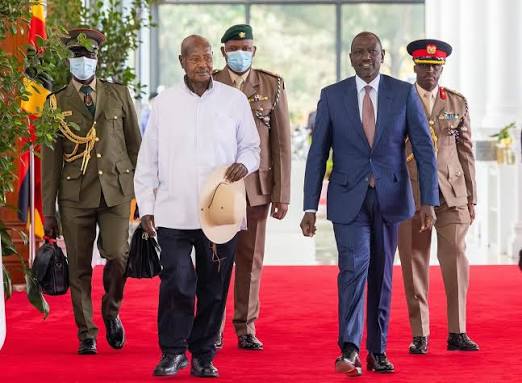
The response comes days after President Yoweri Museveni said Uganda had previously been purchasing petroleum products through intermediaries in Kenya. Speaking during the groundbreaking of a 320-million-litre petroleum storage terminal in Mpigi District on September 17, Museveni said a Kenyan senator had alerted him to the arrangement.
“The Republic of Uganda was buying petroleum products through middlemen in Kenya… And the person who woke me up first was a senator from Kenya,” Museveni said.
Museveni said the information prompted Uganda to review its procurement system and move towards direct sourcing from refiners and bulk suppliers through the Uganda National Oil Company (UNOC). He cited figures showing that the premium paid for diesel had fallen from $118 to $83 per metric tonne, while the petrol premium declined from $97.50 to $61.50. The aviation fuel premium, he said, fell from $114.25 to $79.25 per metric tonne.
Museveni subsequently argued that the previous arrangement was effectively a government-to-middlemen model rather than a direct government-to-government arrangement. His remarks have renewed debate in Kenya over the role of local oil marketing companies and intermediaries in petroleum imports.
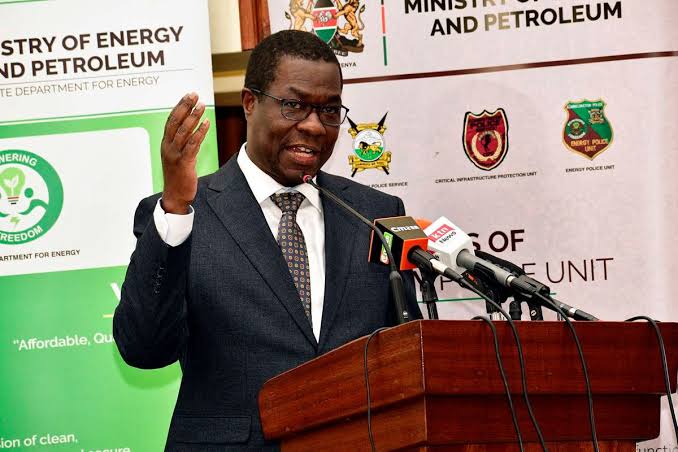
Kenya’s Energy Ministry, however, said the international oil companies involved in the 2023 G-to-G framework were responsible for selecting local counterparties for logistics and related operations.
According to Wandayi, the government initially provided the international suppliers with a list of licensed oil marketing companies. The suppliers first selected Gulf Energy Limited, Galana Energies Limited and Oryx Energies Kenya Limited before subsequently adding One Petroleum Limited, Asharami Synergy Limited and BE Energy Limited as the arrangement progressed.
The Ministry said the government did not dictate which local companies the international suppliers should appoint, arguing that doing so could have caused the suppliers to withdraw from the arrangement at a time when Kenya was facing serious fuel-supply risks.
The Ministry has also pointed to changes in freight and premium charges as evidence of renegotiation since the G-to-G framework began. It said the negotiated premium for Super Petrol initially stood at $97.50 per metric tonne, diesel at $118 and Jet A1 at $114.25.
The rates were renegotiated in September 2023, with Super Petrol falling to $90 per metric tonne, diesel to $88 and Jet A1 to $111.75. A further renegotiation in March 2025 reduced the premiums to $84 for Super Petrol, $78 for diesel and $97 for Jet A1.
Wandayi said these rates have remained fixed even during periods when international spot-market offers reportedly rose sharply, including during the Middle East crisis.
The Ministry further defended the arrangement on the grounds of fuel security, saying the international suppliers involved rank among major global petroleum refiners and traders. It said their geographic proximity to Kenya has helped maintain a consistent supply of refined petroleum products.
Under the arrangement, Kenya’s petroleum products are paid for in Kenyan shillings through a 180-day Letter of Credit, according to the Ministry. It said this structure has reduced the immediate demand for US dollars and helped preserve and build the country’s foreign exchange reserves.
The Ministry said the number of banks issuing the Letters of Credit has also expanded from KCB Bank to include MCB, I&M Bank, DTB, Stanbic, UBA and Equity Bank.
The government now says the G-to-G framework has become part of Kenya’s wider regional petroleum logistics strategy, with the country seeking to strengthen the Northern Corridor as a major route for petroleum supplies to East Africa and the Great Lakes region.
The latest exchange has brought renewed attention to how petroleum is procured, priced and distributed across the region. Museveni’s remarks focused on Uganda’s previous procurement model and the savings his government says followed its shift toward direct sourcing, while Kenya’s Energy Ministry has defended its current G-to-G framework as a response to the country’s 2022 foreign-exchange and fuel-supply crisis.
The competing accounts are likely to keep the spotlight on the role of oil marketing companies, local counterparties, freight and premium charges, and how each component ultimately affects the cost of petroleum products in the region.
About the Author