

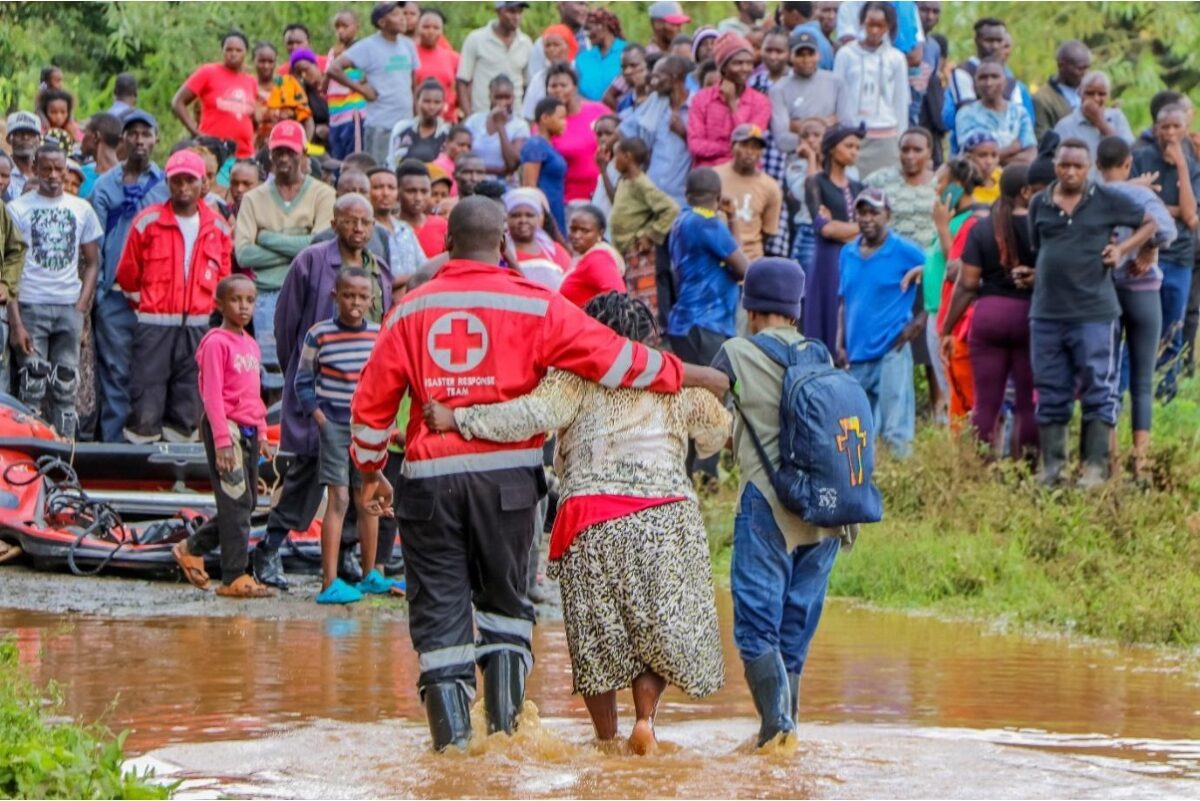
When an emergency happens, most people instinctively move towards safety. For Kenya Red Cross volunteers, the call to help can mean moving in the opposite direction.
That is the central message of “The Call,” a new Kenya Red Cross Society documentary released to mark World First Aid Day on Saturday, September 12, 2026.
The film follows the human story behind emergency response — from the volunteer who leaves home when the phone rings to the teams, technology and coordination systems working behind the scenes.
“When an emergency happens, most people look for safety. There are people who move in the opposite direction. They answer the call,” the documentary opens.
At its centre is a community-based responder whose life away from emergencies is much like anyone else’s. He is a neighbour, friend and family man. But when an accident, flood, collapsed building or other emergency occurs, he becomes part of the network called upon to save lives.
The documentary traces that commitment back to one of Nairobi’s most difficult recent emergencies — the devastating floods of 2024.
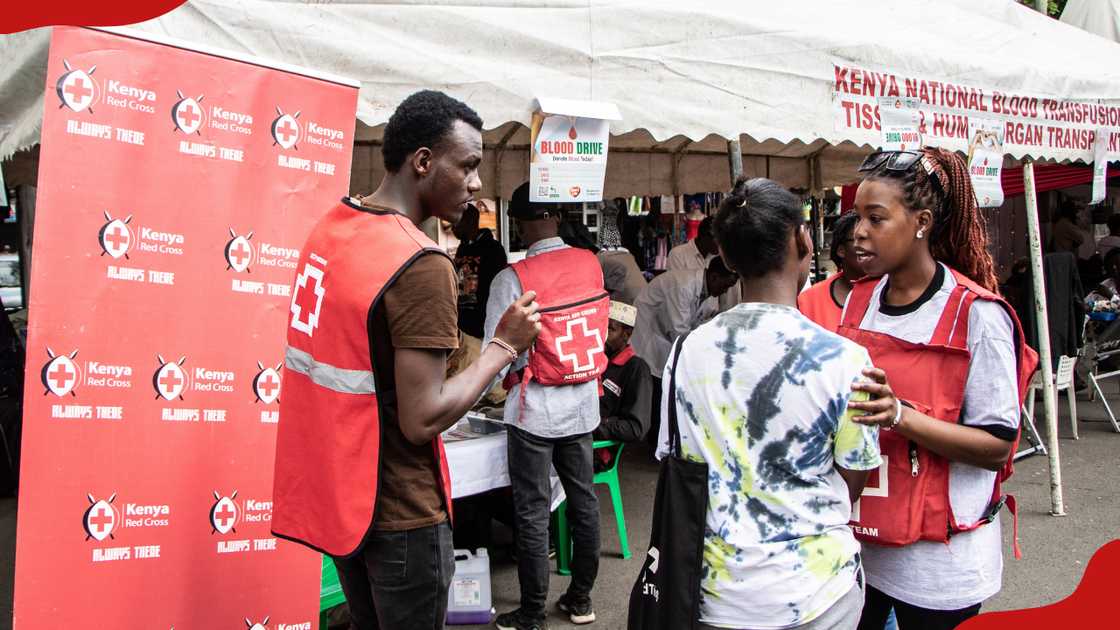
When familiar streets became disaster zones
Through archive footage and the volunteer’s recollections, The Call revisits the flooding that transformed parts of Nairobi into emergency zones.
Homes were inundated, vehicles swept away and businesses destroyed. For some families, the floods brought the ultimate loss — the death of loved ones.
“For those caught in the floods, the emergency was deeply personal — a home, a business, a vehicle, a family, sometimes a life,” the film notes.
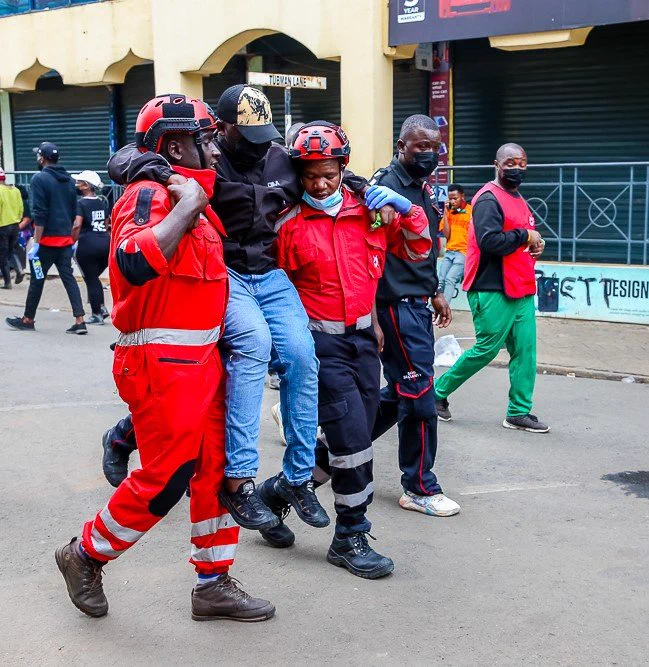
The documentary places the responder back in locations where emergency teams operated, allowing him to recall what he encountered and the difficult work of rescue and recovery.
But The Call also makes clear that the person seen pulling someone from danger is only the visible end of a much larger emergency-response system.
Inside the situation room
The film takes viewers behind the scenes into an emergency situation room, where calls and information from the field can be assessed and turned into action.
The process involves receiving information, assessing the emergency and deploying the appropriate response.
“The main one being is to save lives,” an officer explains while describing the activities being coordinated from the situation room.
Technology has become increasingly important to that process.
An official featured in the documentary says Kenya Red Cross has access to satellite capabilities through a partnership with the Airbus Foundation as well as a fleet of about five drones.
The drones can support search and rescue and both small- and large-scale mapping. Data collected from the air can then be combined with satellite information and processed to give emergency teams a clearer picture of conditions on the ground.
The documentary says such tools have been deployed in responses including landslides, where mapping can help teams understand affected areas and identify risks downstream.
“Technology can provide the eyes. The situation room can provide the information. But someone still has to go,” the narrator says.
That “someone” is often a volunteer.
Who takes care of the rescuer?
The film then turns to an aspect of emergency response that is less visible: what happens to responders after they return home.
Rescuers can witness death, severe injuries, destruction and the distress of families during emergencies. The Call asks a simple but important question: Who takes care of the rescuer?
“First aid is about helping people survive. But survival is not always only physical,” the documentary says. “Sometimes the person who needs care after an emergency is the person who spent the night saving others.”
The focus broadens the meaning of emergency preparedness beyond equipment and technical skills to include the psychological wellbeing of the people expected to respond.
As the volunteer returns to ordinary community life, the documentary reminds viewers that another emergency can come at any time.
His phone eventually rings again.
“On my way,” he responds.
“When the water rises, someone has to go. Someone has to answer the call.”
World First Aid Day 2026
The documentary comes as countries around the world mark World First Aid Day, observed annually on the second Saturday of September. In 2026, that falls on September 12. The International Federation of Red Cross and Red Crescent Societies says the observance is intended to increase awareness of the importance of first aid and its potential to save lives.
The scale of the movement is significant. According to the IFRC, it and its National Red Cross and Red Crescent Societies reach more than 50 million people every year through activities promoting awareness of first aid. The IFRC network comprises 191 National Red Cross and Red Crescent Societies.
The international focus for World First Aid Day 2026 is “First Aid in Migration Contexts,” under the message “On the move, but not alone.” The campaign highlights the importance of access to first aid for people on the move, including refugees, asylum seekers, people displaced by conflict or disasters, undocumented migrants and voluntary migrants.
According to the IFRC, an estimated 304 million people were living as international migrants worldwide by mid-2024, equivalent to about 3.7 per cent of the global population. It says nearly 9,000 people die or go missing each year while migrating, illustrating why timely first aid can become critical along dangerous routes.
People on the move can face risks ranging from dehydration, hypothermia and exhaustion to injuries, violence and psychological distress. Accessing care may also be complicated by language barriers, lack of information, cost, cultural differences or fear associated with immigration status.
The broader principle, however, extends well beyond migration: a person trained in first aid can become the crucial first link between an emergency and professional medical care.
Ordinary people, extraordinary responsibility
That principle is reflected in The Call.
The documentary shifts attention away from emergency response as an abstract institution and towards the people who make it work — volunteers who may be at home with their families one moment and responding to a flood, road crash or other disaster the next.
It also shows how modern humanitarian response increasingly combines human courage with information, mapping, communications and aerial technology.
But even with sophisticated technology, the final step remains human.
Someone must administer first aid. Someone must enter the affected community. Someone must comfort a survivor. And, when necessary, someone must put personal safety aside and move towards the emergency.
For World First Aid Day 2026, The Call offers a reminder that behind the Red Cross jacket is an ordinary person who has chosen an extraordinary responsibility: to answer when someone needs help.
#KenyaRedCross #WorldFirstAidDay #TheCall #FirstAid
About the Author


