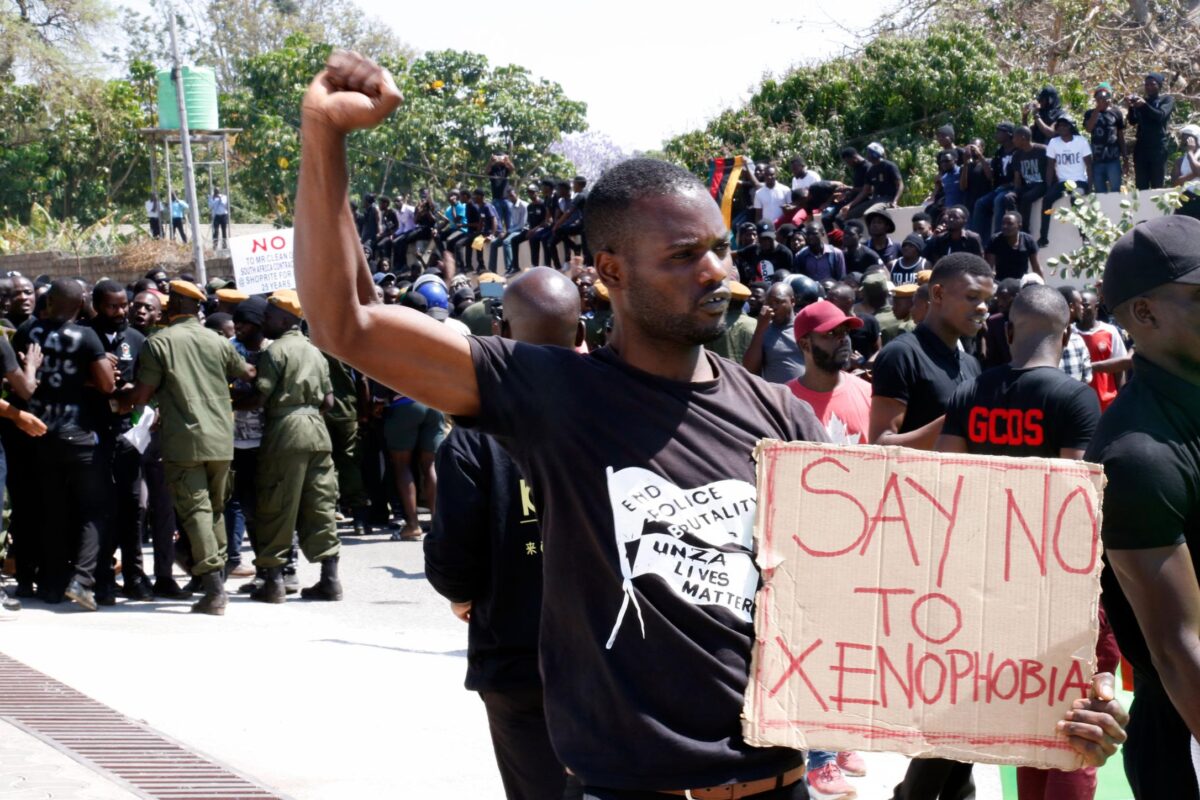
Kenya needs to have a serious conversation about what has happened over the past few days.
For years, when we spoke about xenophobia in Africa, our minds often turned to South Africa — to disturbing images of African migrants being attacked, businesses being destroyed and foreigners being blamed for unemployment, poverty and economic hardship.
Many Kenyans watched those events from a distance and wondered: How can Africans turn against fellow Africans simply because they crossed a border?
This week should teach us that no country is automatically immune from xenophobia.
A few days ago, President William Ruto directed authorities to act against foreign nationals operating certain small businesses, arguing that activities such as hawking and small-scale retail should primarily benefit Kenyans. The government has every right — and indeed a responsibility — to enforce immigration, work-permit, licensing and business laws. Foreign nationals, just like Kenyans, must operate within the law.
But there is an enormous difference between ENFORCING THE LAW and creating the impression that FOREIGNERS are the problem.
That distinction matters.
Within days, fear spread among foreign communities. Hundreds of Burundians began seeking travel documents from their embassy, with some saying they wanted to leave Kenya because they no longer felt safe. Reports emerged of harassment and growing anti-foreigner sentiment. The situation became serious enough for the government to come back and clarify its position, announce a 90-day regularisation window for undocumented East Africans and publicly warn that xenophobia and harassment would not be tolerated.
And therein lies the lesson.
The government is now trying to calm a crisis that, in my view, could have been avoided through more careful political communication from the beginning.
President Ruto may have intended to address illegal employment, undocumented migration and unfair competition in particular sectors. His administration now says the measures were meant to regulate informal trade and protect local livelihoods, rather than target foreigners as a people.
But presidents do not speak like ordinary citizens.
When a Head of State speaks, government agencies listen. Police listen. Politicians listen. Supporters listen. Angry citizens listen. And sometimes people hear something far more dangerous than what the leader intended.
A statement about enforcing immigration law can very quickly become, in the streets, “foreigners must leave.”
A statement about protecting Kenyan businesses can become “foreigners are taking our jobs.”
And once that sentiment takes root, the difference between a documented and undocumented migrant can disappear in the eyes of a mob. Nobody stops to inspect a work permit before insulting someone because of their accent or nationality.
This is exactly why political rhetoric matters.
South Africa did not become associated with xenophobic violence overnight. Economic frustration, unemployment, inequality and competition for opportunities created fertile ground for resentment, while migrants became convenient targets for problems far bigger than them.
Kenya must never travel down that road.
Our economic problems cannot simply be reduced to the presence of a Burundian selling goods, a Ugandan working in Nairobi, a Congolese running a small business or any other African trying to make an honest living.
If somebody is in Kenya illegally, we have immigration laws.
If somebody is working without a permit, we have labour and immigration authorities.
If somebody is operating an illegal business, we have licensing authorities.
If somebody is evading taxes, we have institutions mandated to deal with tax compliance.
Let those institutions do their work — individually, lawfully and without turning nationality itself into an offence.
We must also remember something else: Kenyans are foreigners somewhere too.
Thousands of our brothers and sisters live, study, work and operate businesses across Africa and around the world. We expect them to be treated according to the law, not stereotyped, threatened or collectively punished because they are Kenyan.
We cannot demand dignity for Kenyans abroad while creating an atmosphere of fear for foreigners living among us.
There is also a wider contradiction that Kenya must confront. We speak proudly about the East African Community, African integration, free movement, the African Continental Free Trade Area and a borderless Africa. President Ruto himself has been one of the continent’s prominent advocates of greater African integration. Yet rhetoric that causes Africans living in Kenya to fear their neighbours undermines that very Pan-African vision.
The images of Burundians seeking documents to leave Kenya should therefore trouble us.
Not because Kenya should abandon immigration enforcement. We should enforce our laws.
But because we must ask ourselves: How did we get here so quickly?
How did a conversation about protecting small Kenyan traders turn into foreign nationals fearing for their safety and government officials having to reassure them that Kenya would not tolerate xenophobia?
That is the power of words.
And this lesson becomes even more important as Kenya approaches the 2027 General Election.
Politicians will become more desperate for votes. Economic hardship will become campaign material. Unemployment will be discussed. Tribal grievances will be exploited. Religious, regional and class differences may be amplified. Foreigners may become convenient scapegoats.
Our leaders must understand that there are statements you cannot simply withdraw after they have entered the public bloodstream.
A politician can clarify a statement the following morning.
A government spokesperson can issue a press release.
A ministry can explain what the President “actually meant.”
But once anger has been unleashed among citizens, controlling it becomes much harder.
Political leaders therefore have a responsibility not merely to ask whether their words are technically defensible, but also to consider how those words are likely to be understood by millions of people living with unemployment, poverty and frustration.
Leadership requires restraint.
It requires explaining the law before announcing a crackdown.
It requires distinguishing clearly between illegal activity and nationality.
It requires solving economic problems rather than giving frustrated citizens another group of people to blame.
And it requires remembering that every “foreigner” being discussed is a human being — someone’s father, mother, son, daughter, employee, employer, neighbour or friend.
Kenya has historically enjoyed a reputation as a relatively open society and an economic and diplomatic hub for this region. That reputation took decades to build. We should not casually gamble with it.
Let us enforce our immigration and business laws. Let us protect Kenyan workers and traders where the law provides for it. Let us demand proper documentation from everyone who is required to have it.
But let us never confuse law enforcement with xenophobia.
And above all, as we move towards 2027, let this episode remind every Kenyan leader:
WORDS HAVE CONSEQUENCES.
As a leader, your words can calm a nation, or inflame it.
They can unite people , or give them someone to hate.
They can solve a problem, or create a much bigger one.
Kenya must choose the path of law, dignity and responsible leadership.
We should learn from what we have witnessed elsewhere in Africa rather than repeat it here.
#Kenya #StopXenophobia #ResponsibleLeadership #EAC #Africa #Kenya2027
About the Author