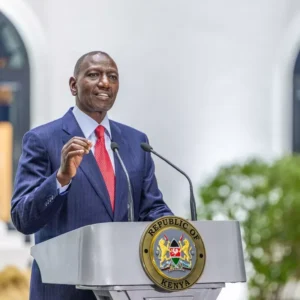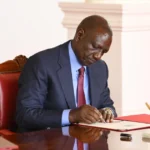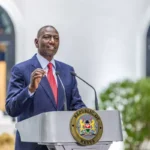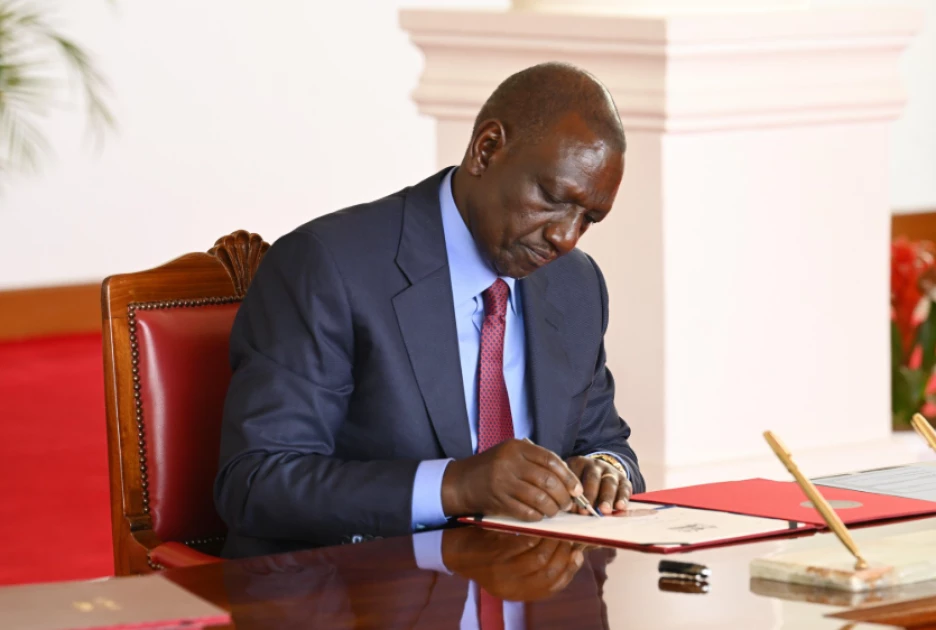
President William Ruto has witnessed the signing of an agreement between Kenya, Italy and GKSD Group that will pave the way for 15 new hospitals across the country.
The deal, signed at State House in Nairobi on Tuesday, includes 13 Level 5 county referral hospitals and two Level 6 national teaching and referral hospitals in 15 counties.
The partnership comes as Kenya seeks to expand hospital capacity and bring specialised treatment closer to patients.
President Ruto said the investment was needed because the country has fewer hospital beds than the level recommended by the World Health Organisation. Kenya currently has about 12 beds for every 10,000 people, compared with the WHO benchmark of 25, according to figures cited by the president.
“By expanding our hospital capacity, strengthening the referral system and bringing specialised services closer to communities, these facilities will accelerate our progress towards Universal Health Coverage,” President Ruto said.
The planned facilities are expected to offer services including advanced diagnostics, specialised surgery, cancer treatment and intensive care. They are also intended to ease pressure on major referral hospitals such as Kenyatta National Hospital and Moi Teaching and Referral Hospital.
But construction is not expected to begin immediately.
The National Treasury will work with the Italian government to finalise financing arrangements, while the Ministry of Health has been directed to speed up the technical and regulatory processes needed to start the programme.
Ruto said the government would judge the programme by the services it delivers rather than simply by the number of agreements signed or buildings completed.
“Ultimately, the true value of these investments will not be in the agreements we sign or the infrastructure we build, but in the lives we improve,” he said.
The agreement falls under Italy’s Mattei Plan for Africa, a framework through which Rome is expanding cooperation with African countries in areas including healthcare, infrastructure, agriculture and education. Italy’s wider plan includes health among its priority areas.
Deputy President Kithure Kindiki said healthcare remained a central part of the government’s agenda. He urged county governments to work with the national government to ensure new investments lead to better services.
GKSD Group chairman Kamel Ghribi said his organisation was ready to contribute its experience to Kenya’s healthcare expansion.
Ghribi said GKSD operates hospitals in Italy and Poland and would draw on that experience as the partnership develops.
The agreement adds to a series of government-backed efforts to expand healthcare infrastructure. In June, the Cabinet approved a separate KSh4.5 billion initiative to build 10 Level 4 and Level 5 mother-and-child hospitals in 10 counties.
The immediate challenge will now be turning the latest agreement into financing, construction and functioning hospitals, a process the government says it wants to move forward with urgency.
About the Author