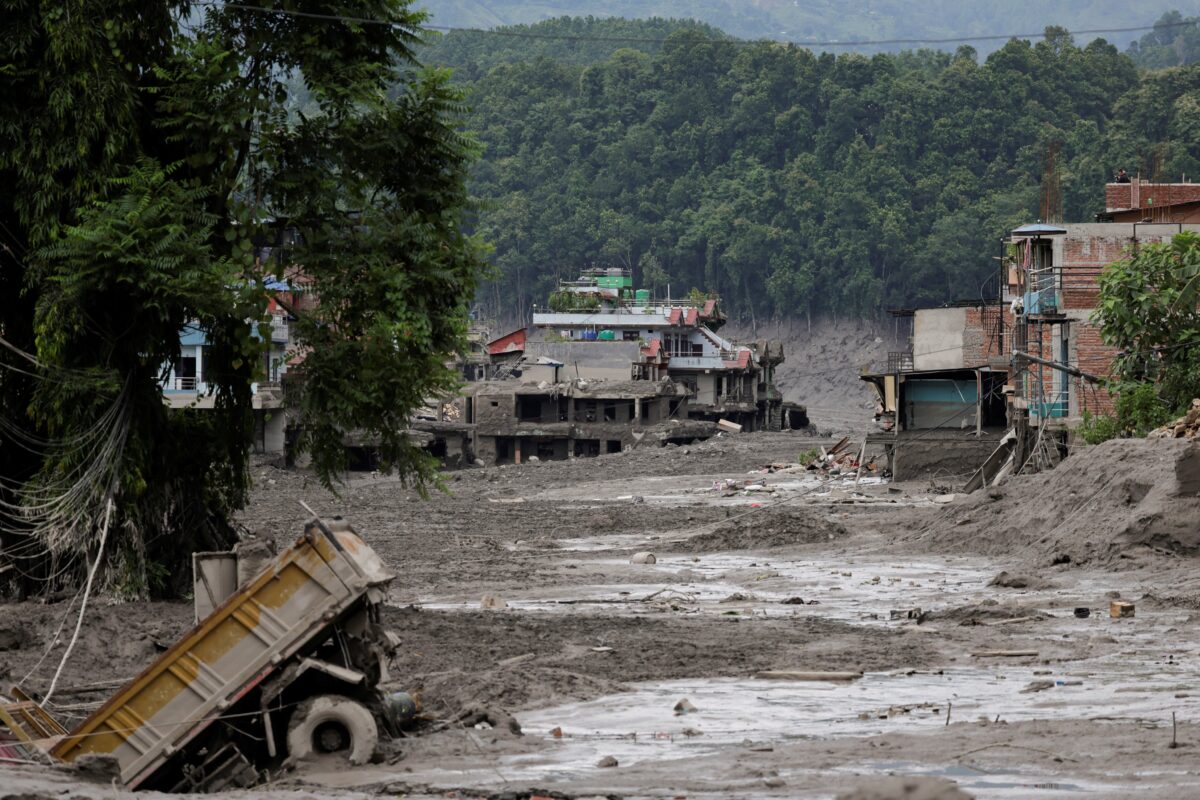
A major flash flood in Nepal has killed at least 162 people, with hundreds more still missing, after a sudden surge of mud, rock and water swept through communities near the country’s border with Tibet.
Rescue teams were using helicopters on Thursday to search for survivors and people still unaccounted for after the disaster struck on Wednesday. Reuters reported that the flooding affected parts of Nepal’s Rasuwa and Dhading districts and crossed into China’s Tibet region.
The disaster has destroyed roads, bridges, buildings and other infrastructure, while communications and transport links in affected areas have been disrupted.
What caused the flooding?
Initial reports suggested an earthquake might have triggered the disaster.
But subsequent analysis points to a different explanation.
The US Geological Survey said seismic activity initially reported as an earthquake was instead a glacial collapse and debris flow. Reuters reported that a large section of glacier at high altitude broke away, sending ice, rock and debris into a valley and producing a powerful surge downstream.
The sudden release of material caused water levels in rivers to rise dramatically, sending a fast-moving mixture of water, mud and debris through settlements.
Experts say the precise sequence of events is still being investigated.
Hundreds remain missing
The number of people unaccounted for remains uncertain as rescue teams work through damaged areas.
Reuters reported that more than 400 people were still missing in Nepal, including many foreign tourists and pilgrims. China has separately reported hundreds missing in the affected Tibetan border area.
The region is an important route for travellers heading towards Mount Kailash and other pilgrimage and trekking destinations.
Rescue efforts have been complicated by destroyed roads, damaged bridges and difficult terrain. Nepalese authorities have deployed helicopters and emergency personnel, while neighbouring countries have offered assistance.
A disaster that arrived within minutes
One of the defining features of the event was its speed.
Reuters reported that a wall of water, mud and rock swept through areas along the Bhote Koshi and Trishuli river systems, carrying away buildings and vehicles.
A survivor interviewed by Reuters described hearing a warning sound before a torrent of water, mud and rock arrived.
The episode illustrates why flash floods are particularly dangerous: unlike slower-rising river floods, they can give people very little time to respond.
Why the story matters in East Africa
The Nepal disaster comes as parts of East Africa prepare for their own wet season.
Kenya’s Meteorological Service Authority has forecast above-average rainfall across much of Kenya during the October-November-December 2026 season, with prolonged wet spells and isolated storms expected in several areas.
KMSA also says the 2026 El Niño event is strengthening, while the Indian Ocean Dipole is expected to become more positive, although its timing and strength remain uncertain.
That does not mean Kenya should expect a disaster similar to Nepal’s.
The two events have different causes and geographical circumstances. Nepal’s flooding was associated with a high-altitude glacial collapse and debris flow, while Kenya’s seasonal outlook concerns rainfall patterns over a three-month period.
The connection is simply that both underline the importance of accurate forecasting, early warnings and timely emergency response.
KMSA says its seasonal forecast should be followed alongside shorter-term 24-hour, five-day, seven-day and monthly forecasts because weather conditions can change during the season.
For now, the focus in Nepal remains on finding those still missing and supporting communities affected by one of the country’s most serious recent flooding disasters.
The situation remains fluid, and casualty figures are expected to change as rescue teams reach more affected areas.
About the Author