
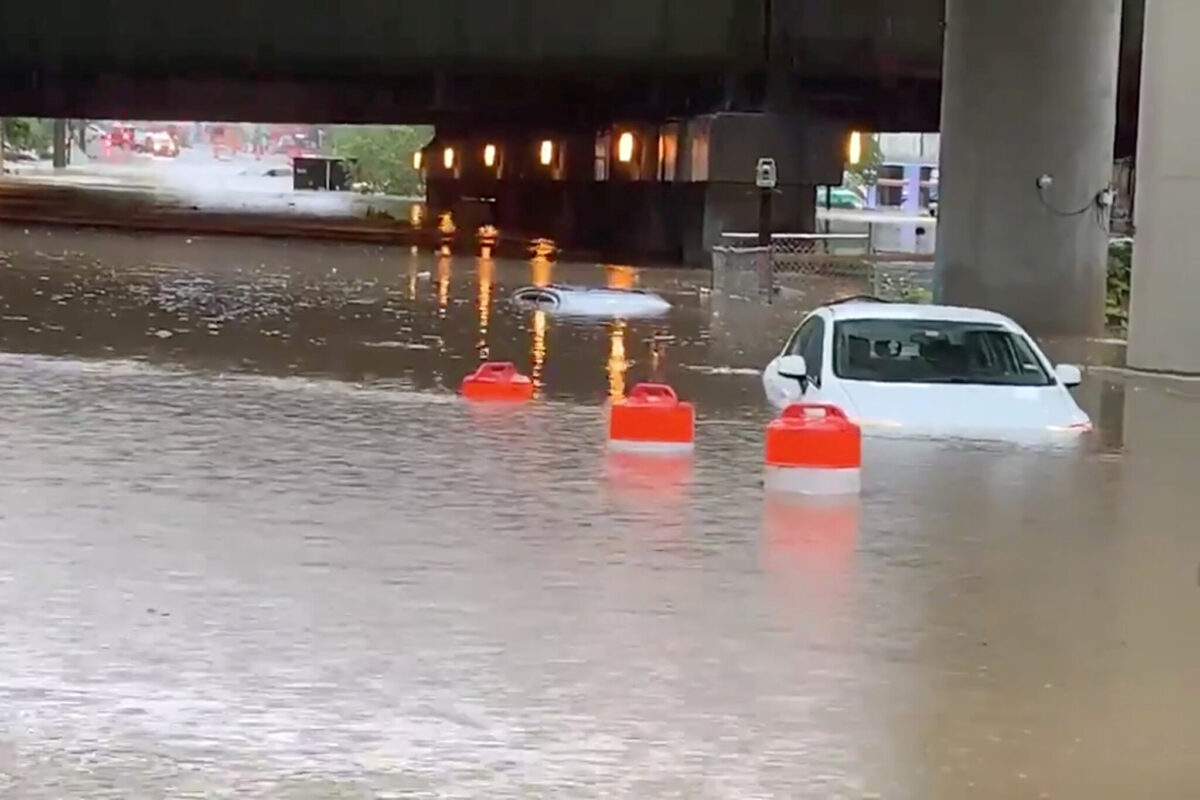
Kenya is heading into a potentially wet October-December season, with the Kenya Meteorological Service Authority (KMSA) forecasting above-average rainfall across much of the country.
For many Kenyans, the biggest danger may not be the rain itself, but how quickly water can rise.
KMSA expects prolonged wet spells and isolated storms during the OND season. It also says the weather can change at shorter timescales because of phenomena such as the Madden-Julian Oscillation and tropical cyclones, making regular updates essential.
With memories of devastating floods in recent years, knowing what to do before and during a flash flood could save lives.
Here are seven things to keep in mind.
1. Don’t wait until the water rises
The safest time to prepare for flooding is before the rain begins.
Know whether your home, workplace or regular route is near a river, drainage channel, low-lying area or other flood-prone location.
Keep essential documents and important items somewhere they can be moved quickly. Have a charged phone and a basic emergency kit ready.
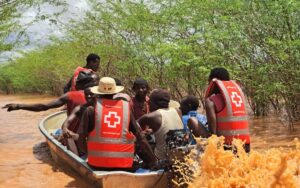
Kenya Red Cross Society has already been strengthening early-warning systems, including sending millions of alerts to communities during previous flood emergencies. In 2026, the Society reported more than 26 million early-warning SMS alerts had been sent to at-risk communities.
The message is simple: take warnings seriously, even when the sky still looks clear.
2. Move to higher ground
If flooding begins or authorities tell you to evacuate, don’t wait to see how high the water gets.
Move away from rivers, drainage channels and low-lying areas and head towards safer, higher ground.
Flash floods can develop rapidly, sometimes leaving people with little time to react. Flood-safety guidance consistently advises people to avoid entering floodwater and to move to higher ground when flooding threatens.
If you are already inside a building, moving to a higher floor may be safer than attempting to drive through flooded streets.
3. Never drive through floodwater
A road that looks passable may conceal a much deeper or faster current than it appears.
Turn around rather than attempt to cross it.
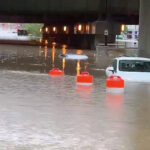
Floodwater can sweep vehicles off roads, damage bridges and conceal potholes, open drains and other hazards. The safest option is to avoid driving during severe flooding whenever possible.
This is particularly relevant in Nairobi, where authorities have identified hundreds of flood hotspots and are accelerating drainage and flood-mitigation works ahead of the expected rains.
4. Don’t walk or swim through moving water
It can be tempting to cross a flooded road or stream if the water appears shallow.
That can be dangerous.
Moving water can knock a person off their feet, while floodwater may contain sewage, debris or other hazards. It may also conceal open drains and damaged infrastructure.
If you are caught in rising water, look for a safe route to higher ground rather than trying to cross the current.
5. If your car stalls, get out if you can do so safely
If water begins entering your vehicle, don’t assume you are safer inside it.
Unbuckle your seatbelt, open or lower the windows and assess whether you can safely reach higher ground. If the vehicle is being swept away, your priority should be getting out and reaching a safe location rather than trying to save the car.
Never drive around barriers put in place to close a flooded road.
6. Don’t ignore warnings because previous rains were harmless
A common mistake is to judge today’s risk by what happened during the last storm.
But flood risk can change quickly depending on rainfall intensity, saturated ground, drainage capacity and conditions upstream.
In Tana River, Kenya Red Cross says communities are increasingly combining scientific forecasts with local knowledge to act earlier when floods are expected. Residents have described receiving alerts by SMS and radio and moving to higher ground before floodwaters arrive.
That is the principle behind early warning, early action.
7. Follow official updates
The seasonal forecast is only the beginning.
KMSA says the OND outlook should be used alongside 24-hour, five-day, seven-day, monthly and special forecasts as conditions evolve.
Kenya Red Cross, county governments and other emergency agencies may also issue alerts when specific communities are at risk.
KMSA Acting Director Edward Muriuki has stressed that climate information must be understandable and usable if it is to support early action.
That may be the most important lesson as Kenya approaches the 2026 short rains.
You don’t need to wait for a flood to become dangerous before taking a warning seriously.
The forecast gives people time.
The challenge is to use that time.
This article is adapted from established flash-flood safety guidance and contextualised for Kenya’s expected OND 2026 rains. Check updates and instructions from KMSA, Kenya Red Cross Society, county authorities or emergency services.
About the Author