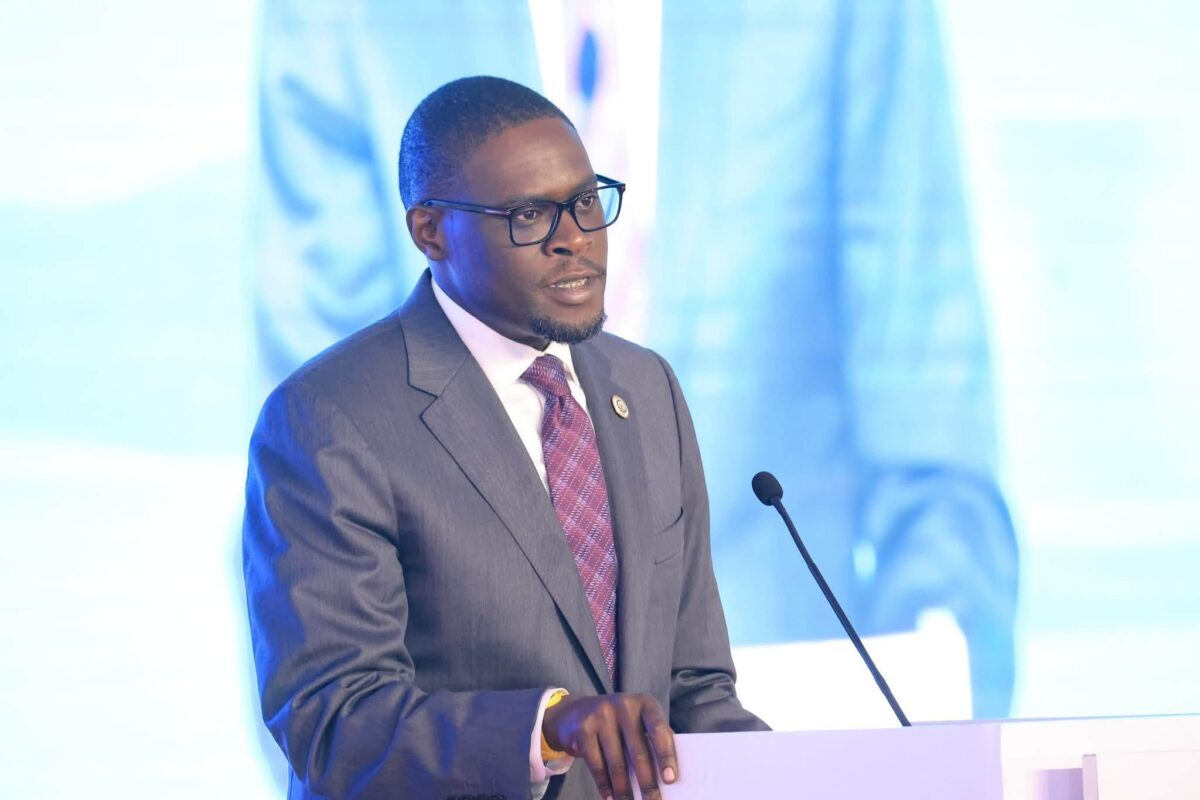
Nairobi Governor Johnson Sakaja has linked his campaign to improve maternal and newborn healthcare to a deeply personal story: his own survival after being born prematurely.
Speaking at the Kenya Health Summit at the Kenyatta International Convention Centre in Nairobi, Mr Sakaja said his mother had lost three children before giving birth to his eldest sister.
“Many people may not know why I am very passionate about issues of maternal mortality,” he said.
He said doctors later advised his mother, who had experienced complications during pregnancy, to have no more than two children. But his father wanted a son, and the family eventually had another child.
That child was Johnson Sakaja.
He was born prematurely in the 1980s, when access to neonatal care was limited. He recalled being transferred to another hospital and spending a long period in an incubator.
“I was in an incubator for a long time,” he said. “And now I’m here, by the way. I survived.”
The experience, he said, influenced how he approached healthcare after becoming governor.
Sakaja said he was surprised to learn from Nairobi’s health officials that the county had no neonatal intensive care units when he took office.
“I said this story must change,” he said.
He pointed to the neonatal intensive care unit at Mbagathi Hospital as one of the changes made under his administration. The county has also expanded newborn care and promoted kangaroo mother care, a practice that involves skin-to-skin contact between a newborn and a parent.
Sakaja said fathers were also being encouraged to take part.
“We have now encouraged men, the fathers, to also do kangaroo,” he said.
For parents with premature babies, he said, his own story was a way of offering hope.
“I tell them, you know what, don’t worry if your child is born small. Even me, I was born small,” he said.
He said a premature baby could grow up to become a governor, lawyer or doctor.
The governor said Nairobi now had 23 neonatal intensive care beds and 224 newborn unit beds, compared with none of the former category when he assumed office. He said further expansion was under way at Pumwani Maternity Hospital, Mbagathi Hospital, Mama Margaret Uhuru Hospital and Mama Lucy Kibaki Hospital.
He also highlighted progress at Pumwani, one of Nairobi’s busiest maternity facilities.
“We have recorded zero maternal deaths,” Mr Sakaja said.
Pumwani handles between 50 and 80 deliveries a day, according to the governor. Other county hospitals, including Mbagathi and Mutuini, have also expanded maternal and newborn services.
His remarks came as health officials and leaders gathered in Nairobi to discuss maternal and newborn deaths, an issue that remains a major challenge in Kenya.
First Lady Rachel Ruto, speaking at the same summit, has also called for faster action to reduce preventable maternal and newborn deaths.
For Sakaja, however, the issue is more than a policy priority. His own beginning, he said, is a reminder of what access to timely care can mean for a mother and her child.
About the Author