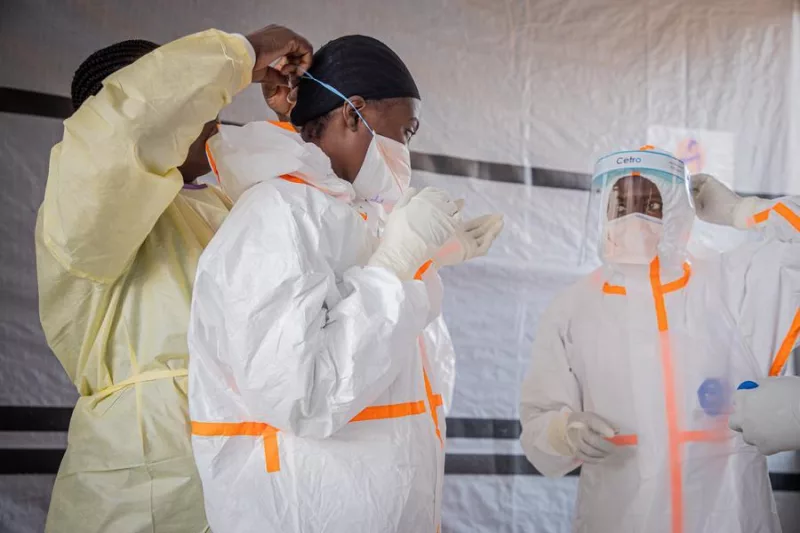
The Ebola outbreak in the Democratic Republic of Congo has become the deadliest in the country’s history, with 2,325 people now reported dead.
The latest figures from the country’s public health authorities show 4,945 confirmed cases, including 101 recorded in the previous 24 hours. The death toll has surpassed the 2,299 fatalities recorded during the 2018-2020 outbreak.
The outbreak was declared on May 15 and is being driven by the Bundibugyo strain, a rare form of Ebola for which there is currently no approved vaccine or specific treatment.
The speed of the outbreak has alarmed health officials. More than 2,000 people have died in less than three months, a pace that has made this the fastest-growing Ebola outbreak recorded in the country.
The virus has spread to six of the Democratic Republic of Congo’s 26 provinces. Most infections and deaths have been reported in Ituri, where the outbreak was first detected.
The situation is being made harder by conflict, population movement and limited access to healthcare. In some areas, health workers have struggled to reach communities and identify patients early.
The outbreak has also crossed the border into Uganda. Uganda recorded 20 confirmed cases, including two deaths, but declared its outbreak over in July after completing the required monitoring period without detecting further transmission.
Health experts say the rising death toll does not necessarily mean the virus itself has become more lethal. Instead, many patients are being diagnosed late, when treatment is less likely to save their lives.
The case fatality ratio has risen sharply, from about 20 per cent in early June to around 46 per cent in the latest figures.
Normally, as an outbreak progresses, the case fatality ratio should fall as contact tracing improves and patients are identified and treated earlier,” said Thomas Parisch, a public health specialist working with Médecins Sans Frontières in the DRC.
Researchers are working on vaccines aimed specifically at the Bundibugyo strain. Clinical trials are also examining potential treatments that could improve survival.
The World Health Organisation has warned that containing the outbreak will require faster detection, better access to treatment and stronger efforts to trace people who have been exposed.
Ebola spreads mainly through contact with the blood or other bodily fluids of infected people. Symptoms can include fever, headache and severe weakness, followed by vomiting and diarrhoea as the illness progresses.
The current outbreak is the 17th Ebola outbreak recorded in the Democratic Republic of Congo since the virus was identified there 50 years ago. It is now second only to the 2014-2016 West African epidemic in deaths recorded during a single outbreak.
About the Author