
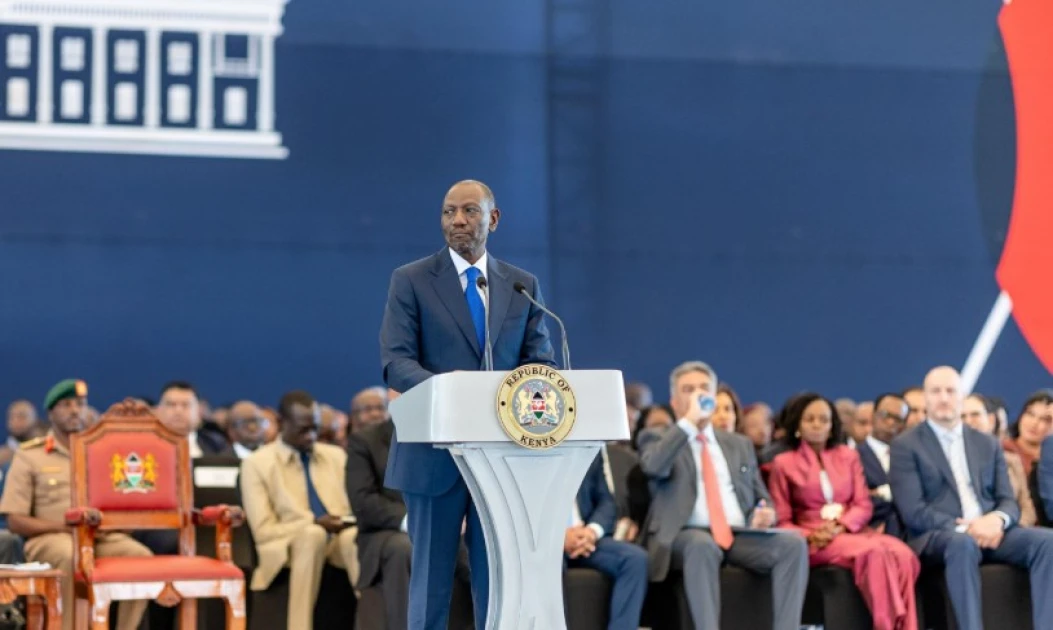
President William Ruto has unveiled a Ksh2 billion youth employment programme that the government says will help more than 100,000 young Kenyans gain work experience, training and business skills over the next three years.
The initiative, launched at State House in Nairobi today Friday, brings together the Kenyan government, the United Nations Development Programme (UNDP) and the Kenya Private Sector Alliance (KEPSA). It is designed to tackle youth unemployment by linking graduates and job seekers with private sector opportunities while offering practical training beyond the classroom.
Speaking during the launch, President Ruto described the programme as an investment in Kenya’s future workforce rather than simply another government project.
“Over the next three years, it will accelerate inclusive youth economic transformation by connecting young people with meaningful work experience and practical skills,” the President said.
Government commits Ksh2 billion to youth employment drive
The programme will begin by placing 15,000 graduates in structured, stipend-supported internships across the private sector. Participants will also receive training in entrepreneurship, financial literacy, workplace readiness and life skills intended to improve their chances of securing long-term employment or starting businesses.
Government officials said the remaining beneficiaries will undergo specialised skills training tailored to employment and enterprise development.
President announced that the first 10,000 young people will join the programme within the next three months, with the initiative expanding gradually to reach its target of 100,000 participants nationwide.
The government has committed Ksh2 billion to the programme this financial year and plans to increase that allocation to Ksh5 billion next year. The President also appealed to development partners to provide additional funding to broaden its reach.
“It is an investment in productivity, competitiveness and long-term economic growth,” he said.
15,000 graduates to receive paid internships and workplace training
The President urged businesses to play a greater role by opening internship opportunities, mentoring young professionals and helping bridge the gap between education and the labour market.
“Together, we can build a stronger bridge between education and employment, between promise and possibility,” he said.
He also praised the UNDP for partnering with Kenya on the initiative, saying the organisation had brought international experience to strengthen local efforts.
The launch was attended by Treasury Cabinet Secretary John Mbadi, Cooperatives Cabinet Secretary Wycliffe Oparanya, United Nations Resident Coordinator Garry Conille, UNDP Resident Representative Jean-Luc Stalon and KEPSA Chairman Jaswinder Bedi, alongside senior government officials.
The announcement comes as youth unemployment remains one of Kenya’s most pressing economic challenges despite several government-backed employment initiatives in recent years.
Government points to broader youth job creation efforts
President Ruto pointed to existing programmes that he said had expanded opportunities for young people, including the National Youth Opportunities Towards Advancement (NYOTA), which he said has supported more than 122,000 young entrepreneurs with financing.
He also highlighted the recruitment of 100,000 teachers over the past three years, more than 642,000 jobs linked to the Affordable Housing Programme and over 540,000 overseas job placements secured through government labour migration initiatives.
The President said Kenya’s growing pool of skilled workers could become a competitive advantage if matched with greater investment in training and employment.
“Kenya must become a hub for export of services globally, and this programme is tied to that pursuit,” he said.
Whether the latest initiative delivers lasting employment opportunities will depend not only on government funding but also on sustained participation from private employers and development partners, as Kenya continues to grapple with high youth joblessness.
About the Author