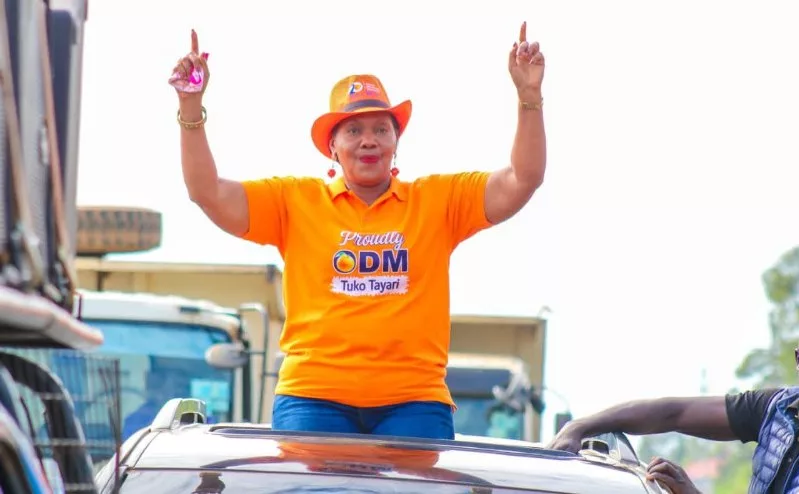
Kisumu West MP Rozaah Buyu has formally entered the race to become Kisumu’s next governor, adding another prominent name to what is shaping up to be one of the most closely watched county contests ahead of the 2027 General Election.
Speaking during a church service in Kisumu over the weekend, Buyu said she had prayed over the decision before declaring her bid, presenting herself as an experienced leader ready to take over from Governor Anyang’ Nyong’o, who is serving his second and final term.
“I have what it takes to be the third governor of Kisumu. My track record speaks for itself,” Buyu said.
Her entry expands an already crowded field that includes Deputy Governor Mathews Owili, Senator Tom Ojienda, Kisumu Central MP Joshua Oron, Nyakach MP Aduma Owuor, Kisumu Woman Representative Ruth Odinga and former Kisumu Central MP Ken Obura.
Buyu, who previously served as Kisumu Woman Representative before winning the Kisumu West parliamentary seat, said her experience in both county and national leadership had prepared her for the county’s top office.
The growing list of aspirants reflects the significance of the election. For the first time in a decade, Kisumu voters will elect a governor without an incumbent seeking another term, opening the door to a fresh political contest.
Political analysts say several factors are likely to shape the race. Among them are who secures the backing of the Orange Democratic Movement (ODM), whether voters favour continuity or change after Nyong’o’s tenure, the candidates’ records in public service and the alliances that emerge before party nominations.
Kisumu has long been regarded as one of ODM’s strongest political strongholds, with the party and the wider Odinga political family continuing to wield considerable influence. Even so, the expanding field suggests that candidates are increasingly seeking to distinguish themselves through their records and policy agendas rather than relying solely on party loyalty.
Ruth Odinga, for example, has built her campaign around economic empowerment, promising stronger support for small businesses, young people, women, persons living with disabilities and community groups.
She has also urged residents to judge candidates by their performance rather than party affiliation or campaign incentives, arguing that effective leadership should be measured by delivery.
Deputy Governor Owili enters the contest as the candidate most closely associated with the current county administration. His supporters are expected to campaign on continuity and experience, though he is also likely to face questions about the county government’s record on service delivery during Nyong’o’s administration.
Buyu, meanwhile, is positioning herself as an experienced but fresh alternative, pointing to her legislative work and development record.
Senator Ojienda is expected to campaign on his national profile and legal expertise, while Joshua Oron is likely to draw on his growing visibility in Parliament. Aduma Owuor is widely expected to rely on his grassroots support across Nyakach.
Ken Obura has taken a different path, choosing to contest as an independent candidate. He has argued that political parties often deny voters the opportunity to choose the most capable leaders and reduce accountability once elections are over.
The succession race is also expected to bring gender representation into sharper focus. With both Buyu and Ruth Odinga seeking the governorship, women are poised to play a central role in the contest, although each has adopted a distinct campaign message.
As campaigns gather pace, the contest is evolving into more than a race to replace Nyong’o. It is also becoming a debate about Kisumu’s political future, with voters expected to weigh experience, development priorities and leadership style alongside party allegiance when they head to the ballot in 2027.
About the Author