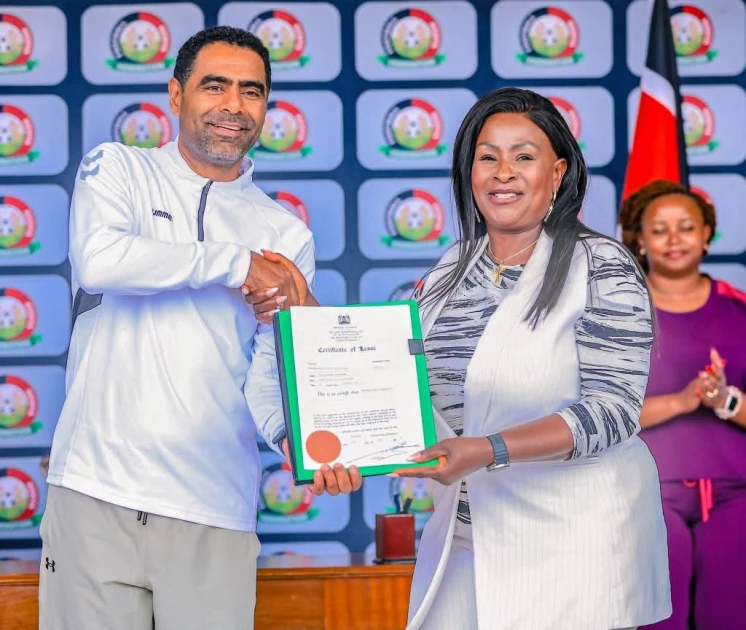
Football Kenya Federation has taken another step in its effort to rebuild Kenyan football from the ground up after reaching an agreement with county governments to strengthen grassroots structures and create more opportunities for young players.
The proposal aims to tackle long-standing challenges, including uneven competition structures, inconsistent affiliation fees and limited access to qualified coaches and referees.
If fully implemented, the partnership could provide a more organised pathway for young footballers hoping to progress from local leagues to the national stage.
Counties to adopt a common football framework
At the centre of the agreement is a standard memorandum of understanding that FKF and county governments intend to adopt.
The framework will introduce uniform affiliation fees across counties, while also encouraging joint investment in referee and coach training. It will further support the organisation of structured competitions designed to raise the standard of grassroots football.
Speaking after the meeting, Ahmed Abdullahi said the agreement is intended to create consistency in how football is managed at the county level.
“There will be a standard template for collaboration through a memorandum of understanding between FKF and the county governments,” Abdullahi said.
He added that the partnership would cover “standardisation of affiliation fees across all counties, collaboration with respect to referees training, coaches training and the actual footballing events that happen across.”
FKF sees football as a source of jobs
Hussein Mohammed said county governments have an important role to play beyond supporting teams, arguing that stronger local leagues could also create employment and economic opportunities.
“We need, as FKF together with county governments, to build on the software, which is the leagues and competition that we intend to work on together to ensure that we commercialise football in a sustainable manner,” Hussein said.
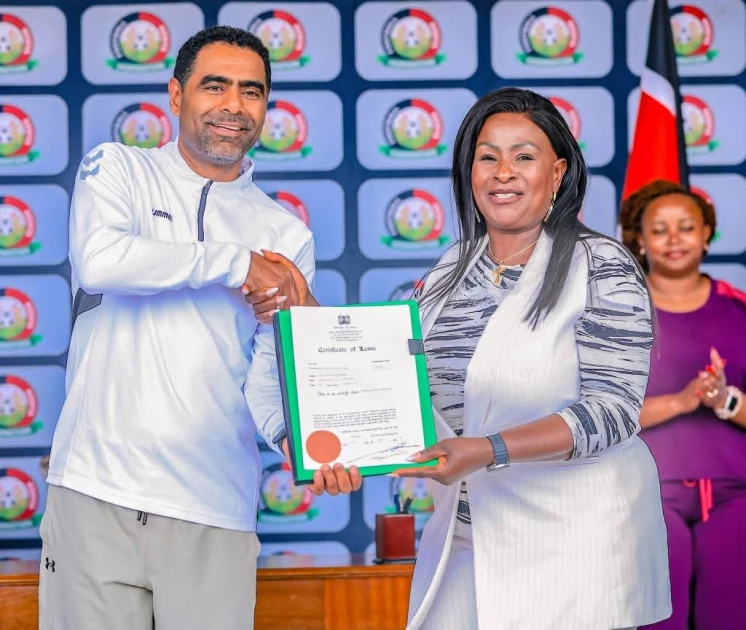
“We have to do this so that we create jobs, employment opportunities and an ecosystem that will benefit thousands of our youth within this sport.”
His remarks reflect FKF’s wider push to strengthen domestic football by investing in competitions at the grassroots rather than focusing only on elite clubs and the national teams.
A long road ahead
Grassroots football has long been viewed as one of Kenyan football’s weakest links, with many counties struggling to maintain organised youth leagues, coaching programmes and player development systems.
The new partnership aims to address those gaps by creating clearer development pathways and improving coordination between FKF and devolved governments.
Its success, however, will depend on sustained funding, effective implementation and continued cooperation between the federation and county administrations. For many young players across Kenya, those efforts could determine whether local talent is given a genuine chance to flourish.
About the Author