
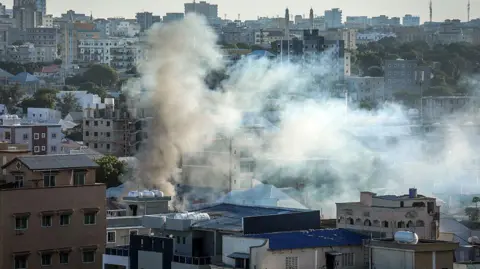
Gunfire echoed across Mogadishu through the night, sending residents scrambling for safety as clashes between rival factions shook Somalia’s capital.
By dawn on Thursday, smoke hung over parts of the city. Armed forces had fanned out across key neighbourhoods, their presence a sign of a deepening political standoff that now threatens to spill further into the streets.
Residents described a night of fear and uncertainty.
“We did not sleep throughout the night because of sporadic gunfire,” said Xalimo Salad, who lives in the Howl Wadaag district. “This morning, the fighting became more intense.”
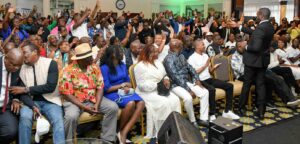
The unrest follows a controversial move by President Hassan Sheikh Mohamud to extend his term by one year, a decision that has drawn sharp opposition from political rivals and regional leaders. Demonstrations had been planned in Mogadishu on Thursday, but tensions escalated before they could fully take shape.
Clashes began on Wednesday as opposition figures arrived in the city. Witnesses and journalists reported intermittent fighting that stretched into the early hours, with gunfire heard in several districts, including areas near Lido Beach and the residence of former president Sharif Sheikh Ahmed.
Police said they had launched a “large-scale security operation” targeting what they described as heavily armed militias accused of firing mortars into residential neighbourhoods.
Opposition leaders, however, offered a starkly different account.
Former prime minister Hassan Ali Khaire said he had been targeted by government forces after moving from the heavily guarded airport zone to his home in the city. In a statement posted online, he accused the president’s forces of carrying out “a sustained and indiscriminate military assault” against him.
Authorities had not confirmed any casualties by Thursday morning, though security sources indicated that heavy weapons had been used and that civilians may have been affected in some areas.
By mid-morning, the intensity of the fighting appeared to ease as talks between government and opposition figures began, raising cautious hopes of de-escalation.
International partners quickly voiced concern. The United States embassy in Mogadishu described the violence as reckless and urged all sides to return to dialogue. A joint statement from the European Union, the United Nations and the British embassy echoed those concerns, warning that the situation could deteriorate further without restraint.
At the heart of the crisis lies a long-running debate over Somalia’s political future. President Mohamud has argued that constitutional changes passed earlier this year justify his extended tenure and are necessary to guide the country towards broader democratic elections.
His critics see it differently. They argue the move risks concentrating power and undermining fragile political agreements in a country already grappling with deep clan divisions and the persistent threat of the militant group Al-Shabaab.
About the Author