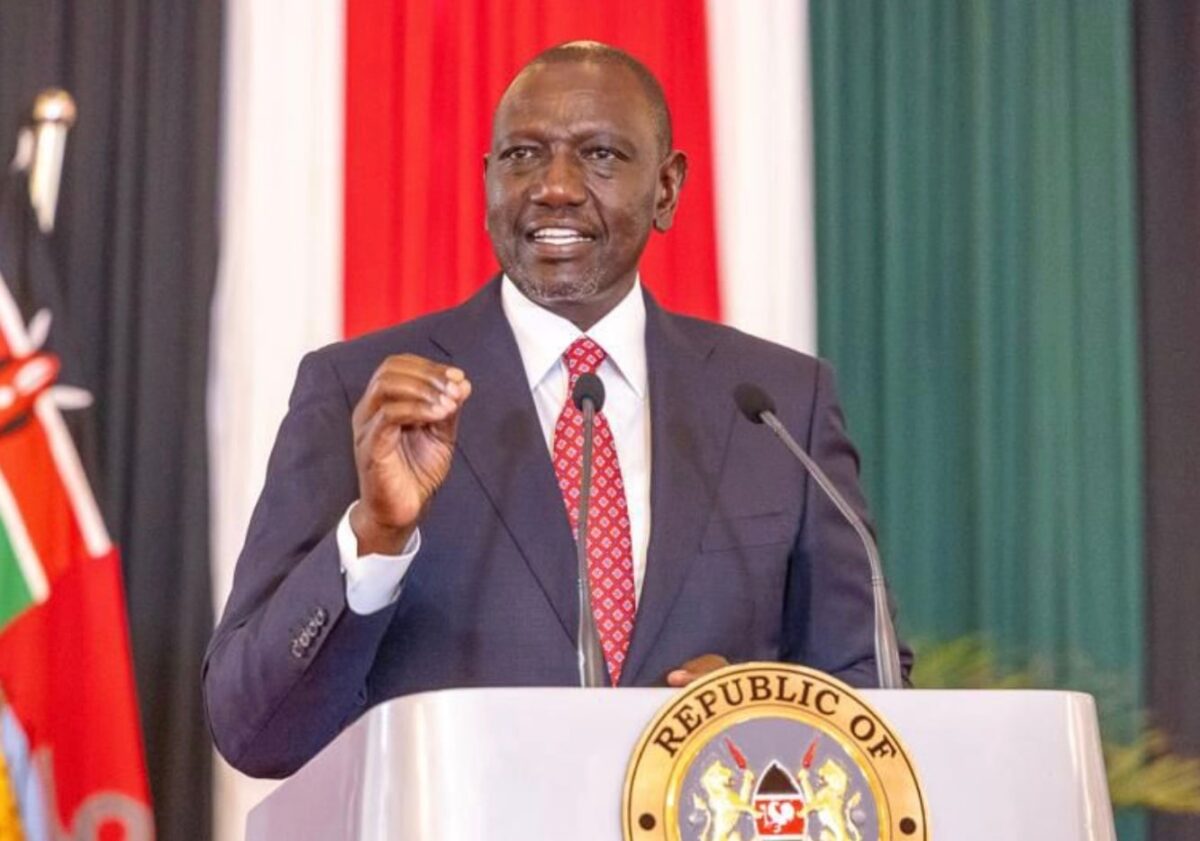
President William Ruto has reassured Kenyans that recent reforms to the issuance of national identity cards have not weakened citizenship safeguards, insisting that national IDs will continue to be reserved for legitimate Kenyan citizens.
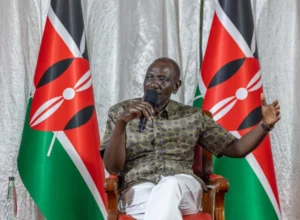
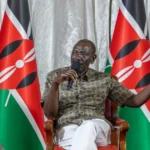
Speaking during the Madaraka Day celebrations in Wajir on Monday, President Ruto said the changes introduced by his administration were intended to end what he described as decades of discrimination against communities in northern Kenya and other border regions.
The President pushed back against claims that easing access to identity documents had opened the door for foreigners to obtain Kenyan papers.
“Kenyan identity cards will only be issued to legitimate citizens of this republic,” President Ruto told thousands gathered at Wajir Stadium.
His remarks came as debate continues over government efforts to streamline the registration process in areas where residents have long complained of facing additional scrutiny when applying for identity cards.
For many families in northern Kenya, obtaining an ID has often been more complicated than in other parts of the country. Applicants have frequently been required to provide extra documents or undergo vetting procedures that critics say unfairly targeted certain communities.
President Ruto recalled the experience of Bakaja Ibrahim Osman, a resident of Wajir, who he said repeatedly faced obstacles while attempting to secure a national identity card.
“Every time Osman went to apply for an identity card, he was treated not as a Kenyan but as a suspect, an illegal alien,” the President said.
According to President Ruto, such experiences reflected a wider problem affecting many citizens in northern Kenya who were born in the country but struggled to access identification documents.
The President argued that the reforms were designed to align government practice with constitutional guarantees of equality and non-discrimination.
“Every Kenyan deserves equal protection, equal dignity and equal treatment under the law,” he said.
President Ruto pointed to a presidential declaration he signed in February 2025 aimed at simplifying the registration and issuance of IDs and birth certificates in northern Kenya and other affected counties. He said the policy had already helped thousands of young adults obtain identification documents without facing what he described as unnecessary hurdles.
Among those he highlighted were Abra Abdul Rahman Ali Osman and Mariam Isaac Mohammed, both from Wajir County, who successfully acquired national identity cards after turning 18.
“They walked away with their national identity cards. No hurdles, no extra documentation, no discrimination, no humiliation,” he said.
At the same time, the President stressed that verification procedures remain in place and that security concerns have not been ignored.
“We did not abolish verification of citizenship. We abolished discrimination, he said.
“We abolished the targeting of entire communities simply because of their ethnicity or place of birth.”
President Ruto argued that fairness and national security should not be viewed as competing priorities.
“A strong nation does not choose between security and justice. A strong nation protects both,” he said.
Broader Push for Inclusion
The issue of identification documents has long been politically sensitive in Kenya, particularly in border regions where questions of citizenship, security and access to public services have often intersected.
For residents who have struggled to secure official documents, however, the debate is also deeply personal. Without a national ID, access to education, employment, banking and government services can be severely restricted.
President Ruto said the reforms should be seen as part of a broader effort to ensure that all citizens feel included in the country’s development.
“People like Osman and Mariam no longer feel like strangers in their own country,” he said. “They feel seen and heard. They feel recognised. They matter and they belong.”
He added that true inclusion must extend beyond identity documents to encompass education, healthcare, economic opportunity and access to public services.
About the Author