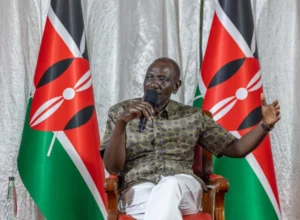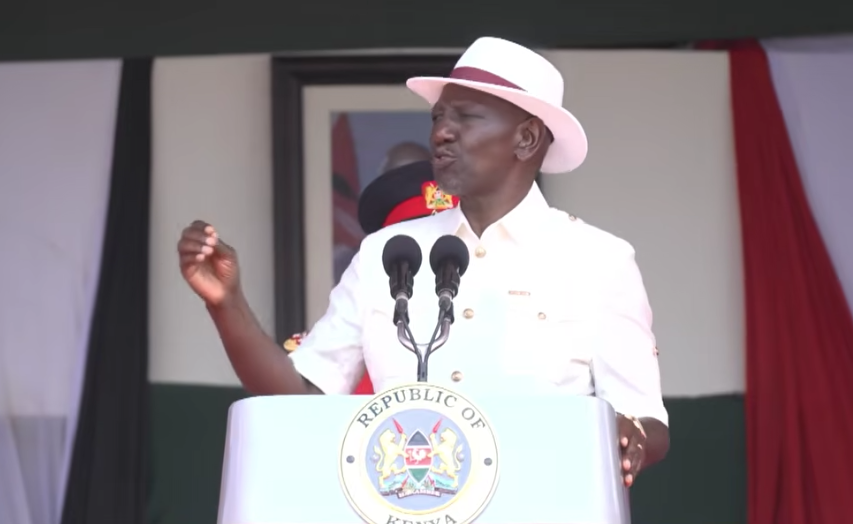
President William Ruto on Monday said Northern Kenya is beginning to see relief from a long-running shortage of teachers, pointing to the recruitment of 1,800 locally trained educators as part of a wider push to improve access to education in the region. Speaking during Kenya’s 63rd Madaraka Day celebrations in Wajir County, Mr Ruto cast education as the cornerstone of his administration’s efforts to tackle poverty, inequality and decades of underdevelopment in parts of the country that have historically lagged behind.
“Of all the investments we are making in Northern Kenya, none is more important than education,” the President told thousands gathered at Wajir Stadium. “Education is the bridge between promise and opportunity, between poverty and prosperity, and between exclusion and belonging.”
The remarks came as the government highlighted progress in implementing education reforms under the Competency-Based Education and Training system, which aims to equip students with practical and career-oriented skills.
President Ruto said interest in science-related subjects was growing among young Kenyans. According to government data, 52 per cent of learners in the first Grade 10 cohort have selected the Science, Technology, Engineering and Mathematics (STEM) pathway.
“What encourages me most is that more than half of our first Grade 10 learners have chosen STEM,” he said. “This is a generation that will help shape Kenya’s industrial and technological future.”
The President linked the country’s ambitions to the experiences of nations such as South Korea, Singapore and Finland, which invested heavily in education as they pursued economic growth and industrial development.
Education spending has also risen sharply during the current administration, President said. The national education budget has increased from about Sh500 billion in 2022 to more than Sh702 billion today. He added that more than 100,000 teachers have been recruited over the past three years, with another 20,000 expected to join the profession this year.
For Northern Kenya, however, the focus has been on a challenge that has persisted for decades: attracting and retaining enough teachers in remote schools.
Rather than relying solely on transfers from other parts of the country, the government has sought to train teachers from the region itself. To support that effort, teacher training colleges in Wajir, Kutulo and Mandera have been expanded alongside the existing college in Garissa.
President Ruto said the strategy is already yielding results. “A record 1,800 local teachers from Wajir, Mandera and Garissa have now been employed and will serve in the region,” he said.
The government also reported that 4,616 students from Northern Kenya are currently enrolled in teacher training colleges, the highest figure recorded for the region.
Supporters of the initiative argue that locally trained teachers are more likely to remain in their communities, helping schools maintain stable staffing levels. Education experts have long identified teacher shortages as one of the factors affecting learning outcomes in parts of Northern Kenya, where vast distances, insecurity and harsh living conditions have often complicated recruitment efforts. President Ruto said the goal is to create lasting solutions by investing in people rather than focusing only on physical infrastructure.
“This is how sustainable change is achieved,” he said. “By investing in people.”
As the government continues to roll out education reforms, the success of these efforts will ultimately be measured not only by recruitment numbers, but by whether learners in Northern Kenya see lasting improvements in access, quality and educational outcomes.
About the Author