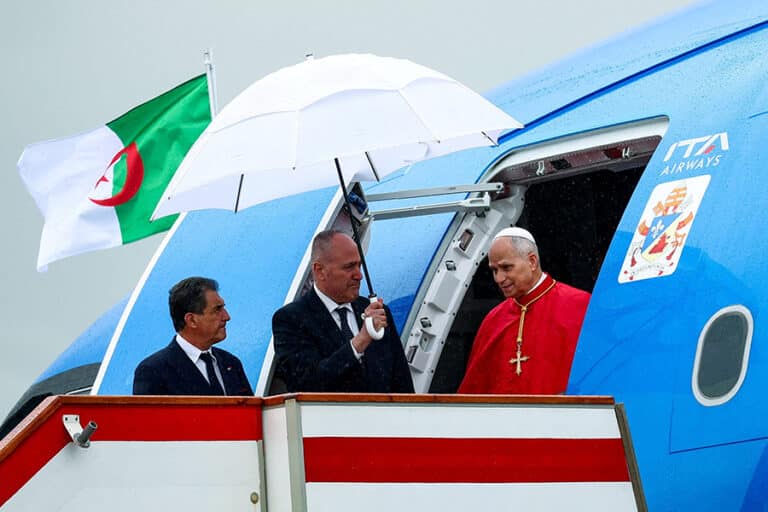
Pope Leo XIV has arrived in Algeria, opening an 11-day tour of Africa that the Vatican is casting as both pastoral and political in scope, and one that immediately breaks new ground in Catholic-Muslim relations.
The papal plane touched down in Algiers shortly after 09:00 GMT on Monday, according to journalists travelling with the delegation. It is the first time a Catholic pope has visited the North African country.
On arrival, the 70-year-old pontiff is expected to pay respects to those killed during Algeria’s war of independence from France in the 1950s and early 1960s, a conflict that still shapes national memory.
The visit comes as Pope Leo continues to build a profile as a global voice on conflict and inequality. Since his election last year, he has travelled sparingly, but has spoken frequently about war, displacement and the responsibilities of political leaders.
Over 11 days, he will visit four countries: Algeria, Cameroon, Angola and Equatorial Guinea, covering roughly 18,000 Kilometers and delivering more than 20 speeches across the continent.
A delicate first stop
Algeria stands out on the itinerary. It is overwhelmingly Muslim, with a Catholic population estimated at fewer than 10,000 in a country of nearly 48 million people.
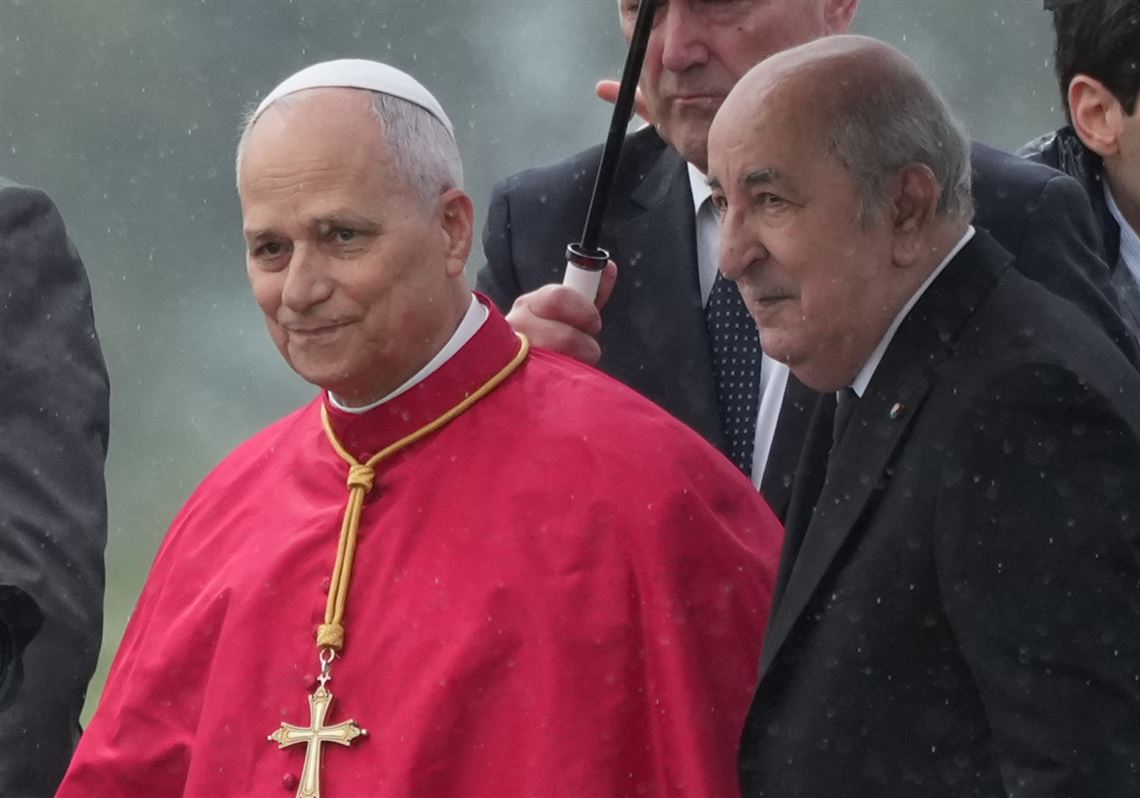
Jean-Paul Vesco, the archbishop of Algiers, described the visit as an effort to strengthen ties between faiths that have often been viewed through the lens of history and suspicion.
“This is about continuing to build bridges between Christians and Muslims,” he told AFP before the pope’s arrival.
Monday’s programme includes visits to the Great Mosque of Algiers and the Basilica of Our Lady of Africa, two landmarks that reflect the country’s layered religious and colonial history. The pope is also expected to pray privately at a chapel dedicated to clergy killed during Algeria’s civil conflict in the 1990s.
He will not visit the Tibhirine monastery, where seven monks were kidnapped and killed in 1996, a case that remains unresolved and deeply sensitive in both religious and political circles.
A continent in focus
After two days in Algeria, the pope will move south to Cameroon, Angola and Equatorial Guinea, countries where Catholicism is far more widespread. In Cameroon alone, the Vatican expects crowds of up to 600,000 at a single Mass in Douala.
Vatican officials say the pope will deliver around 25 speeches across the tour, touching on themes that range from governance and corruption to religious dialogue and the management of natural resources.
Matteo Bruni, the Vatican spokesperson, said the diversity of the countries explains the broad agenda.
“These nations face different realities,” he told reporters. “The Holy Father will speak to those realities directly.”
The trip also reflects a wider shift in global Catholicism. According to Vatican figures, Africa accounted for more than half of all new baptisms recorded in 2023, with millions joining the Church across the continent. The region is also producing increasing numbers of priests and seminarians.
That growth has, in many ways, changed the centre of gravity within Catholicism itself.
Politics never far away
While the Vatican presents the tour as pastoral, politics is unlikely to stay in the background.
Cameroon and Equatorial Guinea are both led by long-serving presidents who have faced repeated criticism from rights groups, allegations their governments reject.
Church officials say the pope is expected to address governance, accountability and the role of public institutions during his speeches, though carefully framed in moral rather than political terms.
Leo has also drawn attention internationally for his recent comments on global conflicts, including the war involving Iran, where he has called for restraint and dialogue.
A voice across languages
Fluent in several languages, including English, French, Spanish and Portuguese, the pope is expected to switch between them throughout the trip, a reflection of both Africa’s linguistic diversity and the Vatican’s diplomatic outreach.
By the end of the journey, he will have addressed audiences in 11 cities and towns, from the Mediterranean coast to Central and West Africa.
About the Author