
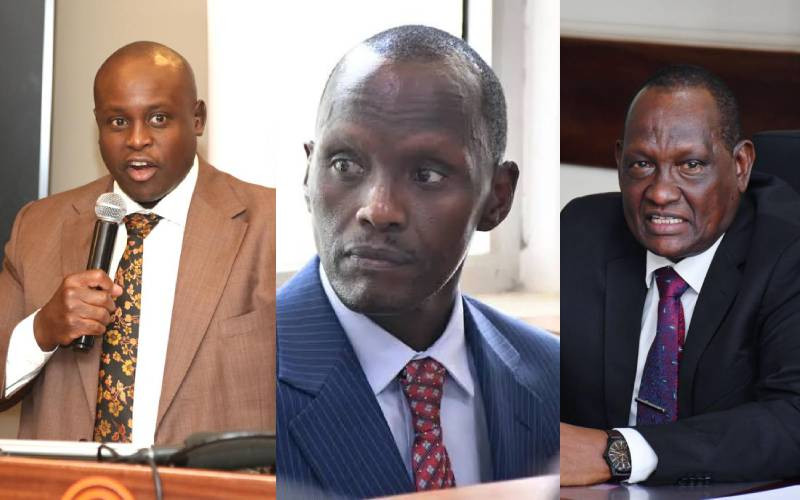
Nairobi, April 4, 2026 — A sweeping criminal investigation into Kenya’s fuel import system has escalated dramatically, with the arrest of four senior energy officials in what authorities describe as a potentially irregular oil importation scheme that could cost taxpayers billions.
Those arrested include Petroleum Principal Secretary Mohamed Liban, Director General of the Energy and Petroleum Regulatory Authority Daniel Kiptoo, Managing Director of the Kenya Pipeline Company Joe Sang, and Petroleum Deputy Director Joseph Wafula.
The arrests, carried out in coordinated early morning raids by detectives from the Directorate of Criminal Investigations, mark one of the most consequential crackdowns in Kenya’s energy sector in recent years.
A ship, a diversion, and billions at stake
At the centre of the probe is the alleged diversion of a fuel consignment aboard the vessel MV Paloma, which docked at the Port of Mombasa in late March carrying more than 60,000 metric tonnes of petroleum products.
Investigators believe the cargo, originally destined for Angola, was rerouted to Kenya under what sources describe as a “suspect arrangement” that bypassed the government-to-government (G-to-G) fuel import framework introduced in 2023 to stabilize prices and curb supply volatility.
Under that system, Kenya sources fuel through bilateral agreements with major oil producers and traders, reducing reliance on open market tenders that previously exposed the country to price shocks and forex pressure.
However, preliminary findings suggest the diverted shipment may have entered the Kenyan market outside this framework—raising red flags over procurement integrity, pricing, and regulatory oversight.
Money trail and parallel shipments
Sources close to the investigation indicate that more than KSh100 million in cash was recovered from the homes of the suspects during the raids—an element now forming a critical part of the financial crime inquiry.
Further, detectives are examining claims that the consignment—linked to global oil supply chains involving Saudi Aramco and BP—was overpriced by up to KSh4 billion.
A second vessel, reportedly scheduled to deliver a similar consignment under comparable arrangements, has since been halted following the arrests. Investigators estimate that, had both shipments been completed, potential losses could have reached KSh8 billion.
Inside the crackdown
The arrests unfolded across multiple locations in Nairobi, with the suspects briefly held at various police stations before being transferred to DCI headquarters for interrogation.
Mr Kiptoo and Mr Sang were questioned for several hours, while Mr Wafula was also detained and later presented to investigators. Petroleum PS Liban was questioned and subsequently released on medical grounds, though officials confirm that investigations into his role are ongoing.
Legal teams for the suspects have since assembled, signaling the beginning of what is expected to be a high-stakes legal and political battle.
Institutional shockwaves
The developments have sent ripples through Kenya’s energy sector, a critical pillar of the economy that directly affects inflation, cost of living, and industrial productivity.
In an interim measure, the Kenya Pipeline Company board has appointed an acting managing director to ensure continuity of operations, even as it distances itself from the unfolding scandal and pledges cooperation with investigators.
The Energy and Petroleum Regulatory Authority, meanwhile, faces renewed scrutiny over its oversight role—particularly in enforcing compliance with importation frameworks and safeguarding fuel quality.
Broader concerns: supply, pricing, and public trust
Beyond the immediate criminal probe, the case has reopened longstanding concerns about transparency in Kenya’s fuel supply chain.
Industry analysts note that any breach of the G-to-G framework risks undermining the very stability it was designed to protect—potentially leading to artificial shortages, price distortions, and quality inconsistencies.
The investigation is also examining whether recent fuel supply disruptions and consumer complaints about product quality may be linked to the suspect imports.
A sector under the spotlight
This is not the first time Kenya’s energy sector has faced allegations of opaque dealings, but the scale and seniority of those implicated in the current probe make it particularly significant.
For the government, the case presents both a risk and an opportunity: a risk of eroding public confidence in key institutions, but also an opportunity to demonstrate enforcement of accountability at the highest levels.
As the investigation unfolds, attention will turn to whether prosecutors can sustain the evidentiary burden required to secure convictions—and whether systemic reforms will follow.
The Kenya Pipeline Company board has since moved to contain the fallout, issuing a statement acknowledging the unfolding developments surrounding Managing Director Joe Sang and other officials. In the statement signed by Board Chair Faith Boinett, the board indicated it is closely monitoring the situation and remains in active communication with investigative agencies to establish the full scope of the allegations.
Even as the probe intensifies, the board sought to reassure stakeholders that KPC’s core operations remain stable and unaffected. To maintain continuity, General Manager for Finance Pius Mwendwa has been appointed to act as Managing Director in the interim. The board added that it will issue further guidance as investigations progress, signaling an effort to balance institutional stability with accountability at the highest level.
Civic awareness amid governance questions

Amid these developments, media and civil society actors are also stepping up public engagement on governance and accountability. Switch Media has rolled out a nationwide civic education campaign dubbed “Kura Yako, Future Yako,” targeting youth and underserved communities, with a strong digital push across its platforms—audiences are encouraged to follow and engage via @switchtvkenya.
About the Author