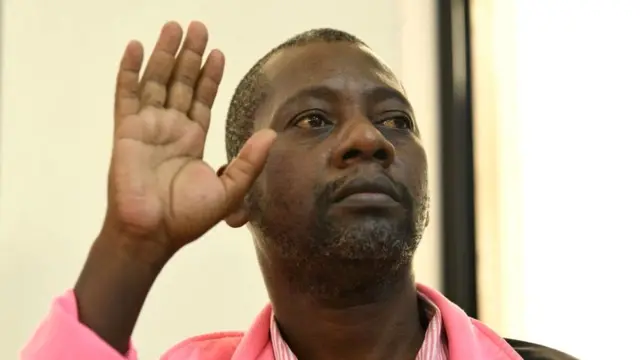
The High Court in Mombasa has dealt a blow to prosecutors in one of Kenya’s most harrowing criminal cases, refusing to reopen proceedings in the trial over the deaths of 191 children in Shakahola forest.
In a ruling that could shape the course of the case, the court declined an application by the Office of the Director of Public Prosecutions to recall a convicted co-accused for further questioning. The state had hoped to revisit the testimony of Enos Amanya, a former aide to the controversial preacher Paul Mackenzie, who is on trial alongside 29 others.
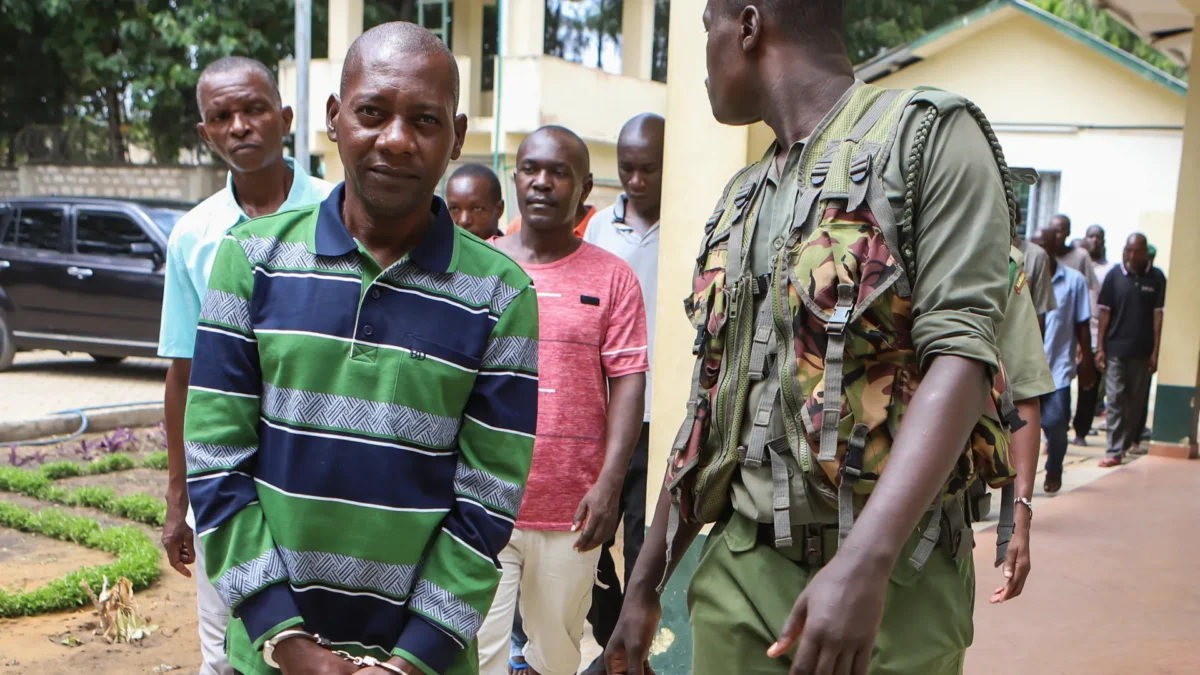
The judge was firm. While courts have the power to recall witnesses in the interests of justice, he said, that discretion “cannot be used to help a party fill gaps, repair omissions or strengthen a case after it has voluntarily closed it”.
“Although the application is presented as an attempt to cure a procedural misstep,” the judge ruled, “it is in substance a strategy intended to assist the prosecution to fill gaps in its case through the re-examination of the convict.”
The decision came at the High Court in Mombasa, where the trial has drawn national attention. The deaths in Shakahola forest, near the coastal town of Malindi, shocked Kenya and prompted a sweeping investigation into alleged cult-like practices linked to Mackenzie’s ministry.
Earlier this year, Amanya, 51, changed his plea. He admitted to 191 counts of murder and recorded a detailed confession describing events in the forest between 2021 and 2023. Prosecutors said his account set out not only his own role but also implicated others.
Yet he never took the stand as a prosecution witness in the main trial. Instead, only the officer who recorded his confession testified, addressing whether the statement had been made voluntarily.
On January 22, after closing its case and calling 119 witnesses, the prosecution asked the court to reopen proceedings. The aim, it said, was limited: to allow the remaining accused to cross-examine Amanya on the contents of a confession recorded on January 16, 2026.
The state acknowledged a procedural error. It argued that the law allows a confession to be considered not only against its maker but also, in certain circumstances, against co-accused persons. Without cross-examination, prosecutors warned, the trial risked being tainted by unfairness and could even collapse into a mistrial.
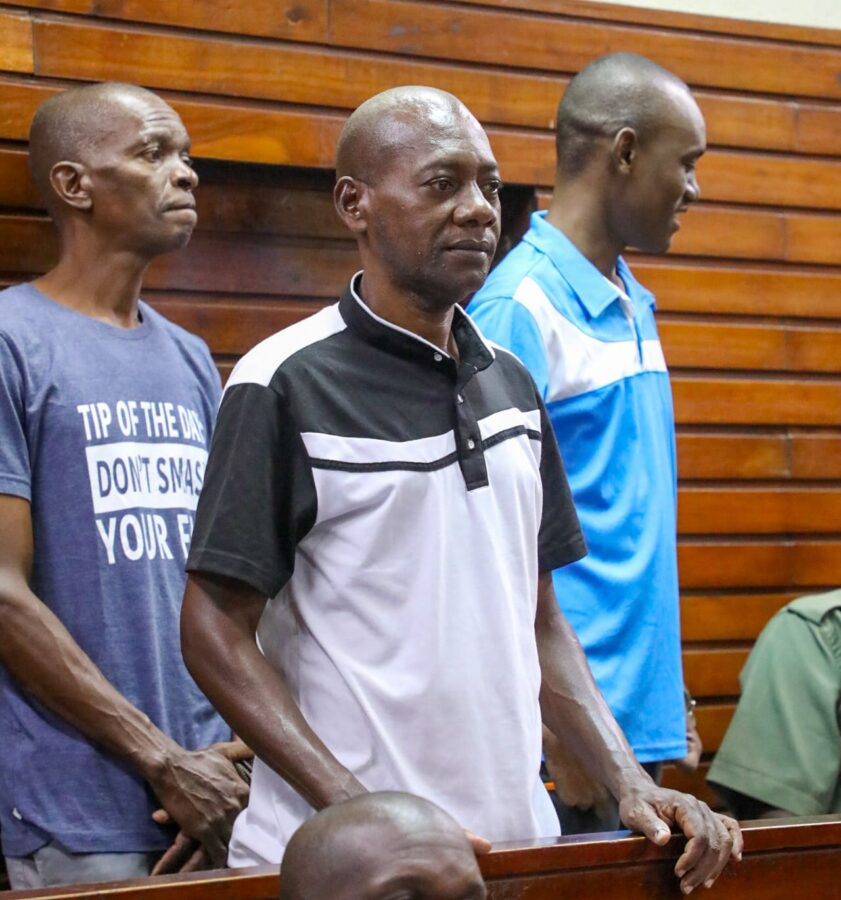
Defence lawyers saw matters differently. They told the court that Amanya had been present and available when the prosecution chose to close its case. The application, they argued, was less about fairness and more about repairing a misstep.
The judge agreed. He noted that the confession was recorded after all prosecution witnesses had testified and therefore did not form part of the state’s evidence. It was, he said, “a mere interlude” that briefly interrupted the closure of the prosecution’s case.
“The confession cannot be treated as part of the evidence led by the prosecution and must be considered separately, without influencing the assessment of the prosecution’s case,” he said.
He went further, restating a key principle of criminal law: the confession of a co-accused is not, on its own, substantive evidence against others. It must first be set aside and may only support an already established conclusion, not create one.
“Even assuming that Amanya incriminated the co-accused,” the judge added, “such evidence would be of the weakest kind and incapable of sustaining a conviction without independent corroboration.”
The ruling does not end the matter. The trial has not yet reached the defence stage. No accused person has been called upon to answer the charges. If that point comes, the court noted, any implicated defendant may seek leave to call Amanya as a witness.
For now, the decision clears the way for Amanya to be sentenced and for the court to consider whether there is sufficient evidence to put the remaining accused on their defence.
In his confession, Amanya described a slow descent. He said he abandoned his evangelical church after encountering Mackenzie’s teachings on television. He moved with his family from Nairobi to Malindi, and eventually to Shakahola forest.
What began, he said, as religious devotion drew him deeper into Mackenzie’s inner circle. By mid-2022, he told investigators, fasting had been declared a divine command. Children were to die first, followed by women and then men, with Mackenzie last.
Amanya said he was appointed head of security. His duties, according to the confession, included preventing followers from leaving, enforcing fasting orders, digging graves and burying the dead as the toll rose. Food was branded evil. Those who resisted were beaten or restrained. He described a system of coded language in which bodies were called “fertiliser” and burials “planting”.
Mackenzie and his co-accused have not been convicted in the main trial, and the court has yet to decide whether there is a case for them to answer.
Outside the courtroom, the wider questions remain. How did so many people come to trust a message that led to death? And how did the warning signs go unnoticed for so long?
For the families of the dead, the legal arguments may feel distant. But inside the High Court in Mombasa, the case now turns on a narrower question: whether the prosecution’s evidence, without the recalled confession, is enough to proceed.
About the Author