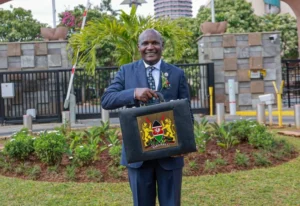
President William Ruto has endorsed the KSh4.7 trillion national budget for the 2026/27 financial year following a Cabinet meeting chaired at State House, Nairobi.
The budget, one of the largest in Kenya’s history, includes KSh495.7 billion in transfers to county governments, earmarked as equitable share and transfers.
The allocation is expected to boost service delivery in sectors such as health, agriculture, infrastructure, and early childhood education, while enhancing development projects across the 47 counties.
KSh4.1 Billion Released for Drought Response
In response to the ongoing drought affecting parts of the country, the Cabinet authorised the release of KSh4.1 billion to scale up emergency interventions in the hardest-hit regions.
The funds will support relief efforts including food distribution, water provision, livestock support, and other humanitarian measures aimed at cushioning vulnerable communities.
The Cabinet also approved comprehensive payroll reforms targeting long-standing integrity issues that have persisted across successive administrations.
According to President Ruto, the reforms will ensure statutory deductions are uniformly deducted at source, sealing loopholes that have previously led to discrepancies and financial mismanagement.
The move is expected to enhance transparency, accountability, and compliance within the public service payroll system.
Legal Alignment with Competency-Based Education System
In the education sector, the Cabinet approved a series of Bills designed to align the country’s legal framework with the Competency-Based Education and Training (CBET) system.
The reforms will address key areas including assessment, funding, tertiary placement, and both pre-service and in-service teacher training. The alignment aims to streamline implementation of the competency-based curriculum and ensure smoother transitions for learners across different levels of education.
Focus on Reform and Service Delivery
The decisions taken during the Cabinet meeting underscore the government’s focus on fiscal discipline, structural reforms, and targeted interventions in critical sectors.
With the 2026/27 budget now endorsed, attention shifts to Parliament for debate and approval, setting the stage for the next financial cycle amid economic recovery efforts and ongoing reforms.
About the Author